Migani Damiano, Smales C Mark, Bracewell Daniel G
The Advanced Centre of Biochemical Engineering, Dept. of Biochemical Engineering, University College London, Bernard Katz Building, London, WC1E 6BT, United Kingdom.
Industrial Biotechnology Centre and School of Biosciences, University of Kent, Canterbury, Kent, CT2 7NJ, United Kingdom.
Biotechnol Prog. 2017 May;33(3):666-676. doi: 10.1002/btpr.2455. Epub 2017 Mar 29.
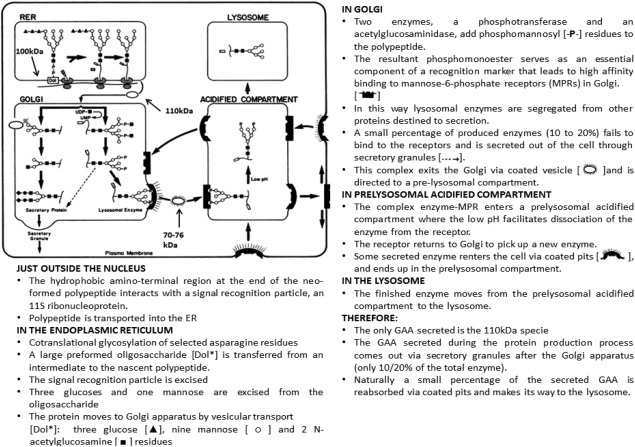
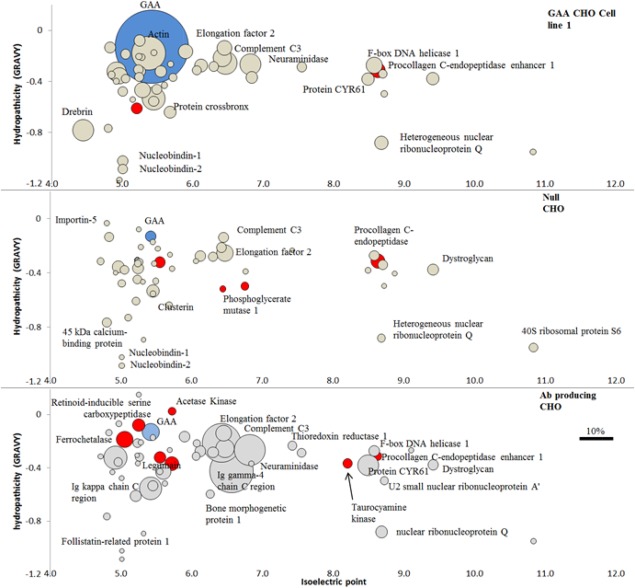
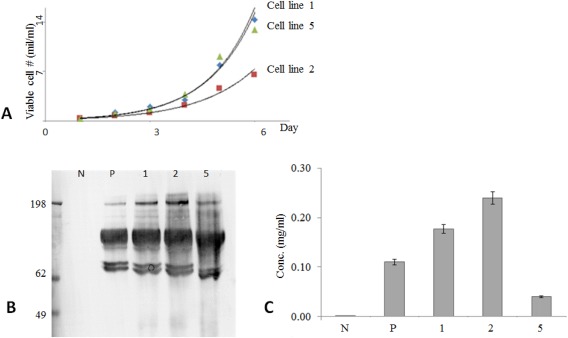
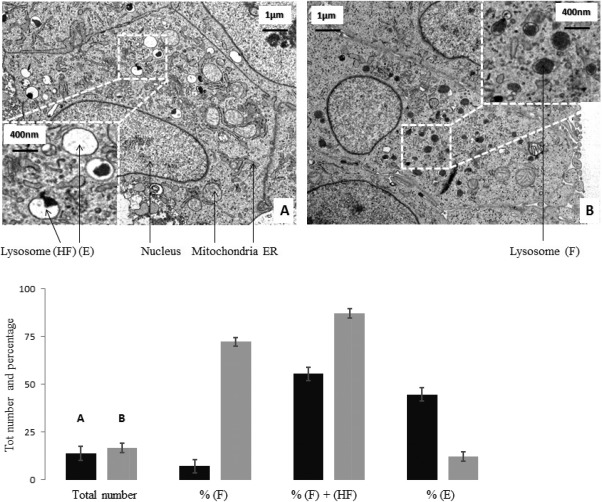
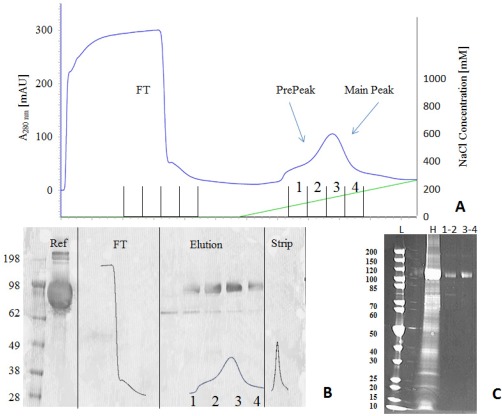
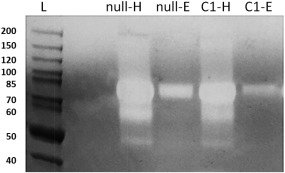
Recombinant human Acid Alpha Glucosidase (GAA) is the therapeutic enzyme used for the treatment of Pompe disease, a rare genetic disorder characterized by GAA deficiency in the cell lysosomes (Raben et al., Curr Mol Med. 2002; 2:145-166). The manufacturing process for GAA can be challenging, in part due to protease degradation. The overall goal of this study was to understand the effects of GAA overexpression on cell lysosomal phenotype and host cell protein (HCP) release, and any resultant consequences for protease levels and ease of manufacture. To do this we first generated a human recombinant GAA producing stable CHO cell line and designed the capture chromatographic step anion exchange (IEX). We then collected images of cell lysosomes via transmission electron microscopy (TEM) and compared the resulting data with that from a null CHO cell line. TEM imaging revealed 72% of all lysosomes in the GAA cell line were engorged indicating extensive cell stress; by comparison only 8% of lysosomes in the null CHO had a similar phenotype. Furthermore, comparison of the HCP profile among cell lines (GAA, mAb, and Null) capture eluates, showed that while most HCPs released were common across them, some were unique to the GAA producer, implying that cell stress caused by overexpression of GAA has a molecule specific effect on HCP release. Protease analysis via zymograms showed an overall reduction in proteolytic activity after the capture step but also revealed the presence of co-eluting proteases at approximately 80 KDa, which MS analysis putatively identified as dipeptidyl peptidase 3 and prolyl endopeptidase. © 2017 American Institute of Chemical Engineers Biotechnol. Prog., 33:666-676, 2017.
重组人酸性α-葡萄糖苷酶(GAA)是用于治疗庞贝病的治疗性酶,庞贝病是一种罕见的遗传性疾病,其特征是细胞溶酶体中GAA缺乏(拉本等人,《当代分子医学》。2002年;2:145 - 166)。GAA的制造过程可能具有挑战性,部分原因是蛋白酶降解。本研究的总体目标是了解GAA过表达对细胞溶酶体表型和宿主细胞蛋白(HCP)释放的影响,以及对蛋白酶水平和制造难易程度的任何后续影响。为此,我们首先构建了一个产生人重组GAA的稳定CHO细胞系,并设计了捕获色谱步骤阴离子交换(IEX)。然后,我们通过透射电子显微镜(TEM)收集细胞溶酶体的图像,并将所得数据与空CHO细胞系的数据进行比较。TEM成像显示,GAA细胞系中72%的溶酶体肿胀,表明存在广泛的细胞应激;相比之下,空CHO细胞中只有8%的溶酶体具有类似的表型。此外,对细胞系(GAA、单克隆抗体和空细胞系)捕获洗脱液中的HCP谱进行比较,结果表明,虽然释放的大多数HCP在它们之间是常见的,但有些是GAA产生细胞特有的,这意味着GAA过表达引起的细胞应激对HCP释放具有分子特异性影响。通过酶谱分析进行的蛋白酶分析表明,捕获步骤后蛋白水解活性总体降低,但也揭示了在约80 kDa处存在共洗脱蛋白酶,质谱分析初步鉴定为二肽基肽酶3和脯氨酰内肽酶。©2017美国化学工程师学会生物技术进展,33:666 - 676,2017。