Purification Process Sciences, Medimmune LLC, Gaithersburg, MD 20878.
Analytical Sciences, Medimmune LLC, Gaithersburg, MD 20878.
Biotechnol Prog. 2019 Jan;35(1):e2732. doi: 10.1002/btpr.2732. Epub 2018 Nov 4.
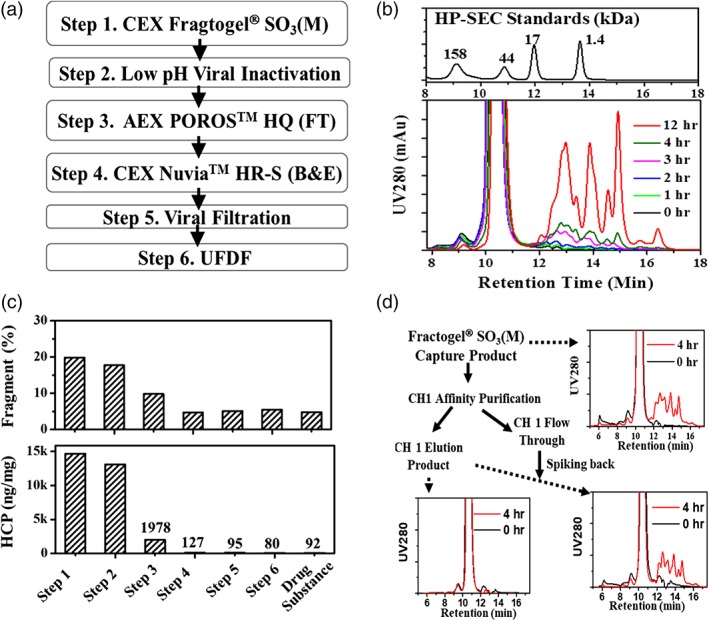
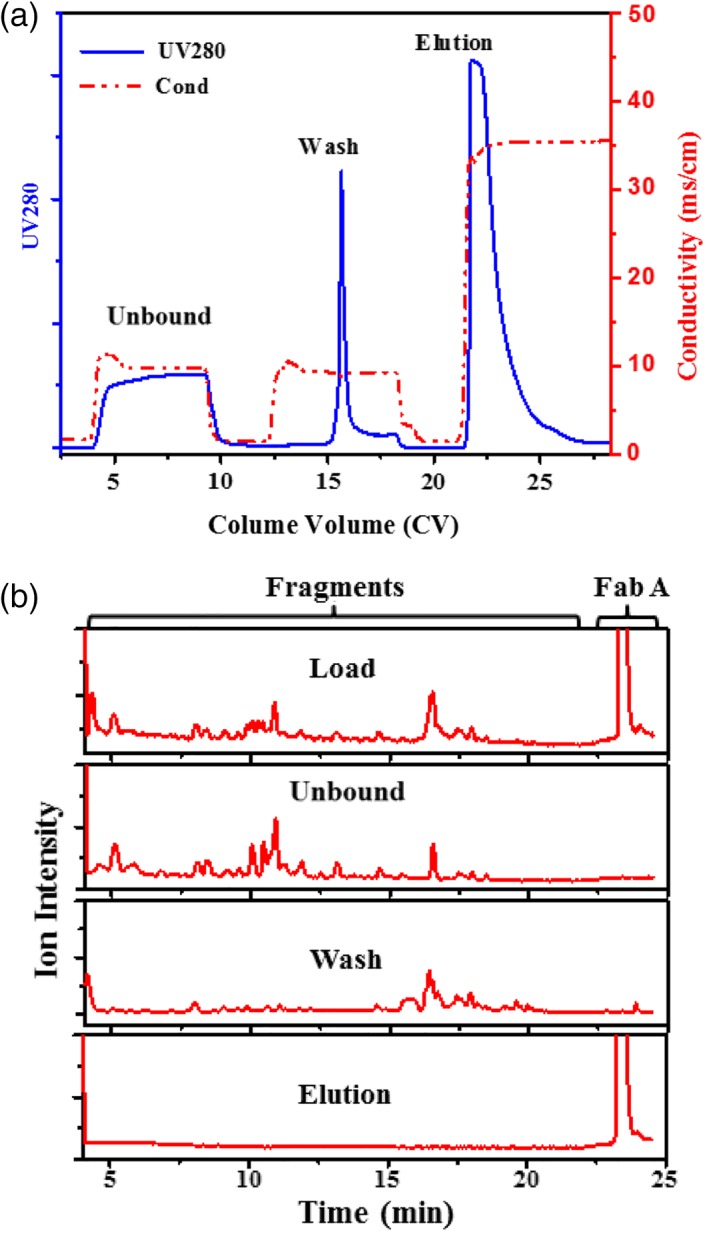
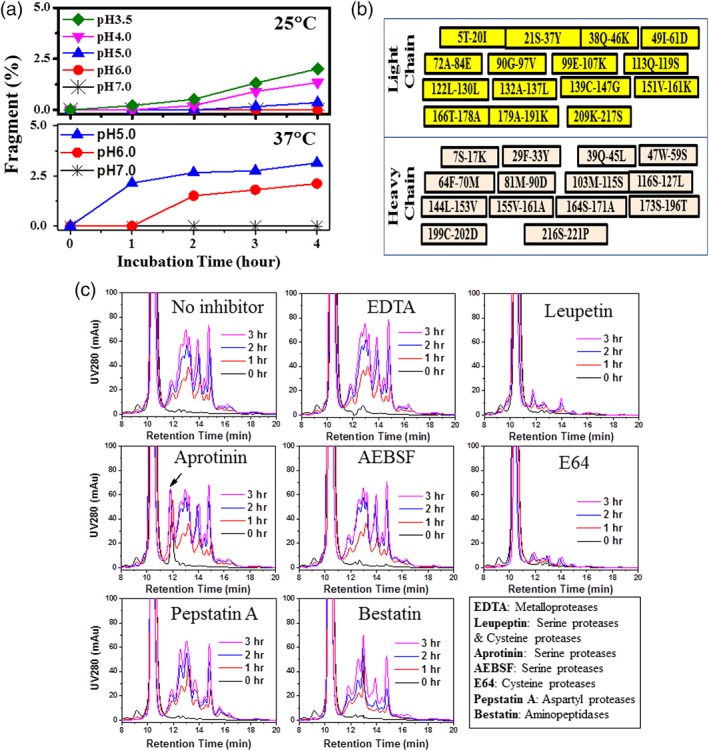
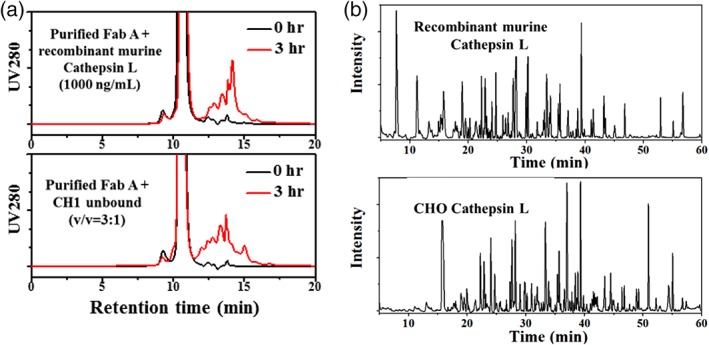
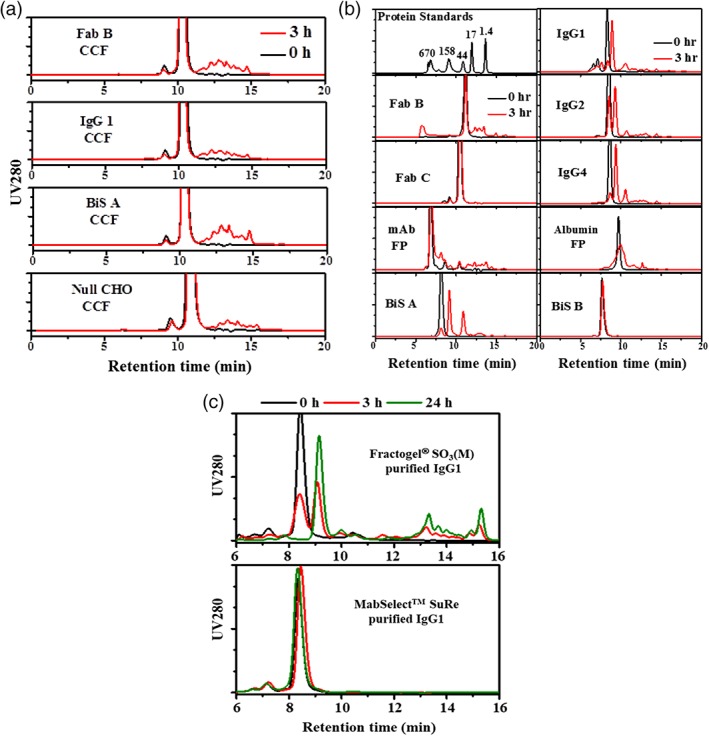
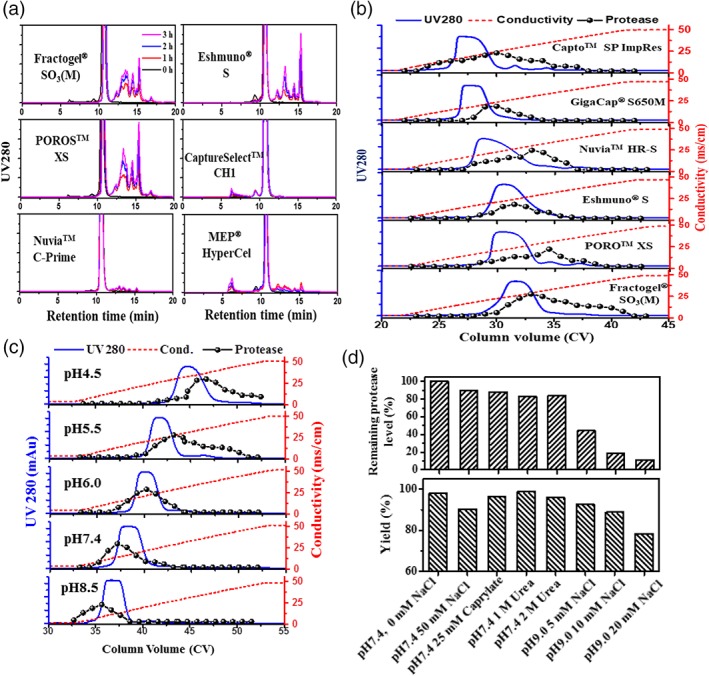
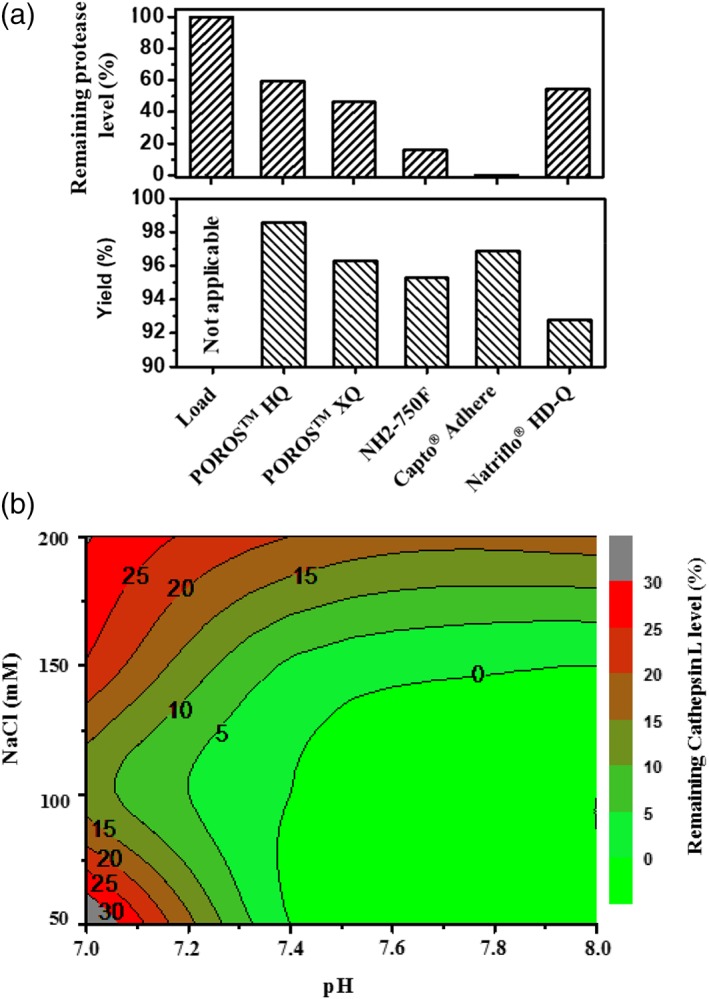
A stochastic approach of copurification of the protease Cathepsin L that results in product fragmentation during purification processing and storage is presented. Cathepsin L was identified using mass spectroscopy, characterization of proteolytic activity, and comparison with fragmentation patterns observed using recombinant Cathepsin L. Cathepsin L existed in Chinese hamster ovary cell culture fluids obtained from cell lines expressing different products and cleaved a variety of recombinant proteins including monoclonal antibodies, antibody fragments, bispecific antibodies, and fusion proteins. Therefore, characterization its chromatographic behavior is essential to ensure robust manufacturing and sufficient shelf life. The chromatographic behaviors of Cathepsin L using a variety of techniques including affinity, cation exchange, anion exchange, and mixed mode chromatography were systematically evaluated. Our data demonstrates that copurification of Cathepsin L on nonaffinity modalities is principally because of similar retention on the stationary phase and not through interactions with product. Lastly, Cathespin L exhibits a broad elution profile in cation exchange chromatography (CEX) likely because of its different forms. Affinity purification is free of fragmentation issue, making affinity capture the best mitigation of Cathepsin L. When affinity purification is not feasible, a high pH wash on CEX can effectively remove Cathepsin L but resulted in significant product loss, while anion exchange chromatography operated in flow-through mode does not efficiently remove Cathepsin L. Mixed mode chromatography, using Capto™ adhere in this example, provides robust clearance over wide process parameter range (pH 7.7 ± 0.3 and 100 ± 50 mM NaCl), making it an ideal technique to clear Cathepsin L. © 2018 American Institute of Chemical Engineers Biotechnol. Prog., 35: e2732, 2019.
本文提出了一种蛋白酶 Cathepsin L 的共纯化的随机方法,该方法在纯化过程和储存过程中导致产物碎片化。Cathepsin L 通过质谱分析、蛋白水解活性的表征以及与使用重组 Cathepsin L 观察到的碎片化模式进行比较来鉴定。Cathepsin L 存在于表达不同产物的中国仓鼠卵巢细胞培养物中,并切割多种重组蛋白,包括单克隆抗体、抗体片段、双特异性抗体和融合蛋白。因此,其色谱行为的表征对于确保稳健的制造和足够的货架期至关重要。使用各种技术,包括亲和、阳离子交换、阴离子交换和混合模式色谱法,系统地评估了 Cathepsin L 的色谱行为。我们的数据表明,Cathepsin L 在非亲和模式下的共纯化主要是由于在固定相上的相似保留,而不是通过与产物的相互作用。最后,Cathespin L 在阳离子交换色谱(CEX)中表现出广泛的洗脱谱,可能是因为它的不同形式。亲和纯化没有碎片化问题,因此亲和捕获是减轻 Cathepsin L 的最佳方法。当亲和纯化不可行时,CEX 上的高 pH 洗涤可以有效地去除 Cathepsin L,但会导致产物大量损失,而阴离子交换色谱以流穿模式操作则不能有效地去除 Cathepsin L。混合模式色谱法,在本示例中使用 Capto™ adhere,在广泛的工艺参数范围内(pH 7.7±0.3 和 100±50 mM NaCl)提供强大的清除效果,使其成为清除 Cathepsin L 的理想技术。©2018 美国化学工程师协会生物技术进展,35:e2732,2019。