Kahveci Kadriye, Dinçer Metin, Doger Cihan, Yaricı Ayse Karhan
Department of Anesthesiology and Reanimation, Ankara Ulus State Hospital, Ankara, Turkey.
Health Institutions Management, Yıldırım Beyazıt University, Faculty of Health Sciences, Ankara, Turkey; Ankara Ulus State Hospital, Ankara, Turkey.
Neural Regen Res. 2017 Jan;12(1):77-83. doi: 10.4103/1673-5374.198987.
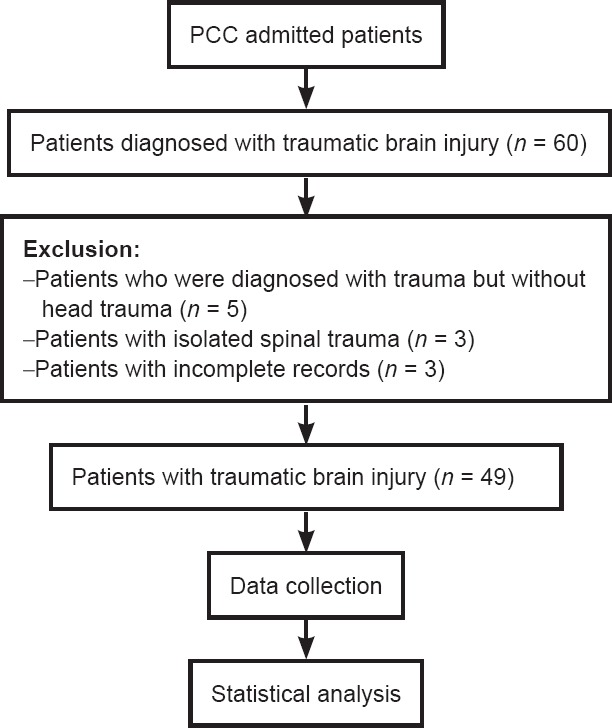
Traumatic brain injury (TBI), which is seen more in young adults, affects both patients and their families. The need for palliative care in TBI and the limits of the care requirement are not clear. The aim of this study was to investigate the length of stay in the palliative care center (PCC), Turkey, the status of patients at discharge, and the need for palliative care in patients with TBI. The medical records of 49 patients with TBI receiving palliative care in PCC during 2013-2016 were retrospectively collected, including age and gender of patients, the length of stay in PCC, the cause of TBI, diagnosis, Glasgow Coma Scale score, Glasgow Outcome Scale score, Karnofsky Performance Status score, mobilization status, nutrition route (oral, percutaneous endoscopic gastrostomy), pressure ulcers, and discharge status. These patients were aged 45.4 ± 20.2 years. The median length of stay in the PCC was 34.0 days. These included TBI patients had a Glasgow Coma Scale score ≤ 8, were not mobilized, received tracheostomy and percutaneous endoscopic gastrostomy nutrition, and had pressure ulcers. No difference was found between those who were discharged to their home or other places (rehabilitation centre, intensive care unit and death) in respect of mobilization, percutaneous endoscopic gastrostomy, tracheostomy and pressure ulcers. TBI patients who were followed up in PCC were determined to be relatively young patients (45.4 ± 20.2 years) with mobilization and nutrition problems and pressure ulcer formation. As TBI patients have complex health conditions that require palliative care from the time of admittance to intensive care unit, provision of palliative care services should be integrated with clinical applications.
创伤性脑损伤(TBI)在年轻人中更为常见,会对患者及其家庭产生影响。TBI患者对姑息治疗的需求以及护理需求的限度尚不清楚。本研究的目的是调查土耳其姑息治疗中心(PCC)中TBI患者的住院时间、出院时的状况以及对姑息治疗的需求。回顾性收集了2013年至2016年期间在PCC接受姑息治疗的49例TBI患者的病历,包括患者的年龄和性别、在PCC的住院时间、TBI的病因、诊断、格拉斯哥昏迷量表评分、格拉斯哥预后量表评分、卡氏功能状态评分、活动状态、营养途径(口服、经皮内镜下胃造口术)、压疮和出院状态。这些患者的年龄为45.4±20.2岁。在PCC的中位住院时间为34.0天。这些TBI患者的格拉斯哥昏迷量表评分≤8,无法活动,接受气管造口术和经皮内镜下胃造口术营养,并有压疮。在出院回家或其他地方(康复中心、重症监护病房和死亡)的患者之间,在活动能力、经皮内镜下胃造口术、气管造口术和压疮方面未发现差异。在PCC接受随访的TBI患者被确定为相对年轻的患者(45.4±20.2岁),存在活动和营养问题以及压疮形成。由于TBI患者从进入重症监护病房时起就有需要姑息治疗的复杂健康状况,因此应将姑息治疗服务与临床应用相结合。