Prieto Isabel, Del Puerto-Nevado Laura, Gonzalez Nieves, Portal-Nuñez Sergio, Zazo Sandra, Corton Marta, Minguez Pablo, Gomez-Guerrero Carmen, Arce Jose Miguel, Sanz Ana Belen, Mas Sebastian, Aguilera Oscar, Alvarez-Llamas Gloria, Esbrit Pedro, Ortiz Alberto, Ayuso Carmen, Egido Jesus, Rojo Federico, Garcia-Foncillas Jesus
Radiation Oncology, Oncohealth Institute, IIS-Fundacion Jimenez Diaz- UAM, Madrid, Spain.
Translational Oncology Division, Oncohealth Institute, IIS-Fundacion Jimenez Diaz-UAM, Madrid, Spain.
PLoS One. 2017 Mar 2;12(3):e0172300. doi: 10.1371/journal.pone.0172300. eCollection 2017.
Multiple observational studies suggest an increased risk of colon cancer in patients with diabetes mellitus (DM). This can theoretically be the result of an influence of the diabetic environment on carcinogenesis or the tumor biologic behavior.
To gain insight into the influence of a diabetic environment on colon cancer characteristics and outcomes.
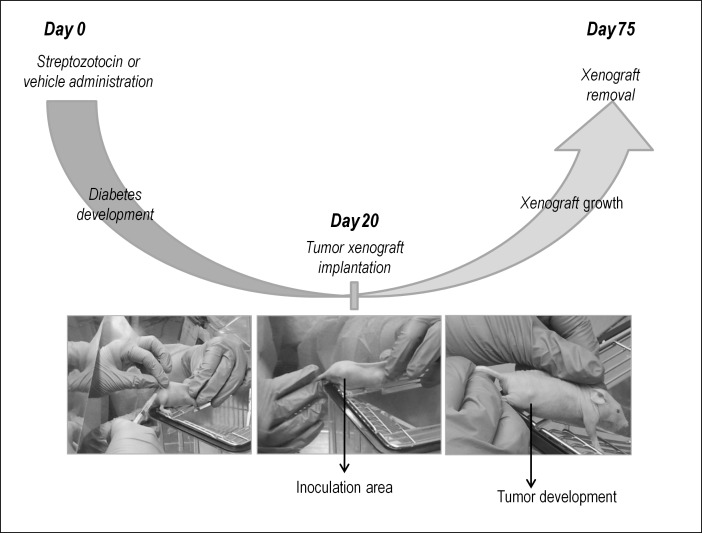
Retrospective analysis of clinical records in an academic tertiary care hospital with detailed analysis of 81 diabetic patients diagnosed of colon cancer matched with 79 non-diabetic colon cancer patients. The impact of streptozotocin-induced diabetes on the growth of colon cancer xenografts was studied in mice.
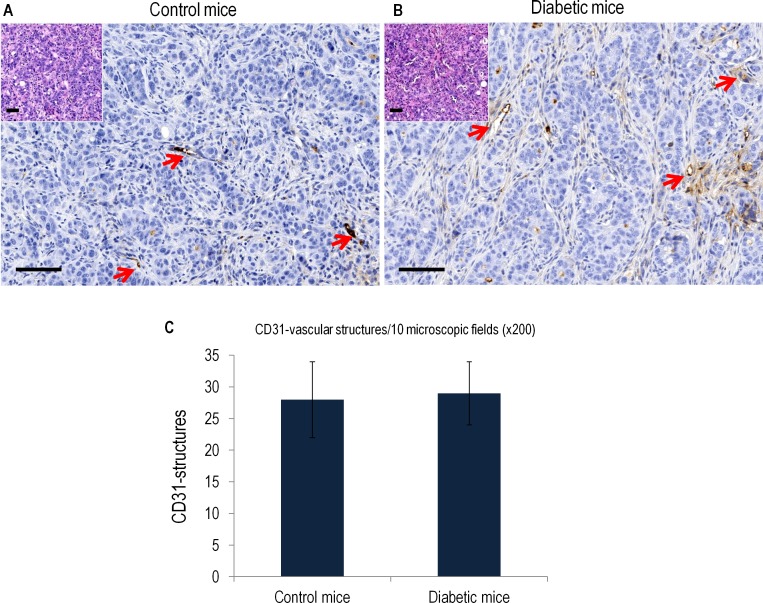
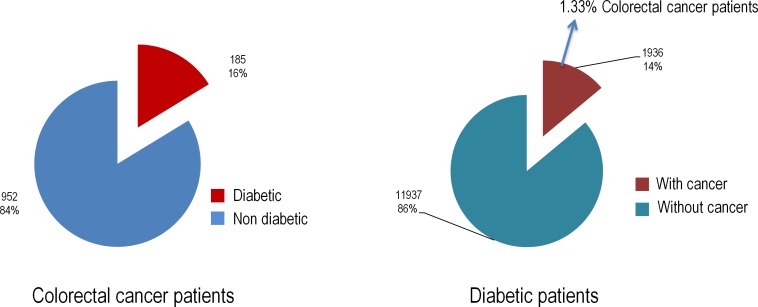
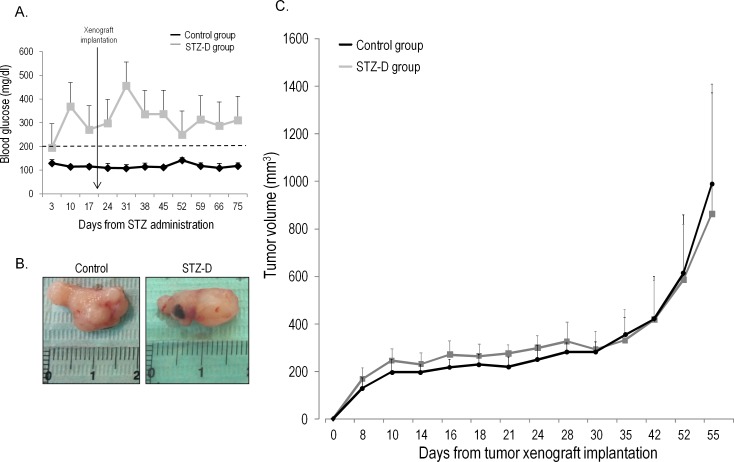
The incidence of DM in 1,137 patients with colorectal cancer was 16%. The diabetic colon cancer cases and non-diabetic colon cancer controls were well matched for demographic and clinical variables. The ECOG Scale Performance Status was higher (worse) in diabetics (ECOG ≥1, 29.1% of controls vs 46.9% of diabetics, p = 0.02), but no significant differences were observed in tumor grade, adjuvant therapy, tumor site, lymphovascular invasion, stage, recurrence, death or cancer-related death. Moreover, no differences in tumor variables were observed between patients treated or not with metformin. In the xenograft model, tumor growth and histopathological characteristics did not differ between diabetic and nondiabetic animals.
Our findings point towards a mild or negligible effect of the diabetes environment on colon cancer behavior, once cancer has already developed.
多项观察性研究表明,糖尿病(DM)患者患结肠癌的风险增加。从理论上讲,这可能是糖尿病环境对致癌作用或肿瘤生物学行为产生影响的结果。
深入了解糖尿病环境对结肠癌特征及预后的影响。
对一家学术性三级护理医院的临床记录进行回顾性分析,详细分析了81例诊断为结肠癌的糖尿病患者,并与79例非糖尿病结肠癌患者进行匹配。在小鼠中研究链脲佐菌素诱导的糖尿病对结肠癌异种移植瘤生长的影响。
1137例结直肠癌患者中糖尿病的发生率为16%。糖尿病结肠癌病例和非糖尿病结肠癌对照在人口统计学和临床变量方面匹配良好。糖尿病患者的东部肿瘤协作组(ECOG)体能状态评分更高(更差)(ECOG≥1,对照组为29.1%,糖尿病患者为46.9%,p = 0.02),但在肿瘤分级、辅助治疗、肿瘤部位、淋巴管浸润、分期、复发、死亡或癌症相关死亡方面未观察到显著差异。此外,接受或未接受二甲双胍治疗的患者之间在肿瘤变量方面也未观察到差异。在异种移植模型中,糖尿病和非糖尿病动物的肿瘤生长和组织病理学特征没有差异。
我们的研究结果表明,一旦癌症已经发生,糖尿病环境对结肠癌行为的影响轻微或可忽略不计。