Snijder Joost, Borst Andrew J, Dosey Annie, Walls Alexandra C, Burrell Anika, Reddy Vijay S, Kollman Justin M, Veesler David
Department of Biochemistry, University of Washington, Seattle, WA, USA.
Department of Integrative Computational and Structural Biology, The Scripps Research Institute, La Jolla, CA, USA.
J Struct Biol. 2017 Apr;198(1):38-42. doi: 10.1016/j.jsb.2017.02.008. Epub 2017 Feb 22.
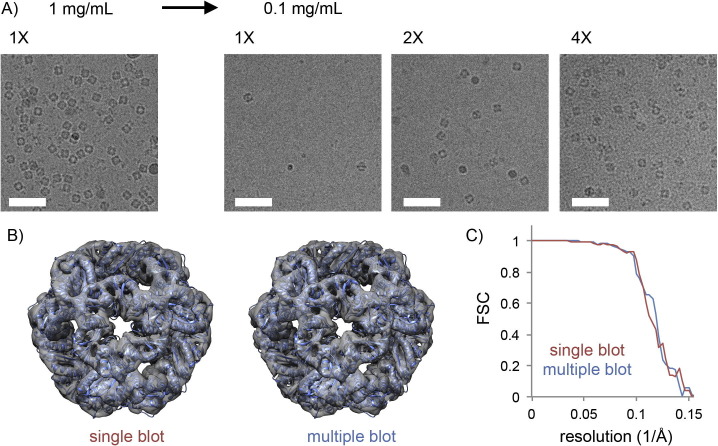
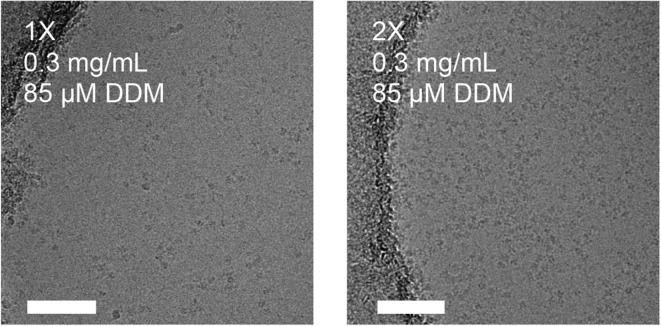
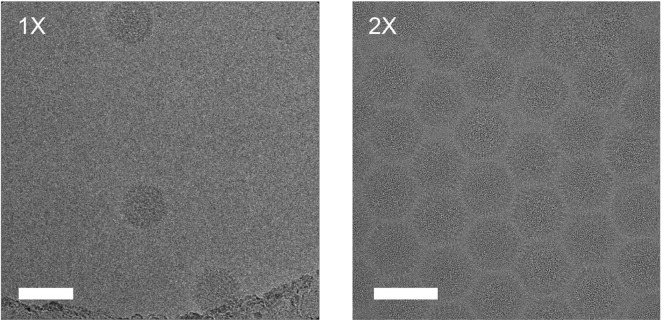
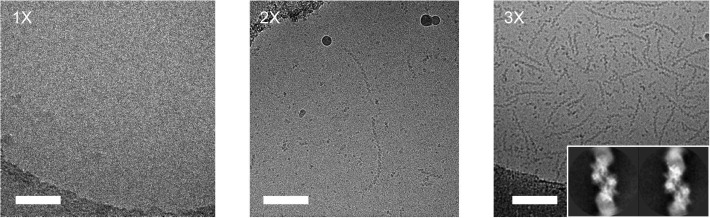
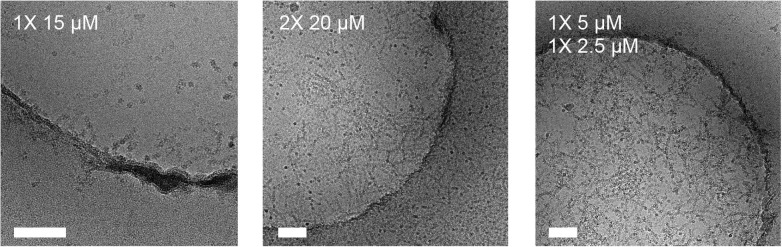
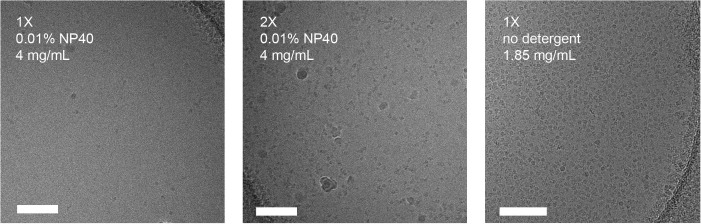
Single particle cryo-electron microscopy (cryoEM) is becoming widely adopted as a tool for structural characterization of biomolecules at near-atomic resolution. Vitrification of the sample to obtain a dense distribution of particles within a single field of view remains a major bottleneck for the success of such experiments. Here, we describe a simple and cost-effective method to increase the density of frozen-hydrated particles on grids with holey carbon support films. It relies on performing multiple rounds of sample application and blotting prior to plunge freezing in liquid ethane. We show that this approach is generally applicable and significantly increases particle density for a range of samples, such as small protein complexes, viruses and filamentous assemblies. The method is versatile, easy to implement, minimizes sample requirements and can enable characterization of samples that would otherwise resist structural studies using single particle cryoEM.
单颗粒冷冻电子显微镜技术(cryoEM)正被广泛用作一种在近原子分辨率下对生物分子进行结构表征的工具。将样品玻璃化以在单个视野内获得密集的颗粒分布仍然是此类实验成功的主要瓶颈。在此,我们描述了一种简单且经济高效的方法,用于提高带有多孔碳支撑膜的网格上冷冻水合颗粒的密度。该方法依赖于在液氮中快速冷冻之前进行多轮样品施加和吸印操作。我们表明,这种方法普遍适用,并且能显著提高一系列样品(如小蛋白质复合物、病毒和丝状聚集体)的颗粒密度。该方法用途广泛、易于实施,将样品需求降至最低,并且能够对那些否则将无法使用单颗粒冷冻电子显微镜技术进行结构研究的样品进行表征。