Zheng Li, Chen Jiangtao, Zhou Zhongyong, He Zhikuan
Department of General Surgery, Huaihe Hospital of Henan University, Kaifeng, People's Republic of China.
Onco Targets Ther. 2017 Feb 20;10:1027-1038. doi: 10.2147/OTT.S125067. eCollection 2017.
microRNAs (miRNAs) can regulate the sensitivity of cancer cells to chemotherapy and radiotherapy. Aberrant expression of miR-195 has been found to be involved in colorectal cancer (CRC); however, its function and underlying mechanism in the radioresistance of CRC remains unclear.
The levels of miR-195 and CARM1 were detected by quantitative reverse transcription-polymerase chain reaction and Western blot analysis in HCT-116 and HT-29 cells, respectively. Colony survival and apoptosis were determined by clonogenic assay and flow cytometry analysis, respectively. The apoptosis-related proteins Bax, Bcl-2, and γ-H2AX were detected using Western blot. The targets of miR-195 were identified by bioinformatic prediction and luciferase reporter assays. CRC cells in vitro and in vivo were exposed to different doses of X-ray radiations.
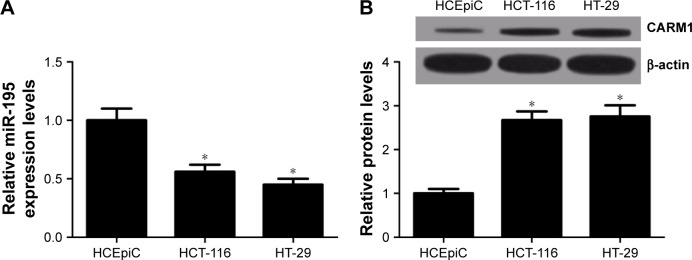
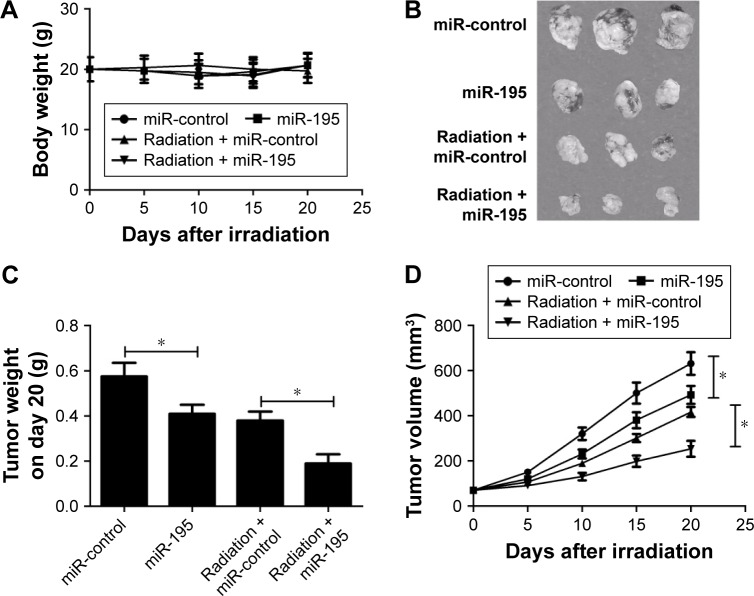
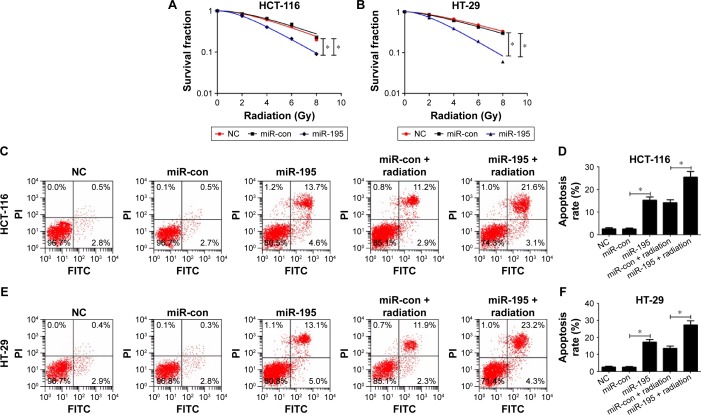
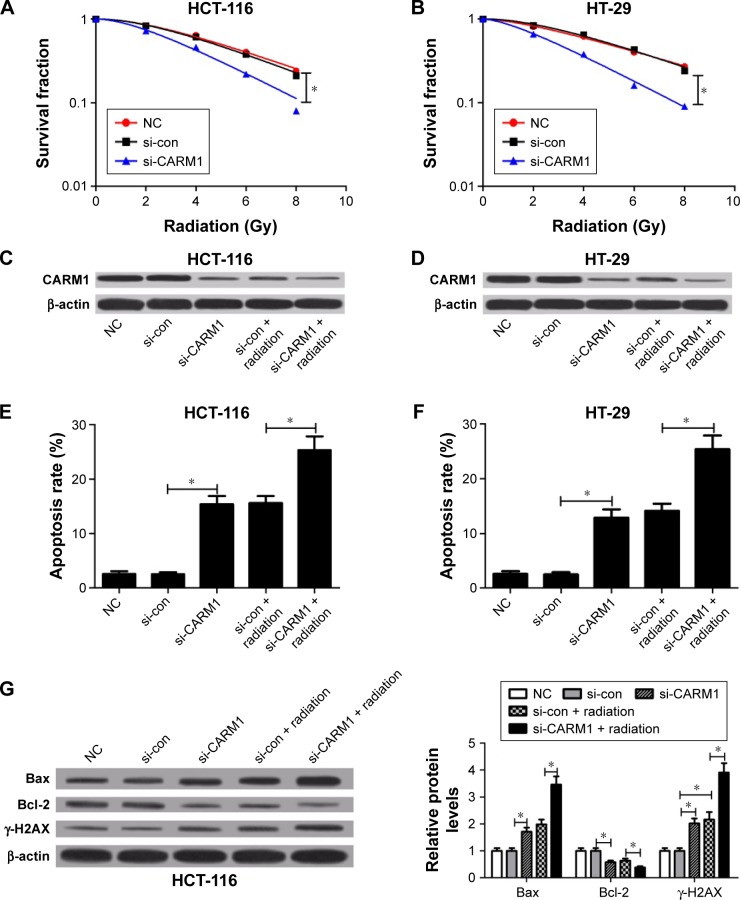
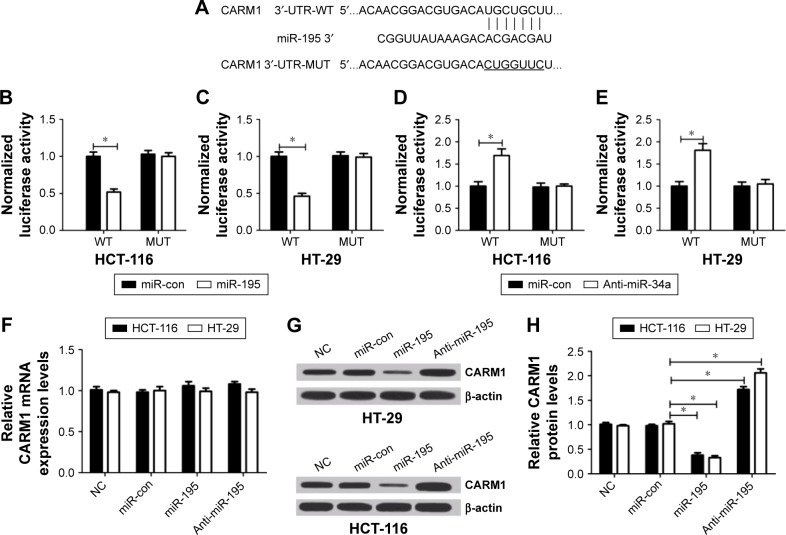
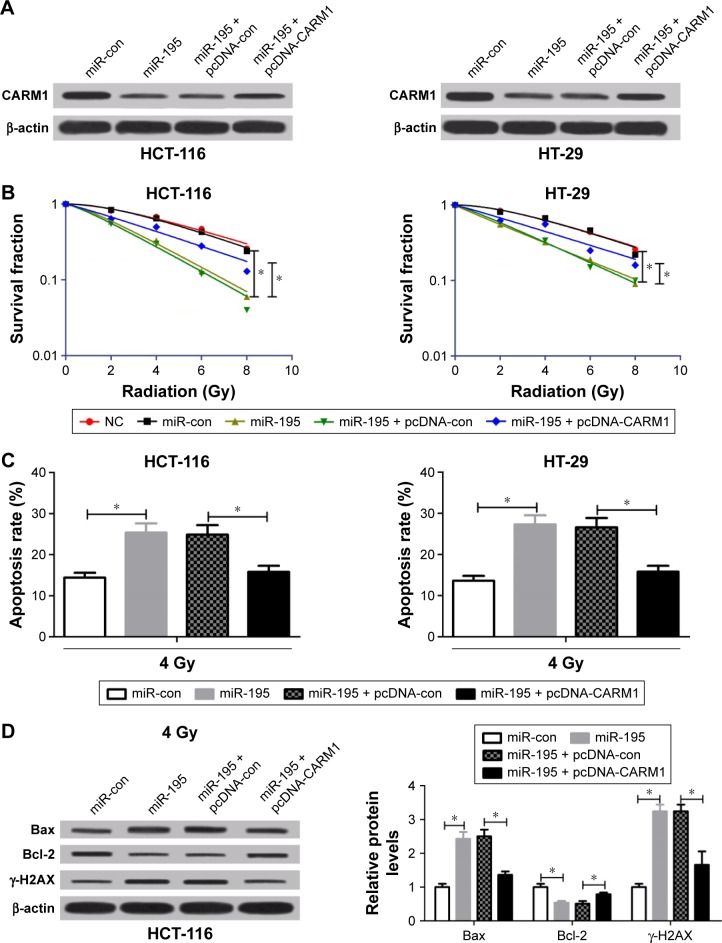
miR-195 was downregulated, and CARM1 was upregulated in HCT-116 and HT-29 cells. miR-195 overexpression or CARM1 knockdown suppressed colony survival, induced apoptosis, promoted expression of Bax and γ-H2AX, and inhibited Bcl-2 expression in CRC cells. CARM1 was identified and validated to be a functional target of miR-195. Moreover, restored expression of CARM1 reversed the enhanced radiosensitivity of CRC cells induced by miR-195. Furthermore, miR-195 increased the sensitivity of CRC cells to radiation in vivo.
miR-195 enhances radiosensitivity of CRC cells through suppressing CARM1. Therefore, miR-195 acts as a potential regulator of radioresistance for CRC cells and as a promising therapeutic target for CRC patients.
微小RNA(miRNA)可调节癌细胞对化疗和放疗的敏感性。已发现miR-195的异常表达与结直肠癌(CRC)有关;然而,其在CRC放射抗性中的功能及潜在机制仍不清楚。
分别通过定量逆转录-聚合酶链反应和蛋白质免疫印迹分析检测HCT-116和HT-29细胞中miR-195和CARM1的水平。分别通过克隆形成试验和流式细胞术分析确定集落存活率和细胞凋亡情况。使用蛋白质免疫印迹检测凋亡相关蛋白Bax、Bcl-2和γ-H2AX。通过生物信息学预测和荧光素酶报告基因试验鉴定miR-195的靶标。将体外和体内的CRC细胞暴露于不同剂量的X射线辐射下。
在HCT-116和HT-29细胞中,miR-195表达下调而CARM1表达上调。miR-195过表达或CARM1敲低可抑制CRC细胞的集落存活、诱导细胞凋亡、促进Bax和γ-H2AX的表达并抑制Bcl-2的表达。已鉴定并验证CARM1是miR-195的功能靶标。此外,恢复CARM1的表达可逆转miR-195诱导的CRC细胞放射敏感性增强。此外,miR-195可提高CRC细胞在体内对辐射的敏感性。
miR-195通过抑制CARM1增强CRC细胞的放射敏感性。因此,miR-195可作为CRC细胞放射抗性的潜在调节因子,也是CRC患者有前景的治疗靶点。