Sun Shuyang, Wang Yilong, Zhou Rong, Deng Zicheng, Han Yong, Han Xiao, Tao Wenjie, Yang Zi, Shi Chaoji, Hong Duo, Li Jiang, Shi Donglu, Zhang Zhiyuan
Department of Oral and Maxillofacial-Head Neck Oncology, Ninth People's Hospital, Shanghai Jiao Tong University, School of Medicine, Shanghai 200011, P. R. China;; Shanghai Key Laboratory of Stomatology, Shanghai 200011, P. R. China.
The Institute for Translational Nanomedicine, Shanghai East Hospital, the Institute for Biomedical Engineering & Nano Science, Tongji University School of Medicine, Shanghai 200092, P. R. China.
Theranostics. 2017 Jan 15;7(3):677-693. doi: 10.7150/thno.16357. eCollection 2017.
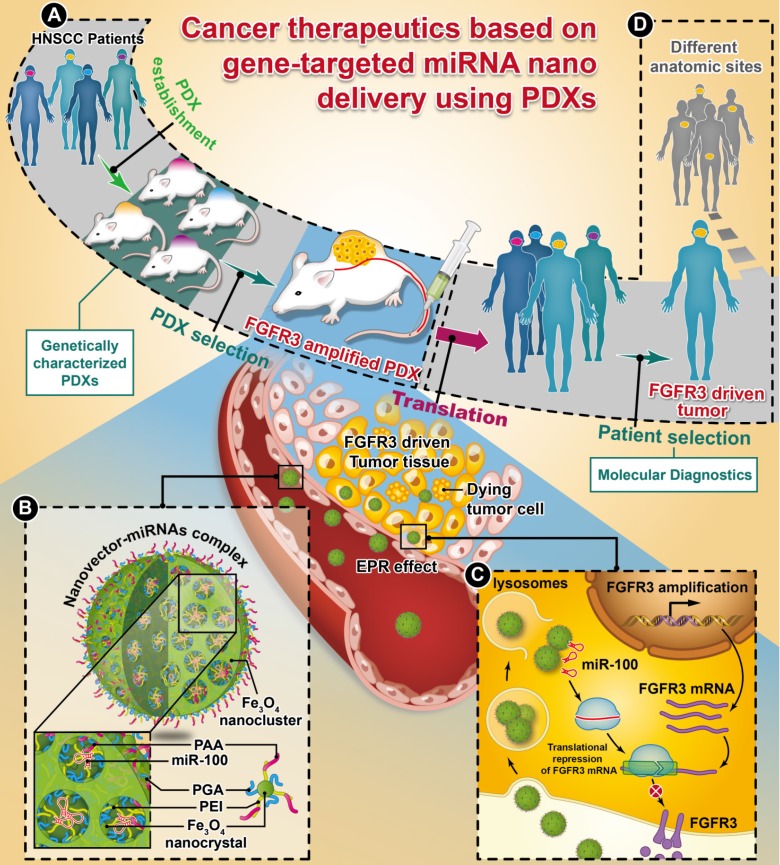
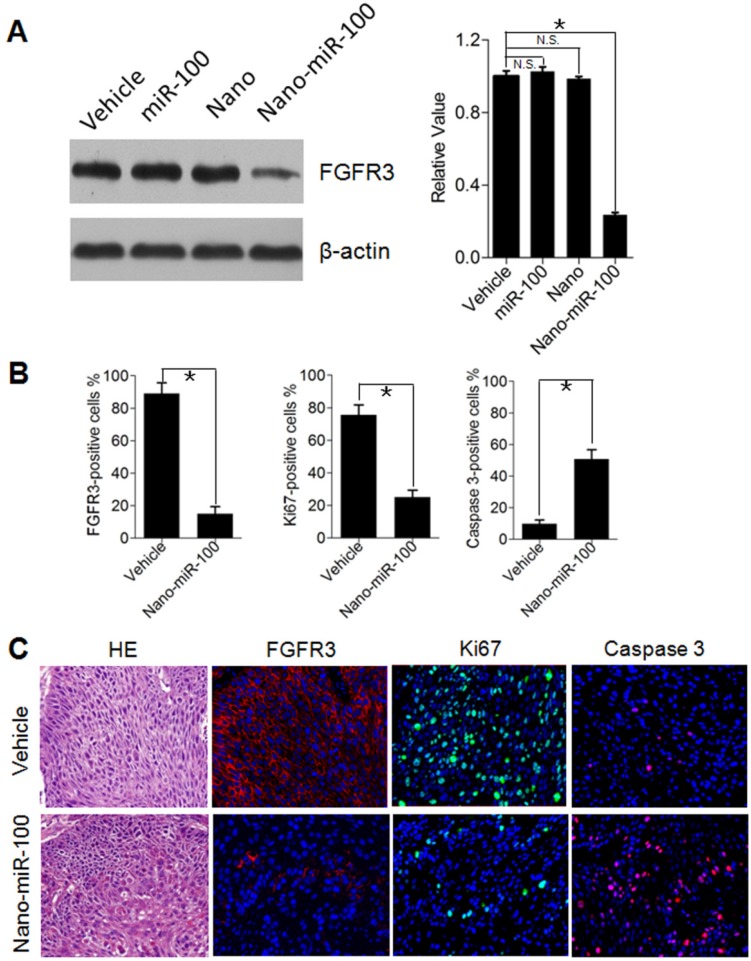
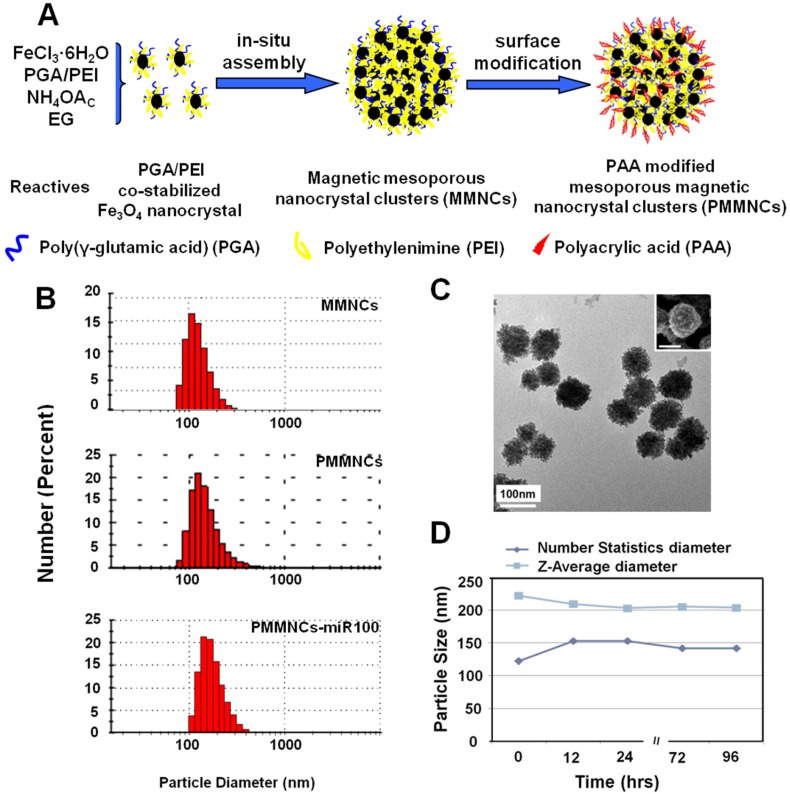
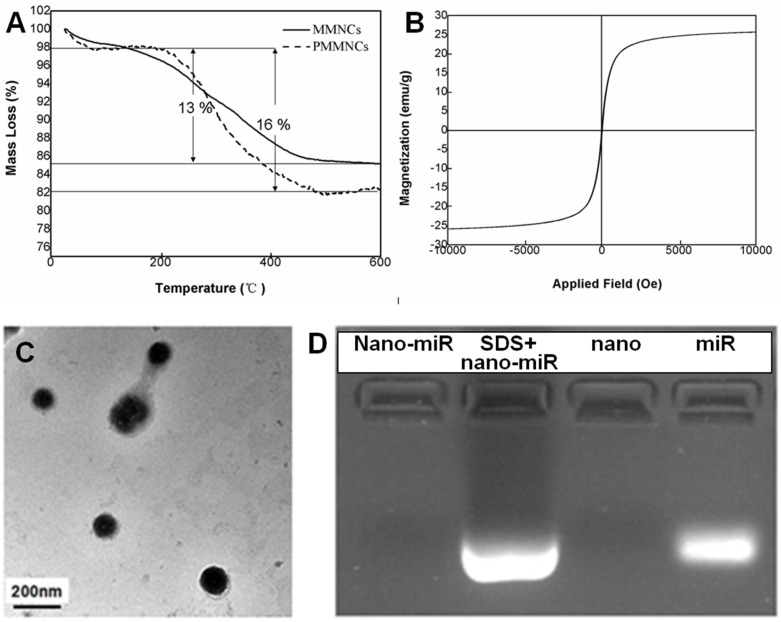
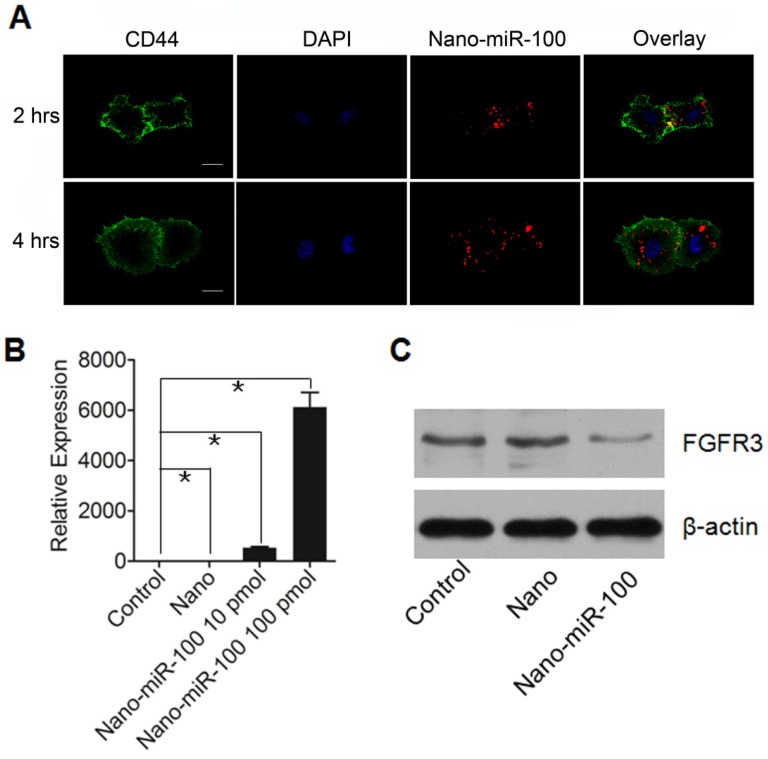
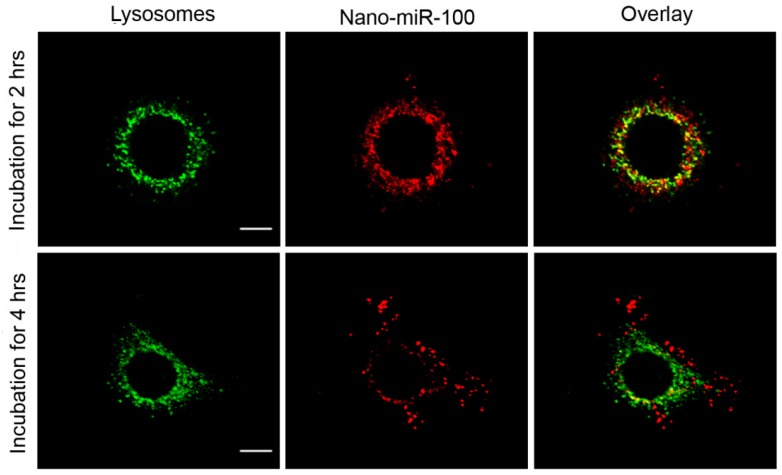
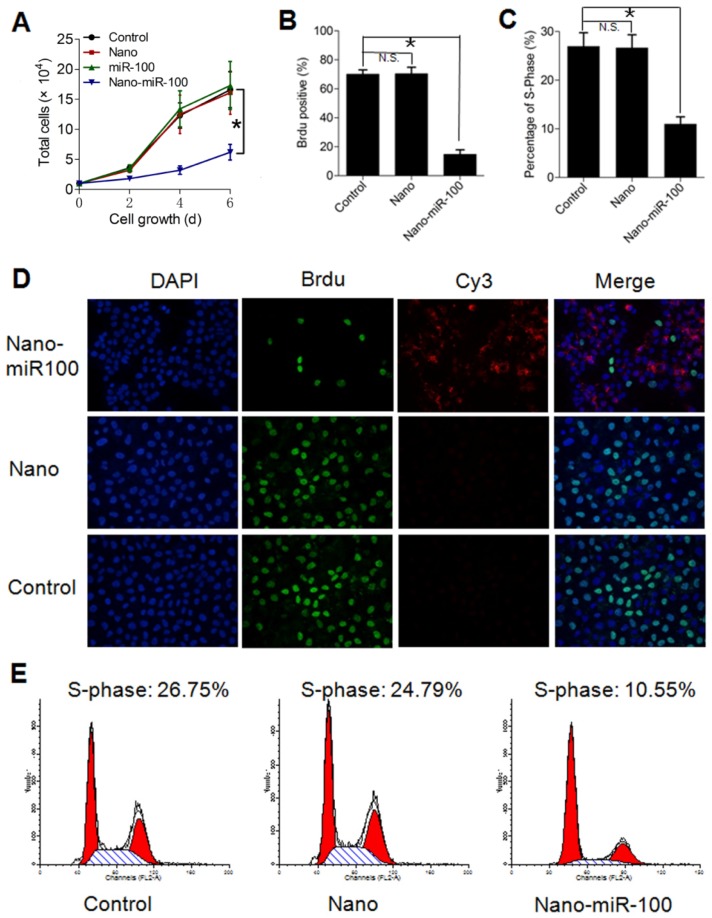
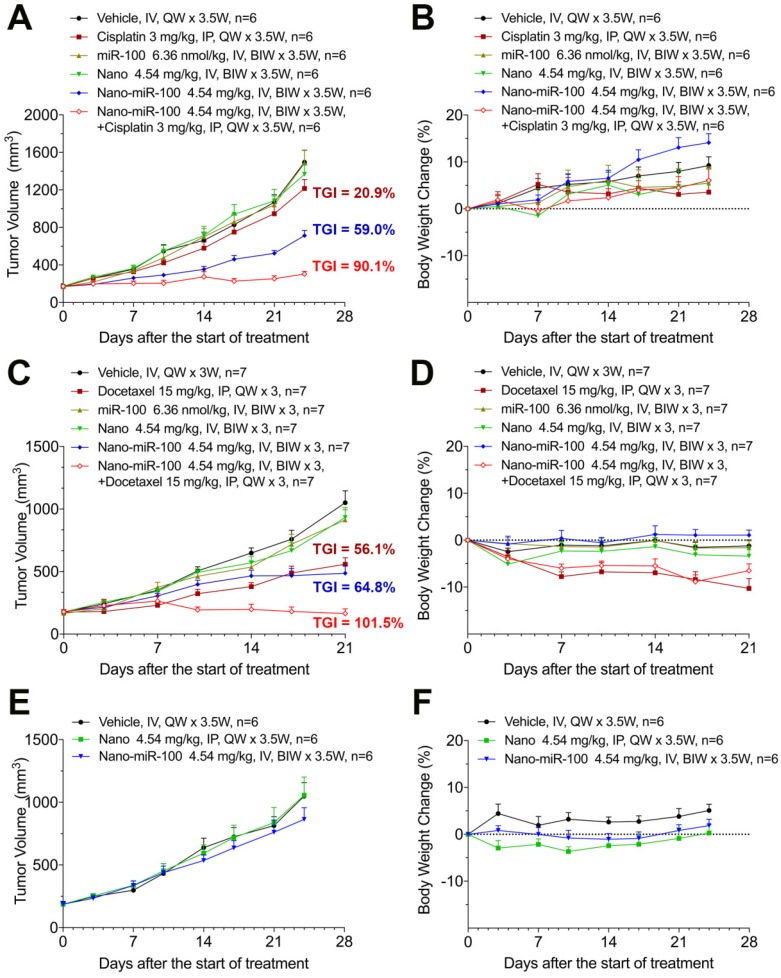
In precision cancer nanomedicine, the key is to identify the oncogenes that are responsible for tumorigenesis, based on which these genetic drivers can be each specifically regulated by a nanovector-directed, oncogene-targeted microRNA (miRNA) for tumor suppression. Fibroblast Growth Factor Receptor 3 (FGFR3) is such an oncogene. The molecular tumor-subtype harboring FGFR3 genomic alteration has been identified via genomic sequencing and referred to as the FGFR3-driven tumors. This genomics-based tumor classification provides further rationale for the development of the FGFR3-targeted miRNA replacement therapy in treating patients with FGFR3 gene abnormity. However, successful miRNA therapy has been hampered by lacking of an efficient delivery vehicle. In this study, a nanovector is developed for microRNA-100 (miR-100) -mediated FGFR3 regulation. The nanovector is composed of the mesoporous magnetic clusters that are conjugated with ternary polymers for efficient miRNA delivery. The miRNA-loading capacity of the nanovector is found to be high due to the polycation polymer functionalized mesoporous structure, showing excellent tumor cell transfection and pH-sensitive miRNA release. Delivery of miR-100 to cancer cells effectively down-regulates the expression of FGFR3, inhibits cell proliferation, and induces cell apoptosis . Patient-derived xenografts (PDXs) are used to evaluate the efficacy of miRNA delivery in the FGFR3-driven tumors. Notably, sharp contrasts are observed between the FGFR3-driven tumors and those without FGFR3 genomic alteration. Only the FGFR3-driven PDXs are significantly inhibited via miR-100 delivery while the non-FGFR3-driven PDXs are not affected, showing promise of precision cancer nanomedicine.
在精准癌症纳米医学中,关键在于识别导致肿瘤发生的致癌基因,在此基础上,这些基因驱动因子可分别通过纳米载体导向的、靶向致癌基因的微小RNA(miRNA)进行特异性调控,以抑制肿瘤。成纤维细胞生长因子受体3(FGFR3)就是这样一种致癌基因。通过基因组测序已鉴定出携带FGFR3基因组改变的分子肿瘤亚型,称为FGFR3驱动的肿瘤。这种基于基因组学的肿瘤分类为开发针对FGFR3基因异常患者的靶向FGFR3的miRNA替代疗法提供了进一步的理论依据。然而,由于缺乏有效的递送载体,miRNA治疗尚未取得成功。在本研究中,开发了一种用于微小RNA-100(miR-100)介导的FGFR3调控的纳米载体。该纳米载体由与三元聚合物共轭的介孔磁性簇组成,用于高效递送miRNA。由于聚阳离子聚合物功能化的介孔结构,该纳米载体的miRNA负载能力很高,显示出优异的肿瘤细胞转染和pH敏感的miRNA释放特性。将miR-100递送至癌细胞可有效下调FGFR3的表达,抑制细胞增殖并诱导细胞凋亡。利用患者来源的异种移植瘤(PDX)评估miRNA在FGFR3驱动的肿瘤中的递送效果。值得注意的是,在FGFR3驱动的肿瘤与无FGFR3基因组改变的肿瘤之间观察到明显差异。仅通过递送miR-100可显著抑制FGFR3驱动的PDX,而未FGFR3驱动的PDX则不受影响,这显示了精准癌症纳米医学的前景。