Kawai Eriko, Nakahara Hidehiro, Ueda Shin-Ya, Manabe Kou, Miyamoto Tadayoshi
Graduate School of Health Sciences, Morinomiya University of Medical Sciences, Osaka City, Osaka, Japan.
PLoS One. 2017 Mar 3;12(3):e0172841. doi: 10.1371/journal.pone.0172841. eCollection 2017.
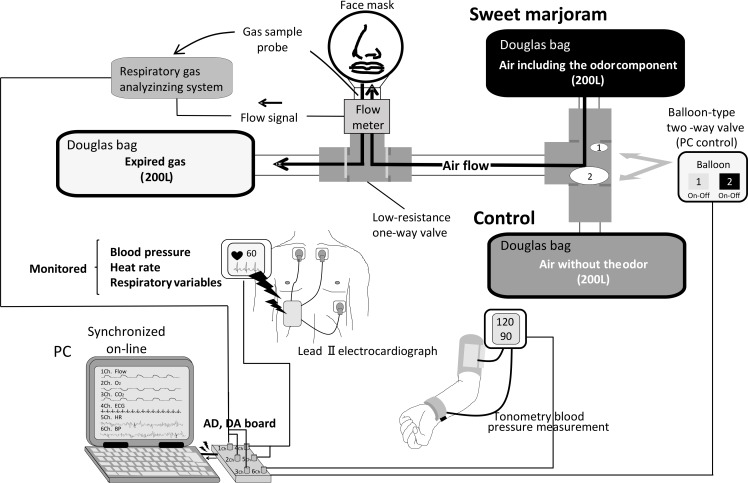
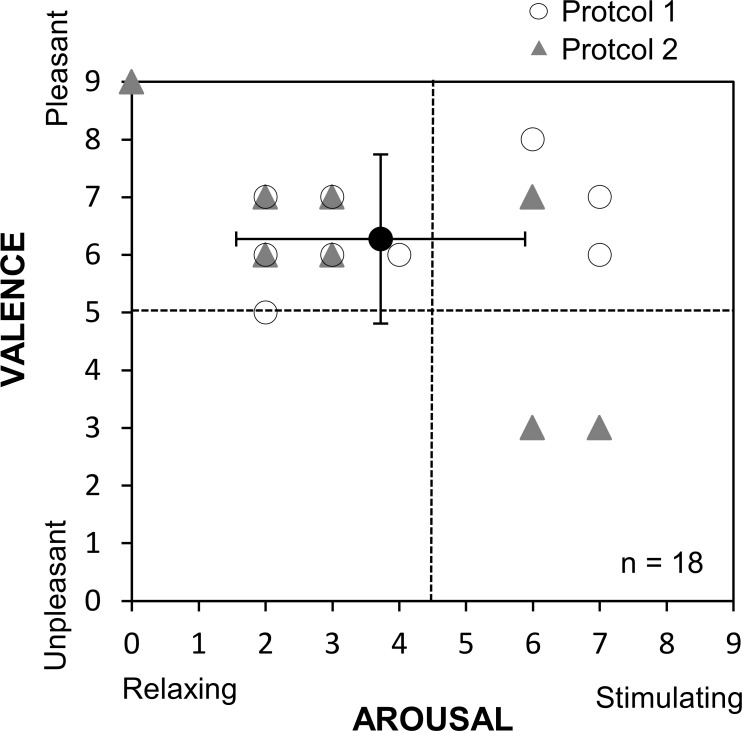
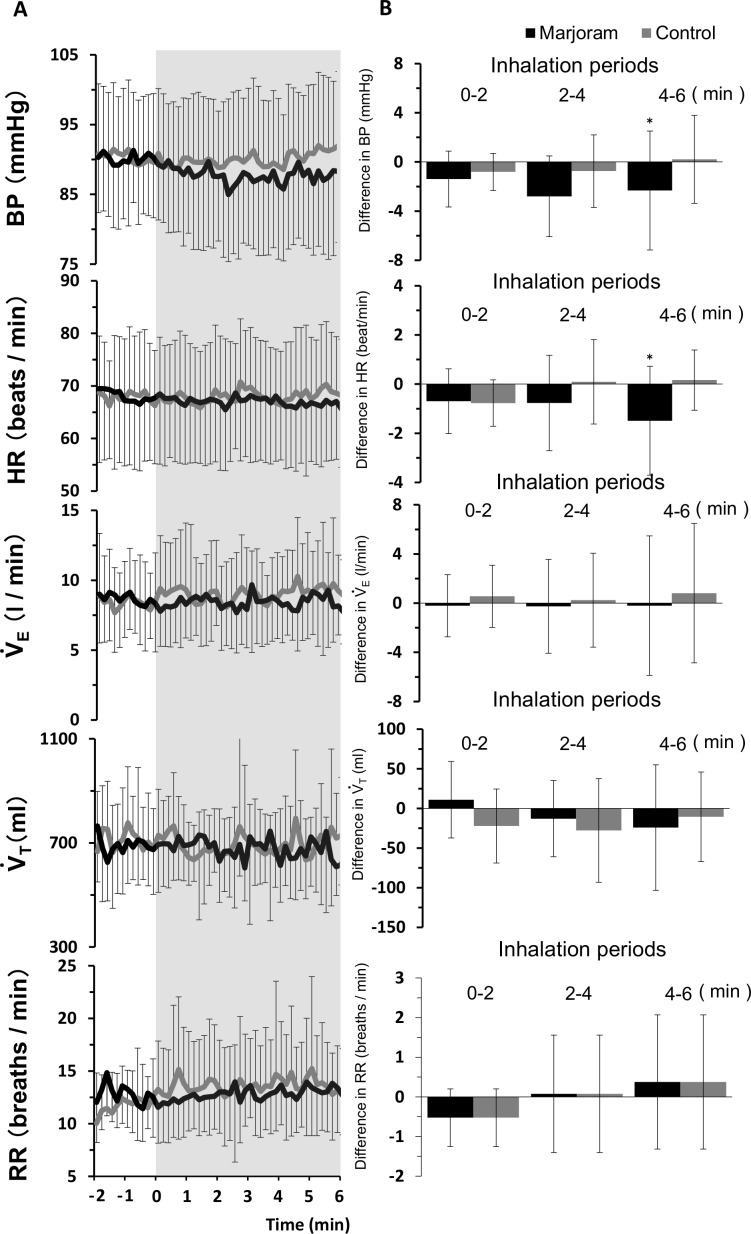
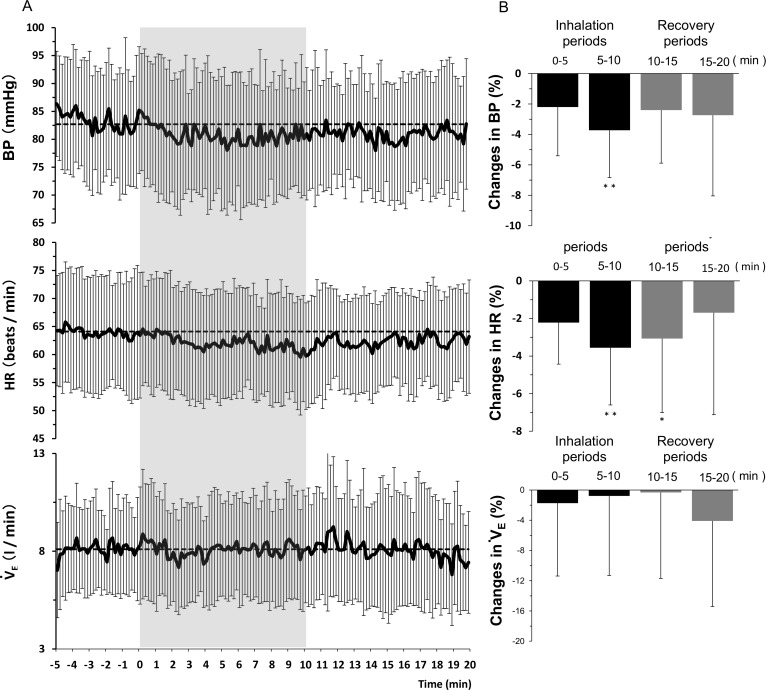
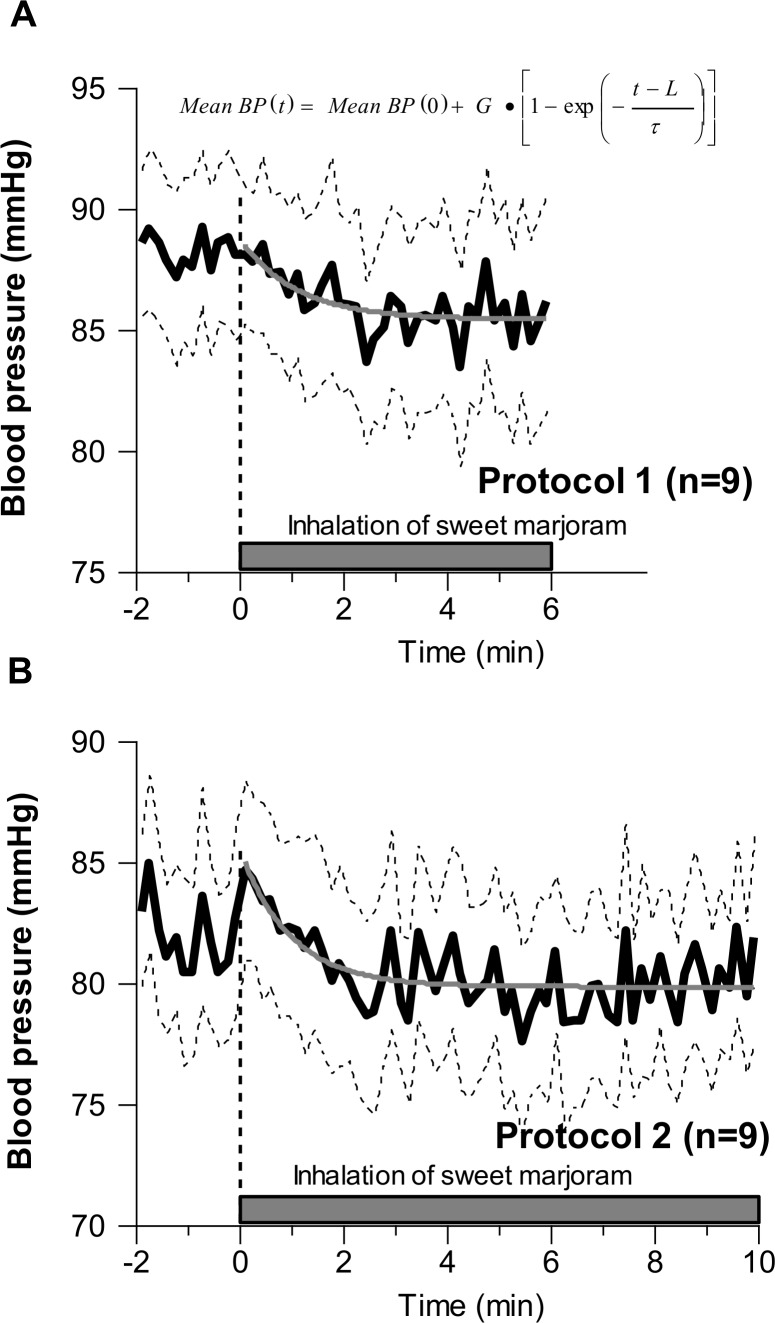
We aimed to develop a novel method to quantitatively evaluate the effects of odor stimulation on cardiorespiratory functions over time, and to examine the potential usefulness of clinical aromatherapy. Eighteen subjects participated. Nine people were assigned to each of the two resting protocols. Protocol 1: After resting for 2 min in a sitting position breathing room air, the subject inhaled either air or air containing sweet marjoram essential oil from the Douglas bag for 6 min, Protocol 2: After resting for 5 min in a supine position, the subject inhaled the essential oil for 10 min, and then recovered for 10 min breathing room air. All subjects inhaled the essential oil through a face mask attached to one-way valve, and beat-to-beat heart rate (HR) and arterial blood pressure (BP) as well as breath-by-breath respiratory variables were continuously recorded. In both protocols, during fragrance inhalation of the essential oil, time-dependent decrease in mean BP and HR were observed (P<0.05). During post-inhalation recovery, the significant fragrance-induced bradycardic effect lasted at least 5 min (- 3.1 ± 3.9% vs. pre-inhalation baseline value, p<0.05). The mean BP response at the start of odor stimulation was approximated by a first-order exponential model. However, such fragrance-induced changes were not observed in the respiratory variables. We established a novel approach to quantitatively and accurately evaluate the effects of quantitative odor stimulation on dynamic cardiorespiratory functions, and the duration of the effect. This methodological approach may be useful for scientific evaluation of aromatherapy as an approach to integrated medicine, and the mechanisms of action of physiological effects in fragrance compounds.
我们旨在开发一种新方法,以定量评估气味刺激随时间对心肺功能的影响,并检验临床芳香疗法的潜在效用。18名受试者参与了研究。将9人分配到两种静息方案中的每一种。方案1:受试者在坐位呼吸室内空气休息2分钟后,从道格拉斯袋中吸入空气或含有甜马郁兰精油的空气6分钟;方案2:受试者在仰卧位休息5分钟后,吸入精油10分钟,然后呼吸室内空气恢复10分钟。所有受试者均通过连接单向阀的面罩吸入精油,并连续记录逐搏心率(HR)、动脉血压(BP)以及逐次呼吸的呼吸变量。在两种方案中,吸入精油香气期间,均观察到平均血压和心率随时间下降(P<0.05)。在吸入后恢复期间,香气引起的显著心动过缓效应至少持续5分钟(-3.1±3.9% vs.吸入前基线值,p<0.05)。气味刺激开始时的平均血压反应可用一阶指数模型近似。然而,在呼吸变量中未观察到这种香气引起的变化。我们建立了一种新方法,可定量且准确地评估定量气味刺激对动态心肺功能的影响及其作用持续时间。这种方法学途径可能有助于对芳香疗法作为一种综合医学方法以及香料化合物生理效应的作用机制进行科学评估。