Ross Ian, Mejia Carlos, Melendez Johanna, Chan Philip A, Nunn Amy C, Powderly William, Goodenberger Katherine, Liu Jingxia, Mayer Kenneth H, Patel Rupa R
Division of Infectious Diseases, Washington University School of Medicine, St. Louis, Missouri, United States of America.
Division of Infectious Diseases, Roosevelt Hospital, Guatemala City, Guatemala.
PLoS One. 2017 Mar 3;12(3):e0173057. doi: 10.1371/journal.pone.0173057. eCollection 2017.
HIV continues to be a major health concern with approximately 2.1 million new infections occurring worldwide in 2015. In Central America, Guatemala had the highest incident number of HIV infections (3,700) in 2015. Antiretroviral pre-exposure prophylaxis (PrEP) was recently recommended by the World Health Organization (WHO) as an efficacious intervention to prevent HIV transmission. PrEP implementation efforts are underway in Guatemala and success will require providers that are knowledgeable and willing to prescribe PrEP. We sought to explore current PrEP awareness and prescribing attitudes among Guatemalan physicians in order to inform future PrEP implementation efforts.
We conducted a cross-sectional survey of adult internal medicine physicians at the main teaching hospital in Guatemala City in March 2015. The survey included demographics, medical specialty, years of HIV patient care, PrEP awareness, willingness to prescribe PrEP, previous experience with post-exposure prophylaxis, and concerns about PrEP. The primary outcome was willingness to prescribe PrEP, which was assessed using a 5-point Likert scale for different at-risk population scenarios. Univariate and multivariate logistic regression was performed to identify predictors for willingness to prescribe PrEP.
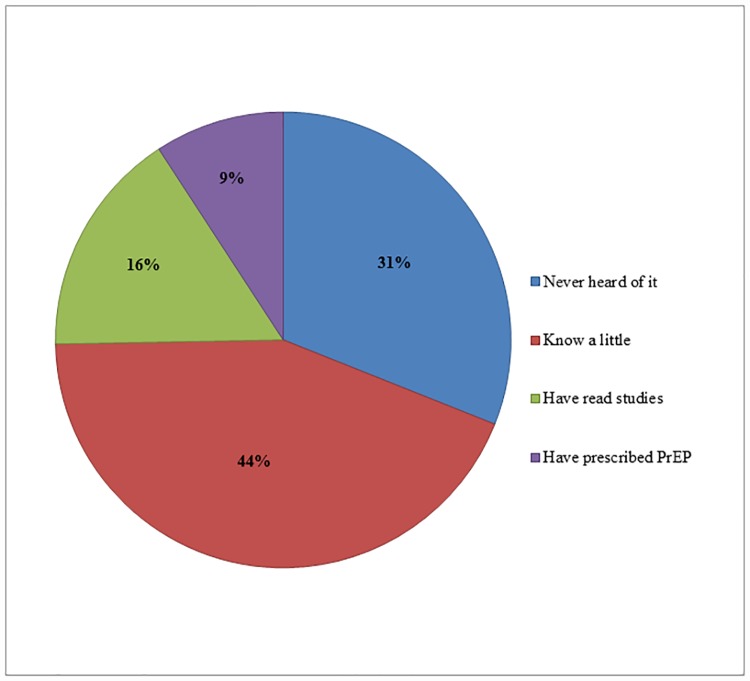
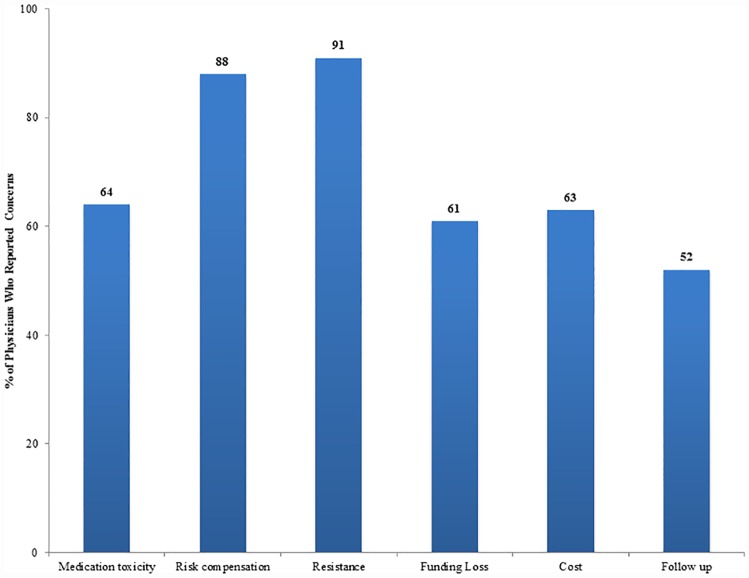
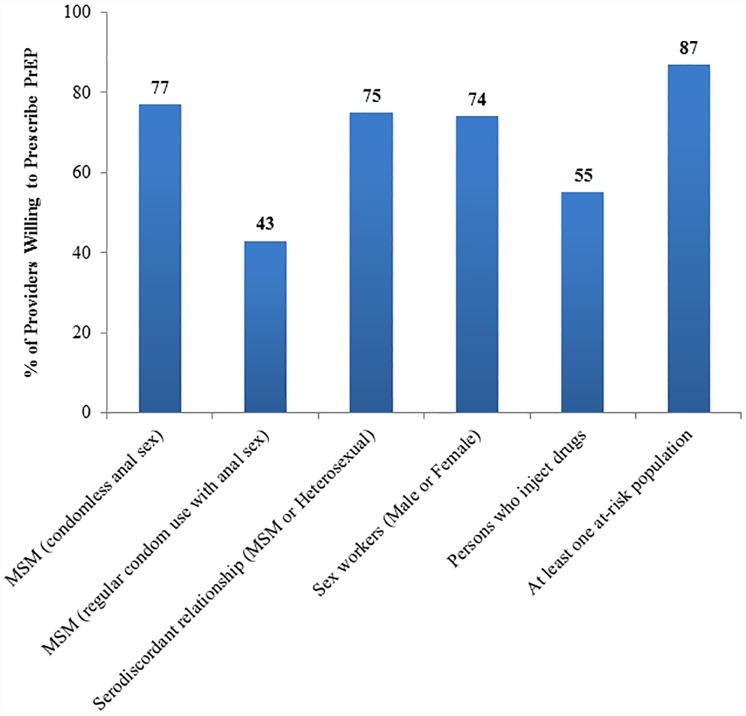
Eighty-seven physicians completed the survey; 66% were male, 64% were internal medicine residency trainees, and 10% were infectious disease (ID) specialists. Sixty-nine percent of physicians were PrEP aware, of which 9% had previously prescribed PrEP. Most (87%) of respondents were willing to prescribe PrEP to men who have sex with men (MSM), sex workers, injection drug users, or HIV-uninfected persons having known HIV-positive sexual partners. Concerns regarding PrEP included development of resistance (92%), risk compensation (90%), and cost (64%). Univariate logistic regression showed that younger age, being a resident trainee, and being a non-ID specialist were significant predictors for willingness to prescribe PrEP. In multivariate logistic regression, being a non-ID specialist was a significant predictor.
Guatemalan physicians at an urban public hospital were PrEP aware and willing to prescribe, but few have actually done so yet. Future education programs should address the concerns identified, including the low potential for the development of antiretroviral resistance. These findings can aid PrEP implementation efforts in Guatemala.
艾滋病病毒(HIV)仍然是一个重大的健康问题,2015年全球约有210万新发感染病例。在中美洲,危地马拉在2015年的HIV感染病例数最高(3700例)。世界卫生组织(WHO)最近推荐抗逆转录病毒药物暴露前预防(PrEP)作为预防HIV传播的有效干预措施。危地马拉正在开展PrEP实施工作,而成功实施将需要有知识且愿意开具PrEP处方的医疗服务提供者。我们试图探究危地马拉医生当前对PrEP的知晓情况及开具处方的态度,以便为未来的PrEP实施工作提供参考。
2015年3月,我们对危地马拉城主要教学医院的成年内科医生进行了一项横断面调查。调查内容包括人口统计学信息、医学专业、护理HIV患者的年限、对PrEP的知晓情况、开具PrEP处方的意愿、暴露后预防的既往经验以及对PrEP的担忧。主要结果是开具PrEP处方的意愿,通过针对不同高危人群情况使用5点李克特量表进行评估。进行单因素和多因素逻辑回归分析以确定开具PrEP处方意愿的预测因素。
87名医生完成了调查;66%为男性,64%为内科住院医师培训学员,10%为传染病(ID)专科医生。69%的医生知晓PrEP,其中9%曾开具过PrEP处方。大多数(87%)受访者愿意为男男性行为者(MSM)、性工作者、注射吸毒者或有已知HIV阳性性伴侣的未感染HIV者开具PrEP处方。对PrEP的担忧包括耐药性产生(92%)、风险代偿(90%)和成本(64%)。单因素逻辑回归显示,年龄较小、为住院医师培训学员以及非ID专科医生是开具PrEP处方意愿的显著预测因素。在多因素逻辑回归中,非ID专科医生是显著预测因素。
危地马拉一家城市公立医院的医生知晓PrEP且愿意开具处方,但实际开具过的医生较少。未来的教育项目应解决已发现的担忧问题,包括抗逆转录病毒耐药性产生的可能性较低这一问题。这些研究结果有助于危地马拉的PrEP实施工作。