Ferron Joelle C, Brunette Mary F, Geiger Pamela, Marsch Lisa A, Adachi-Mejia Anna M, Bartels Stephen J
Health Promotion Research Center at Dartmouth, Department of Psychiatry, Dartmouth Hitchcock Medical Center, Concord, NH, United States.
Center for Technology and Behavioral Health, Department of Psychiatry, Dartmouth College, Lebanon, NH, United States.
JMIR Hum Factors. 2017 Mar 3;4(1):e7. doi: 10.2196/humanfactors.5933.
Smoking is one of the top preventable causes of mortality in people with psychotic disorders such as schizophrenia. Cessation treatment improves abstinence outcomes, but access is a barrier. Mobile phone apps are one way to increase access to cessation treatment; however, whether they are usable by people with psychotic disorders, who often have special learning needs, is not known.
Researchers reviewed 100 randomly selected apps for smoking cessation to rate them based on US guidelines for nicotine addiction treatment and to categorize them based on app functions. We aimed to test the usability and usefulness of the top-rated apps in 21 smokers with psychotic disorders.
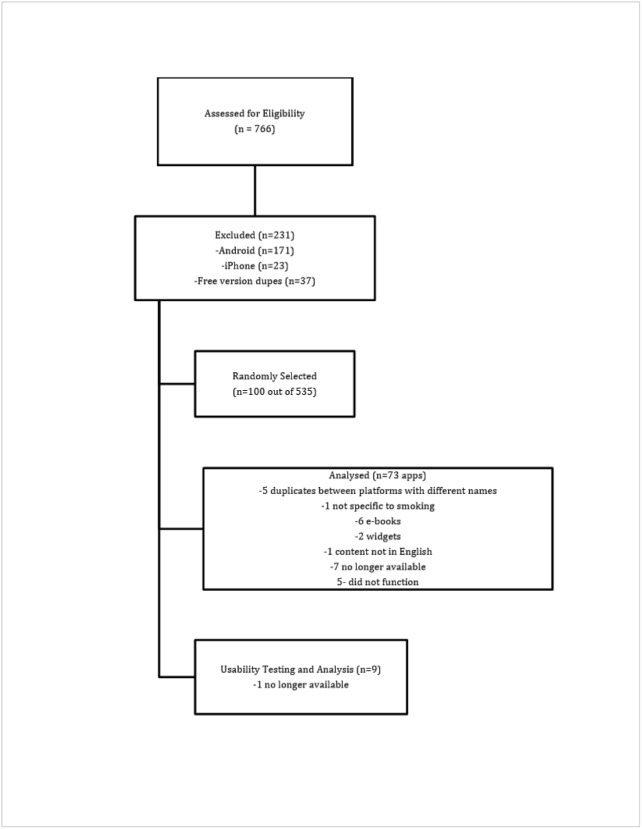
We identified 766 smoking cessation apps and randomly selected 100 for review. Two independent reviewers rated each app with the Adherence Index to US Clinical Practice Guideline for Treating Tobacco Use and Dependence. Then, smokers with psychotic disorders evaluated the top 9 apps within a usability testing protocol. We analyzed quantitative results using descriptive statistics and t tests. Qualitative data were open-coded and analyzed for themes.
Regarding adherence to practice guidelines, most of the randomly sampled smoking cessation apps scored poorly-66% rated lower than 10 out of 100 on the Adherence Index (Mean 11.47, SD 11.8). Regarding usability, three common usability problems emerged: text-dense content, abstract symbols on the homepage, and subtle directions to edit features.
In order for apps to be effective and usable for this population, developers should utilize a balance of text and simple design that facilitate ease of navigation and content comprehension that will help people learn quit smoking skills.
吸烟是精神分裂症等精神障碍患者可预防的主要死亡原因之一。戒烟治疗可改善戒烟效果,但获取治疗存在障碍。手机应用程序是增加戒烟治疗可及性的一种方式;然而,对于常有特殊学习需求的精神障碍患者而言,这些应用程序是否可用尚不清楚。
研究人员审查了100个随机挑选的戒烟应用程序,根据美国尼古丁成瘾治疗指南对其进行评分,并根据应用程序功能进行分类。我们旨在测试21名患有精神障碍的吸烟者中排名最高的应用程序的可用性和实用性。
我们识别出766个戒烟应用程序,并随机挑选100个进行审查。两名独立评审员使用《美国治疗烟草使用和依赖临床实践指南》依从性指数对每个应用程序进行评分。然后,患有精神障碍的吸烟者在可用性测试方案中对排名前9的应用程序进行评估。我们使用描述性统计和t检验分析定量结果。定性数据进行开放编码并分析主题。
关于对实践指南的依从性,大多数随机抽样的戒烟应用程序得分较低——66%在依从性指数上的评分低于100分中的10分(均值11.47,标准差11.8)。关于可用性,出现了三个常见的可用性问题:文本密集的内容、主页上的抽象符号以及编辑功能的隐晦指示。
为使应用程序对该人群有效且可用,开发者应在文本和简单设计之间取得平衡,以方便导航并促进内容理解,从而帮助人们学习戒烟技巧。