Fernández-Calle Rosalía, Vicente-Rodríguez Marta, Gramage Esther, Pita Jimena, Pérez-García Carmen, Ferrer-Alcón Marcel, Uribarri María, Ramos María P, Herradón Gonzalo
Pharmacology Lab, Department of Pharmaceutical and Health Sciences, Facultad de Farmacia, Universidad CEU San Pablo, Urb. Montepríncipe, 28668, Boadilla del Monte, Madrid, Spain.
Biochemistry and Molecular Biology lab, Department of Chemistry and Biochemistry, Facultad de Farmacia, Universidad CEU San Pablo, Madrid, Spain.
J Neuroinflammation. 2017 Mar 4;14(1):46. doi: 10.1186/s12974-017-0823-8.
Pleiotrophin (PTN) is a cytokine found highly upregulated in the brain in different disorders characterized by overt neuroinflammation such as neurodegenerative diseases, drug addiction, traumatic injury, and ischemia. In the present work, we have explored whether PTN modulates neuroinflammation and if Toll-like receptor 4 (TLR4), crucial in the initiation of an immune response, is involved.
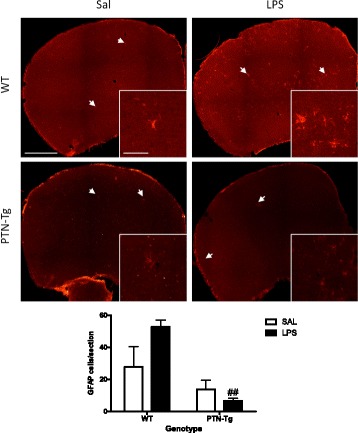
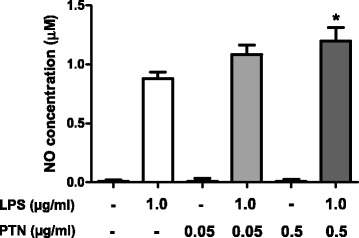
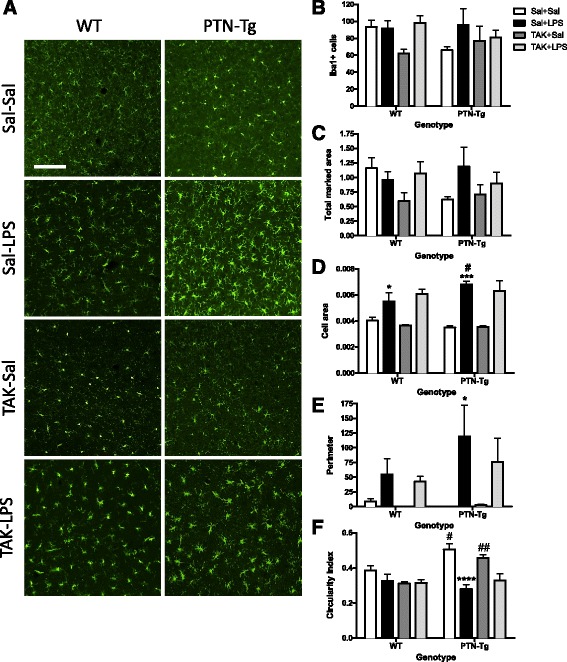
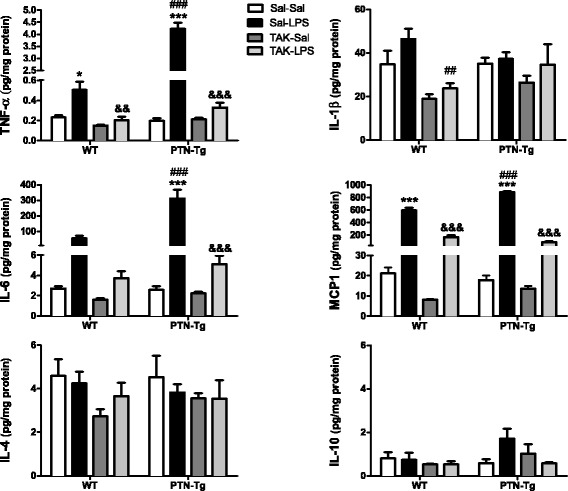
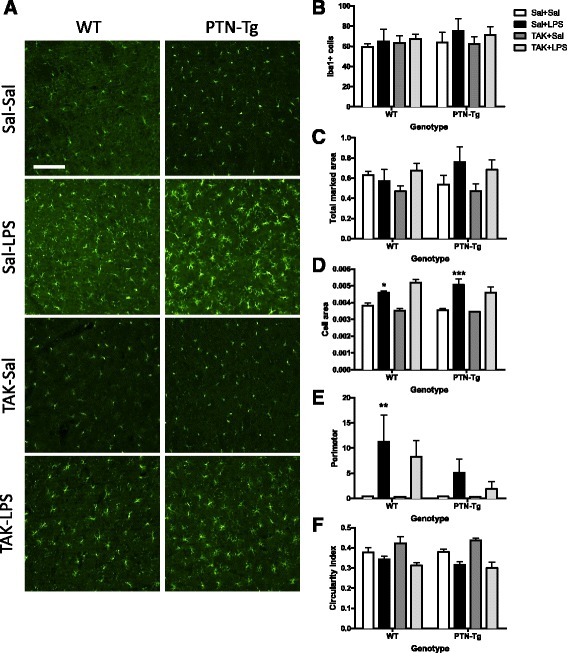
In immunohistochemistry assays, we studied lipopolysaccharide (LPS, 7.5 mg/kg i.p.)-induced changes in glial fibrillary acidic protein (GFAP, astrocyte marker) and ionized calcium-binding adaptor molecule 1 (Iba1, microglia marker) expression in the prefrontal cortex (PFC) and striatum of mice with transgenic PTN overexpression in the brain (PTN-Tg) and in wild-type (WT) mice. Cytokine protein levels were assessed in the PFC by X-MAP technology. The influence of TLR4 signaling in LPS effects in both genotypes was assessed by pretreatment with the TLR4 antagonist (TAK-242, 3.0 mg/kg i.p.). Murine BV2 microglial cells were treated with PTN (0.5 μg/ml) and LPS (1.0 μg/ml) and assessed for the release of nitric oxide (NO).
We found that LPS-induced microglial activation is significantly increased in the PFC of PTN-Tg mice compared to that of WT mice. The levels of TNF-α, IL-6, and MCP-1 in response to LPS were significantly increased in the PFC of PTN-Tg mice compared to that of WT mice. Pretreatment with TAK-242 efficiently blocked increases in cytokine contents in a similar manner in both genotypes. Concomitant incubation of BV2 cells with LPS and PTN significantly potentiated the production of NO compared to cells only treated with LPS.
Our findings identify for the first time that PTN is a novel and potent regulator of neuroinflammation. Pleiotrophin potentiates LPS-stimulated microglia activation. Our results suggest that regulation of the PTN signaling pathways may constitute new therapeutic opportunities particularly in those neurological disorders characterized by increased PTN cerebral levels and neuroinflammation.
多效生长因子(PTN)是一种细胞因子,在以明显神经炎症为特征的不同疾病(如神经退行性疾病、药物成瘾、创伤性损伤和缺血)的大脑中高度上调。在本研究中,我们探讨了PTN是否调节神经炎症以及在免疫反应启动中起关键作用的Toll样受体4(TLR4)是否参与其中。
在免疫组织化学分析中,我们研究了脂多糖(LPS,7.5mg/kg腹腔注射)诱导的胶质纤维酸性蛋白(GFAP,星形胶质细胞标志物)和离子钙结合衔接分子1(Iba1,小胶质细胞标志物)在脑内过表达转基因PTN的小鼠(PTN-Tg)和野生型(WT)小鼠的前额叶皮质(PFC)和纹状体中的表达变化。通过X-MAP技术评估PFC中的细胞因子蛋白水平。通过用TLR4拮抗剂(TAK-242,3.0mg/kg腹腔注射)预处理来评估TLR4信号传导对两种基因型中LPS效应的影响。用PTN(0.5μg/ml)和LPS(1.0μg/ml)处理小鼠BV2小胶质细胞,并评估一氧化氮(NO)的释放。
我们发现,与WT小鼠相比,PTN-Tg小鼠PFC中LPS诱导的小胶质细胞活化显著增加。与WT小鼠相比,PTN-Tg小鼠PFC中对LPS反应的TNF-α、IL-6和MCP-1水平显著增加。用TAK-242预处理以类似方式有效阻断了两种基因型中细胞因子含量的增加。与仅用LPS处理的细胞相比,BV2细胞与LPS和PTN共同孵育显著增强了NO的产生。
我们的研究首次确定PTN是神经炎症的一种新型强效调节剂。多效生长因子增强LPS刺激的小胶质细胞活化。我们的结果表明,PTN信号通路的调节可能构成新的治疗机会,特别是在那些以脑内PTN水平升高和神经炎症为特征的神经疾病中。