Suchorska Wiktoria Maria, Augustyniak Ewelina, Łukjanow Magdalena
Radiobiology Laboratory, Greater Poland Cancer Centre, 61‑866 Poznan, Poland.
Mol Med Rep. 2017 Apr;15(4):1952-1962. doi: 10.3892/mmr.2017.6270. Epub 2017 Mar 1.
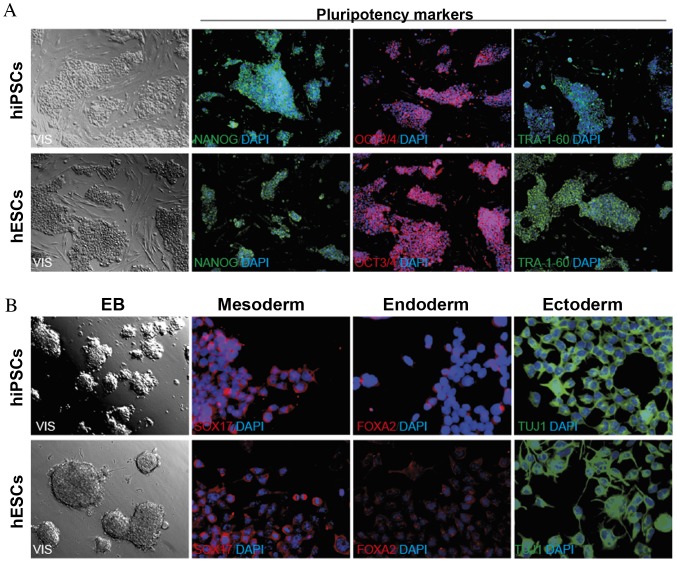
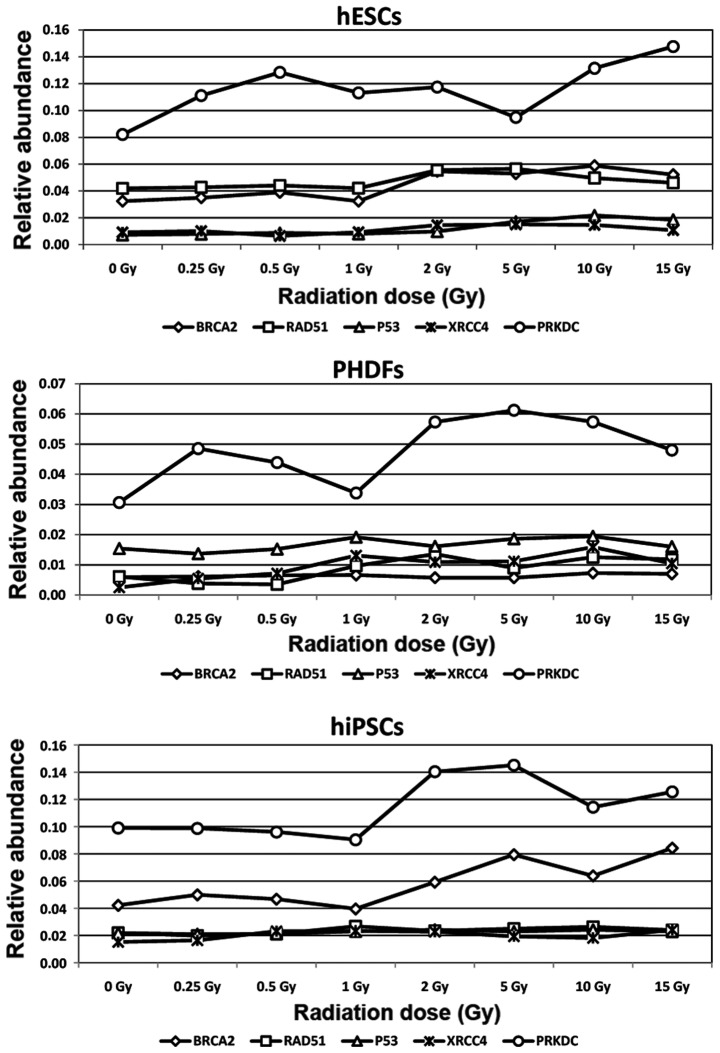
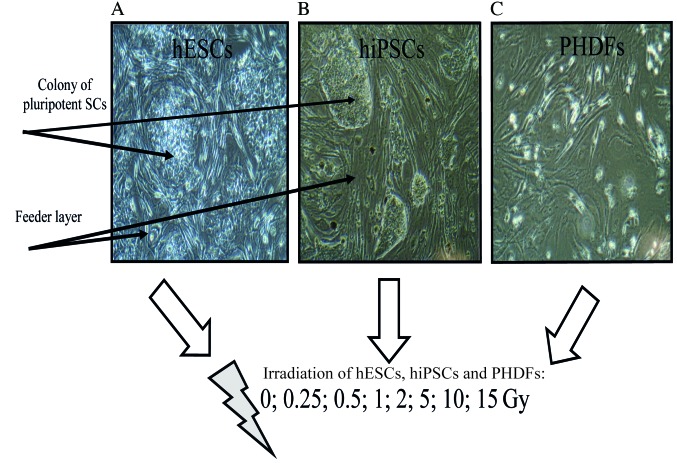
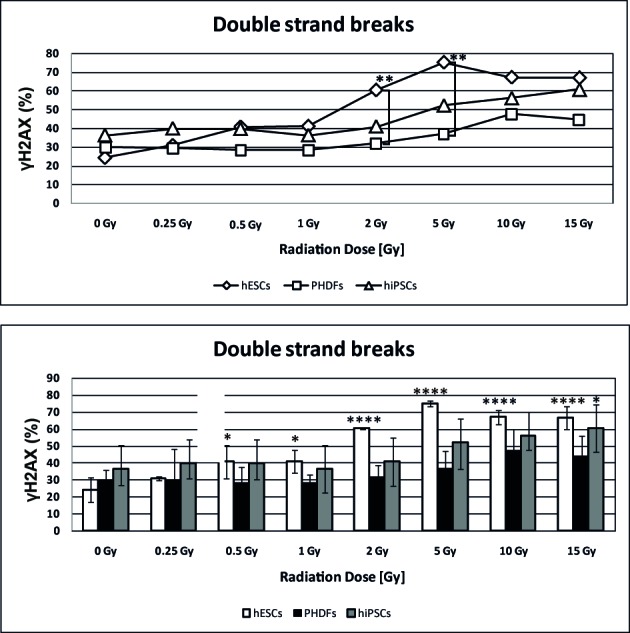
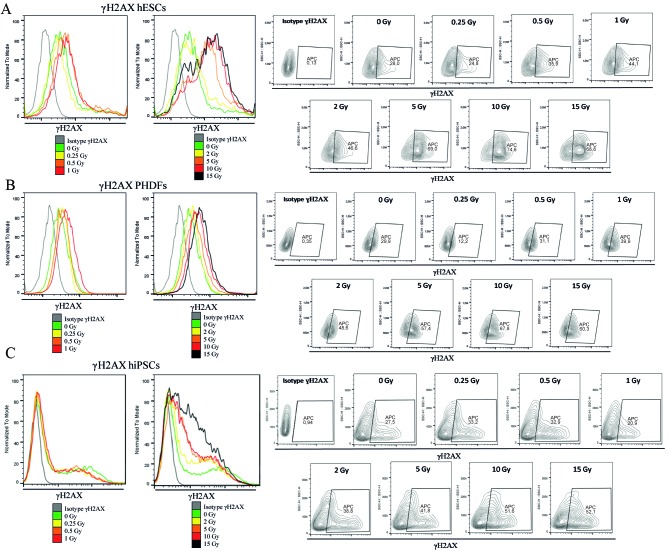
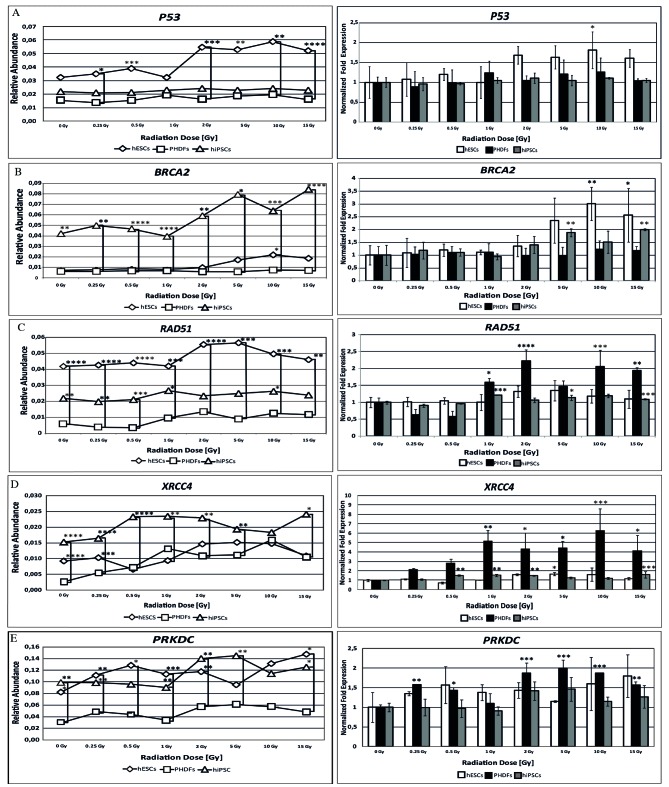
Despite the well-demonstrated efficacy of stem cell (SC) therapy, this approach has a number of key drawbacks. One important concern is the response of pluripotent SCs to treatment with ionizing radiation (IR), given that SCs used in regenerative medicine will eventually be exposed to IR for diagnostic or treatment‑associated purposes. Therefore, the aim of the present study was to examine and compare early IR‑induced responses of pluripotent SCs to assess their radioresistance and radiosensitivity. In the present study, 3 cell lines; human embryonic SCs (hESCs), human induced pluripotent SCs (hiPSCs) and primary human dermal fibroblasts (PHDFs); were exposed to IR at doses ranging from 0 to 15 gray (Gy). Double strand breaks (DSBs), and the gene expression of the following DNA repair genes were analyzed: P53; RAD51; BRCA2; PRKDC; and XRCC4. hiPSCs demonstrated greater radioresistance, as fewer DSBs were identified, compared with hESCs. Both pluripotent SC lines exhibited distinct gene expression profiles in the most common DNA repair genes that are involved in homologous recombination, non‑homologous end‑joining and enhanced DNA damage response following IR exposure. Although hESCs and hiPSCs are equivalent in terms of capacity for pluripotency and differentiation into 3 germ layers, the results of the present study indicate that these 2 types of SCs differ in gene expression following exposure to IR. Consequently, further research is required to determine whether hiPSCs and hESCs are equally safe for application in clinical practice. The present study contributes to a greater understanding of DNA damage response (DDR) mechanisms activated in pluripotent SCs and may aid in the future development of safe SC‑based clinical protocols.
尽管干细胞(SC)疗法已被充分证明具有疗效,但这种方法存在一些关键缺点。一个重要问题是多能干细胞对电离辐射(IR)治疗的反应,因为再生医学中使用的干细胞最终会因诊断或治疗相关目的而暴露于IR。因此,本研究的目的是检查和比较IR早期诱导的多能干细胞反应,以评估它们的抗辐射性和辐射敏感性。在本研究中,3种细胞系,即人胚胎干细胞(hESCs)、人诱导多能干细胞(hiPSCs)和原代人皮肤成纤维细胞(PHDFs),接受了0至15格雷(Gy)剂量的IR照射。分析了双链断裂(DSBs)以及以下DNA修复基因的基因表达:P53;RAD51;BRCA2;PRKDC;和XRCC4。与hESCs相比,hiPSCs表现出更强的抗辐射性,因为鉴定出的DSBs较少。两种多能干细胞系在参与同源重组、非同源末端连接和IR照射后增强的DNA损伤反应的最常见DNA修复基因中均表现出独特的基因表达谱。尽管hESCs和hiPSCs在多能性和分化为3个胚层的能力方面相当,但本研究结果表明,这两种类型的干细胞在暴露于IR后的基因表达方面存在差异。因此,需要进一步研究以确定hiPSCs和hESCs在临床实践中的应用是否同样安全。本研究有助于更深入地了解多能干细胞中激活的DNA损伤反应(DDR)机制,并可能有助于未来基于干细胞的安全临床方案的开发。