State Key Laboratory of Metastable Materials Science and Technology, Yanshan University, Qinhuangdao 066004, China.
Hebei Key Laboratory of Applied Chemistry, School of Environmental and Chemical Engineering, Yanshan University, Qinhuangdao 066004, China.
Sci Rep. 2017 Mar 8;7:44076. doi: 10.1038/srep44076.
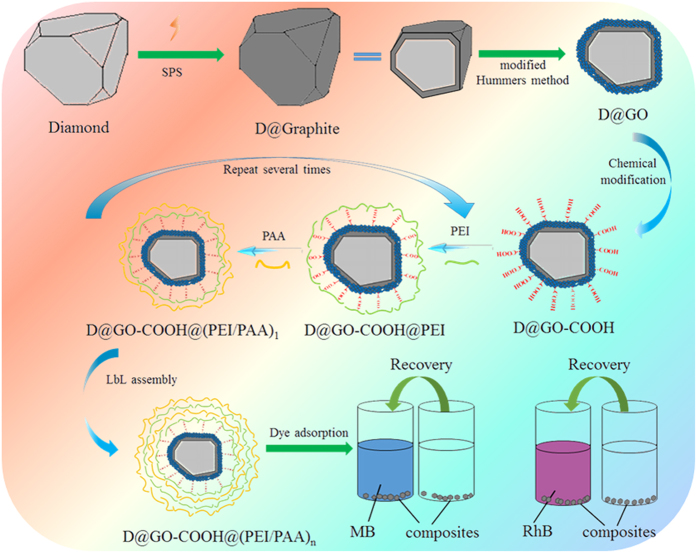
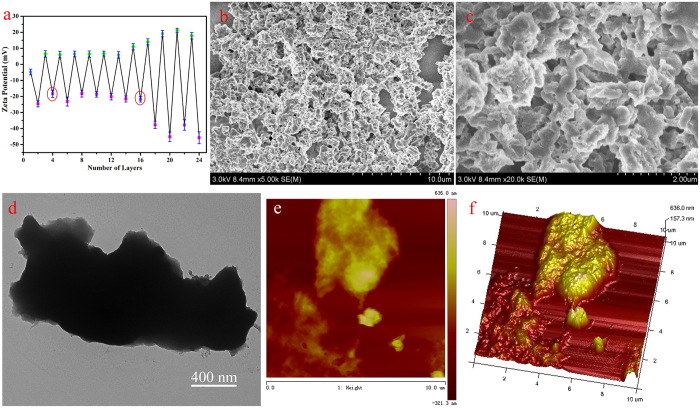
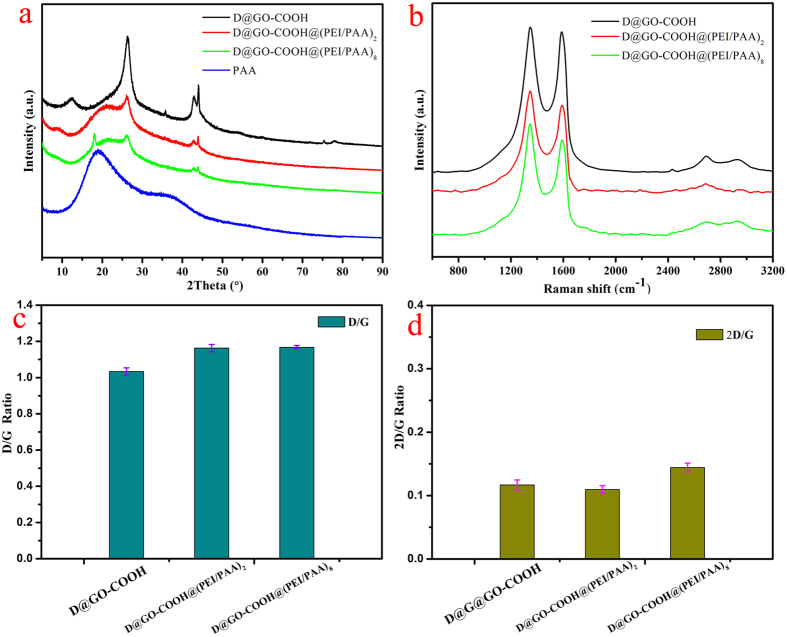
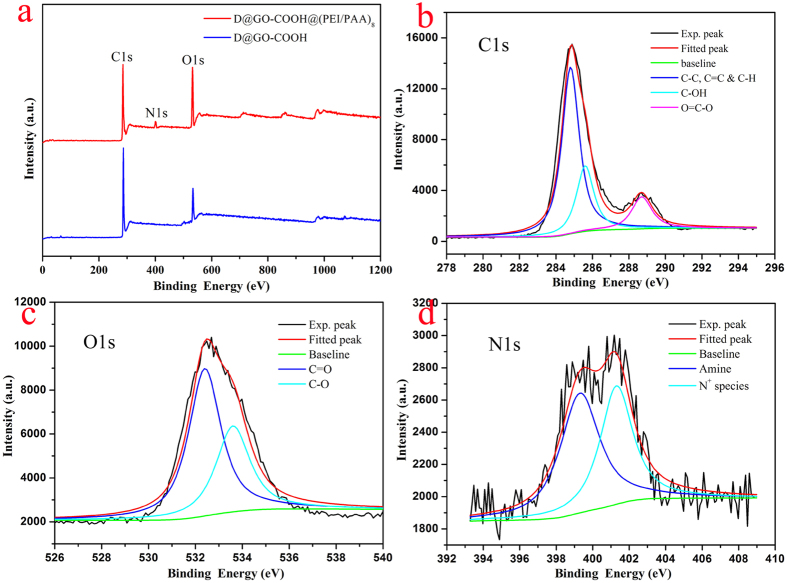
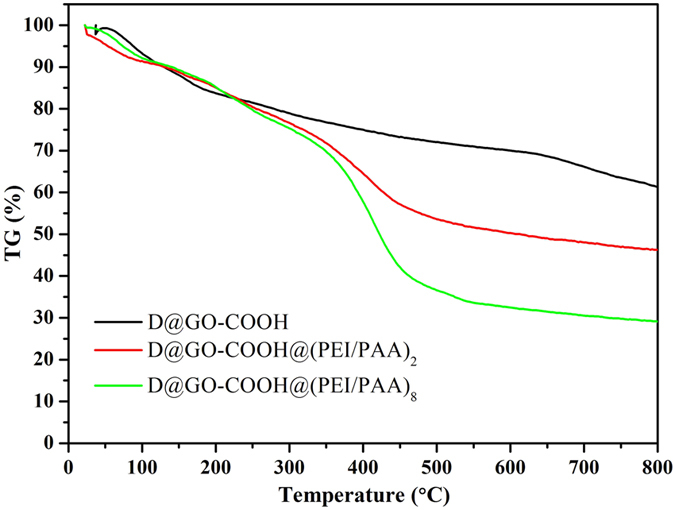
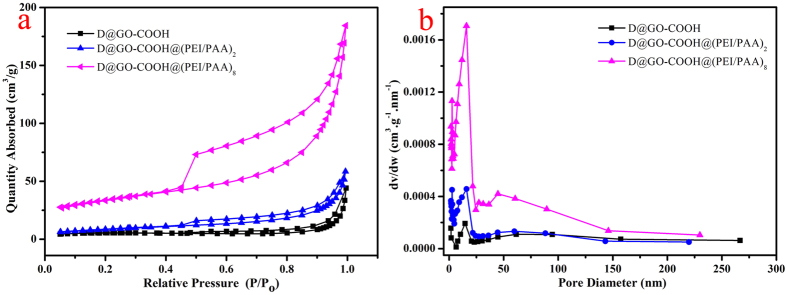
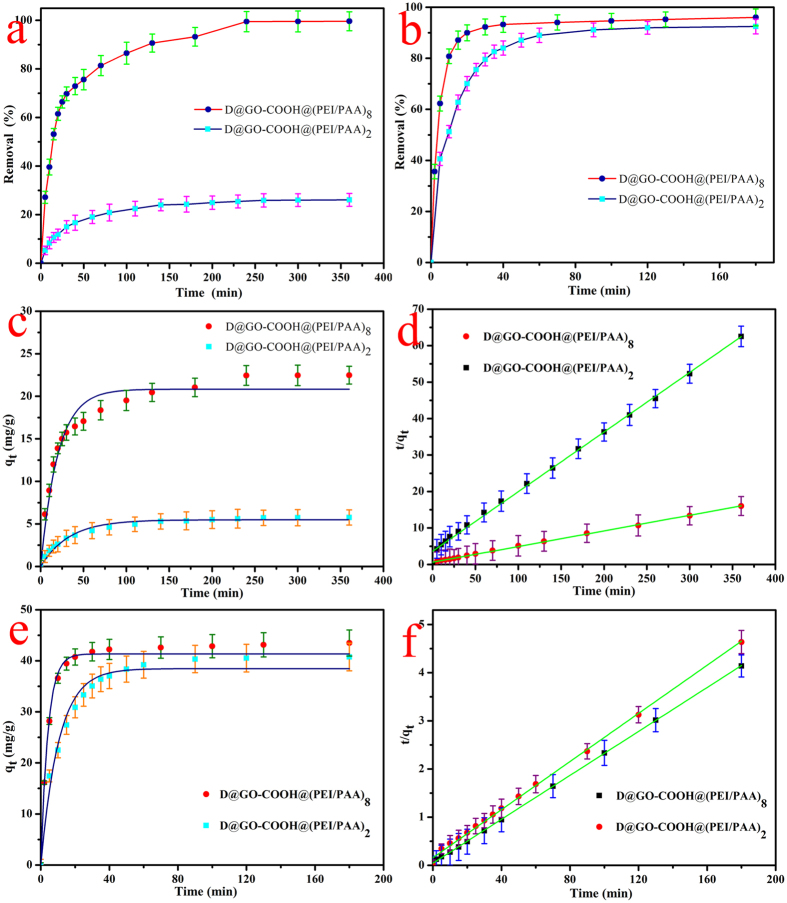
The effective chemical modification and self-assembly of diamond-based hierarchical composite materials are of key importance for a broad range of diamond applications. Herein, we report the preparation of novel core-shell diamond-based nanocomposites for dye adsorption toward wastewater treatment through a layer-by-layer (LbL) assembled strategy. The synthesis of the reported composites began with the carboxyl functionalization of microdiamond by the chemical modification of diamond@graphene oxide composite through the oxidation of diamond@graphite. The carboxyl-terminated microdiamond was then alternatively immersed in the aqueous solution of amine-containing polyethylenimine and carboxyl-containing poly acrylic acid, which led to the formation of adsorption layer on diamond surface. Alternating (self-limiting) immersions in the solutions of the amine-containing and carboxyl-containing polymers were continued until the desired number of shell layers were formed around the microdiamond. The obtained core-shell nanocomposites were successfully synthesized and characterized by morphological and spectral techniques, demonstrating higher surface areas and mesoporous structures for good dye adsorption capacities than nonporous solid diamond particles. The LbL-assembled core-shell nanocomposites thus obtained demonstrated great adsorption capacity by using two model dyes as pollutants for wastewater treatment. Therefore, the present work on LbL-assembled diamond-based composites provides new alternatives for developing diamond hybrids as well as nanomaterials towards wastewater treatment applications.
通过层层自组装策略,制备了新型核壳结构金刚石基纳米复合材料,用于染料吸附处理废水。本研究报告了一种将金刚石@graphene oxide 复合材料通过金刚石@石墨的氧化进行化学修饰,实现微金刚石羧基功能化的方法,进而制备了报道的复合材料。然后,将羧基化的微金刚石交替浸入含有胺的聚乙烯亚胺和含有羧酸的聚丙烯酸的水溶液中,在金刚石表面形成吸附层。通过交替(自限制)浸入含有胺和羧酸的聚合物溶液中,继续进行聚合反应,直到在微金刚石周围形成所需数量的壳层。通过形态学和光谱技术成功合成和表征了所得核壳纳米复合材料,与无孔固体金刚石颗粒相比,其具有更高的比表面积和中孔结构,因此具有更好的染料吸附能力。通过使用两种模型染料作为废水处理污染物,所得的层层组装核壳纳米复合材料表现出了很好的吸附能力。因此,本工作为开发金刚石基复合材料作为废水处理应用的纳米材料提供了新的选择。