Swindell William R, Michaels Kellie A, Sutter Andrew J, Diaconu Doina, Fritz Yi, Xing Xianying, Sarkar Mrinal K, Liang Yun, Tsoi Alex, Gudjonsson Johann E, Ward Nicole L
Ohio University, Heritage College of Osteopathic Medicine, Athens, OH, 45701-2979, USA.
Department of Dermatology, University of Michigan, Ann Arbor, MI, 48109-2200, USA.
Genome Med. 2017 Mar 9;9(1):24. doi: 10.1186/s13073-017-0415-3.
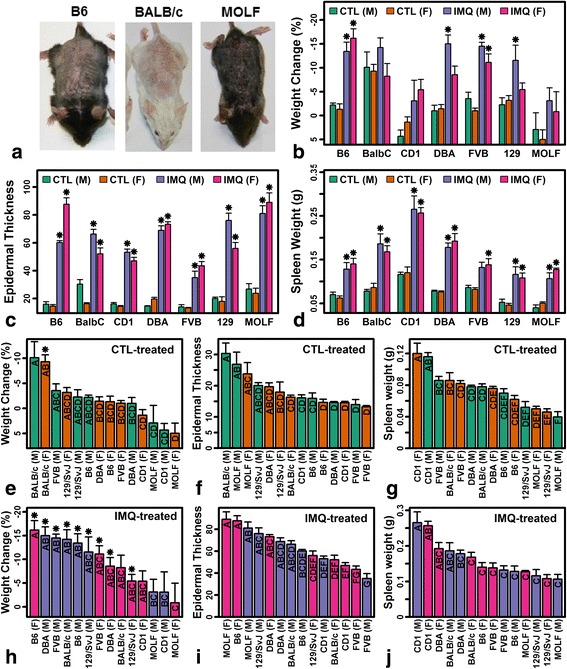
Imiquimod (IMQ) produces a cutaneous phenotype in mice frequently studied as an acute model of human psoriasis. Whether this phenotype depends on strain or sex has never been systematically investigated on a large scale. Such effects, however, could lead to conflicts among studies, while further impacting study outcomes and efforts to translate research findings.
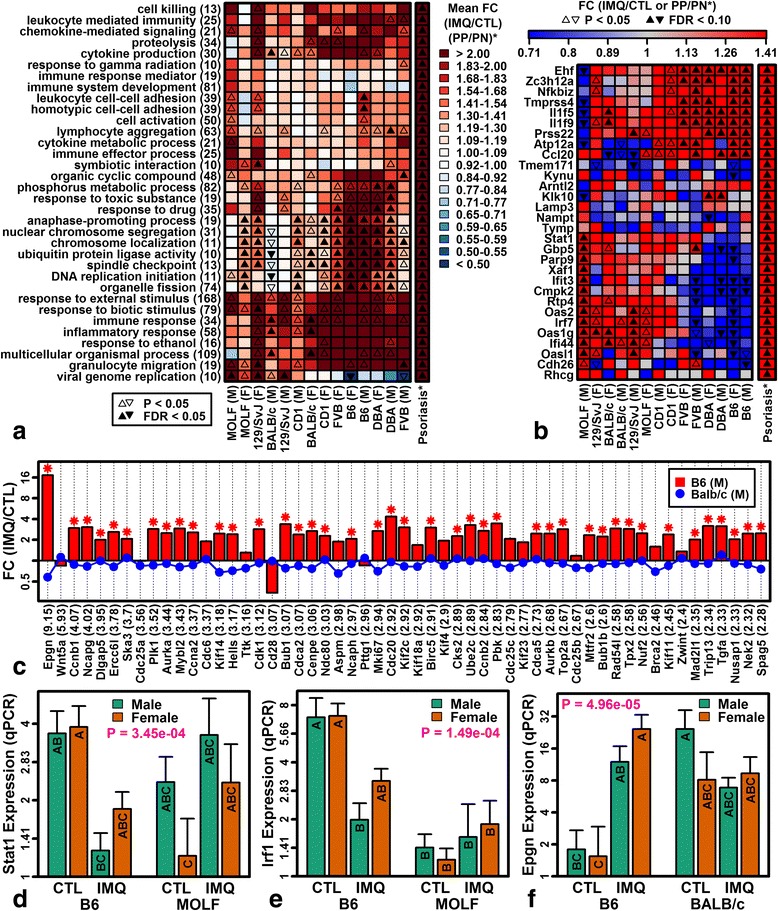
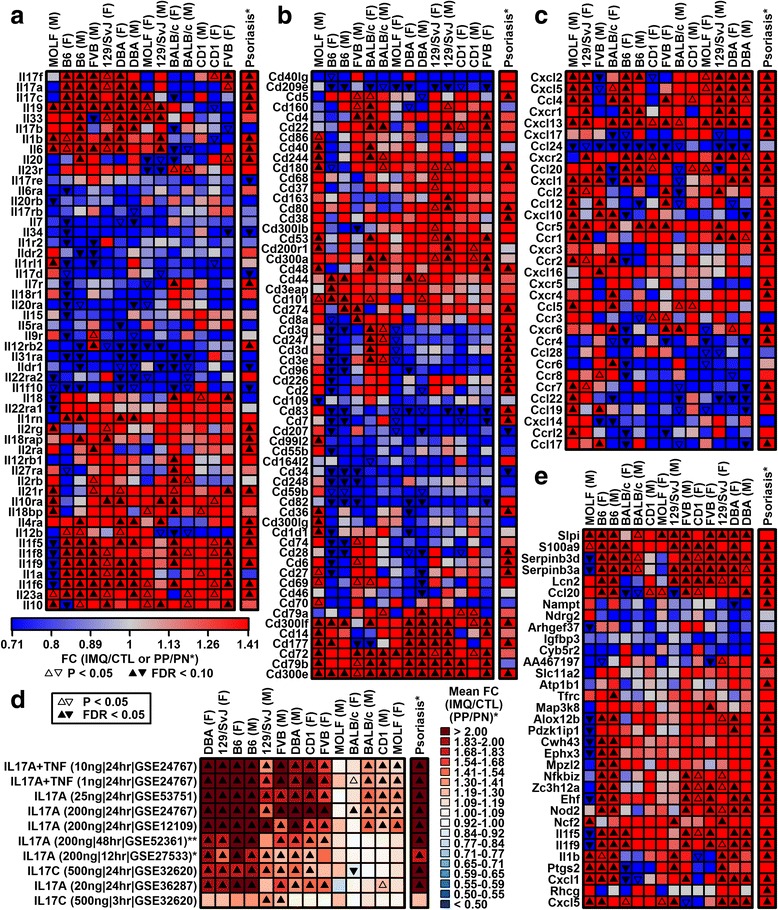
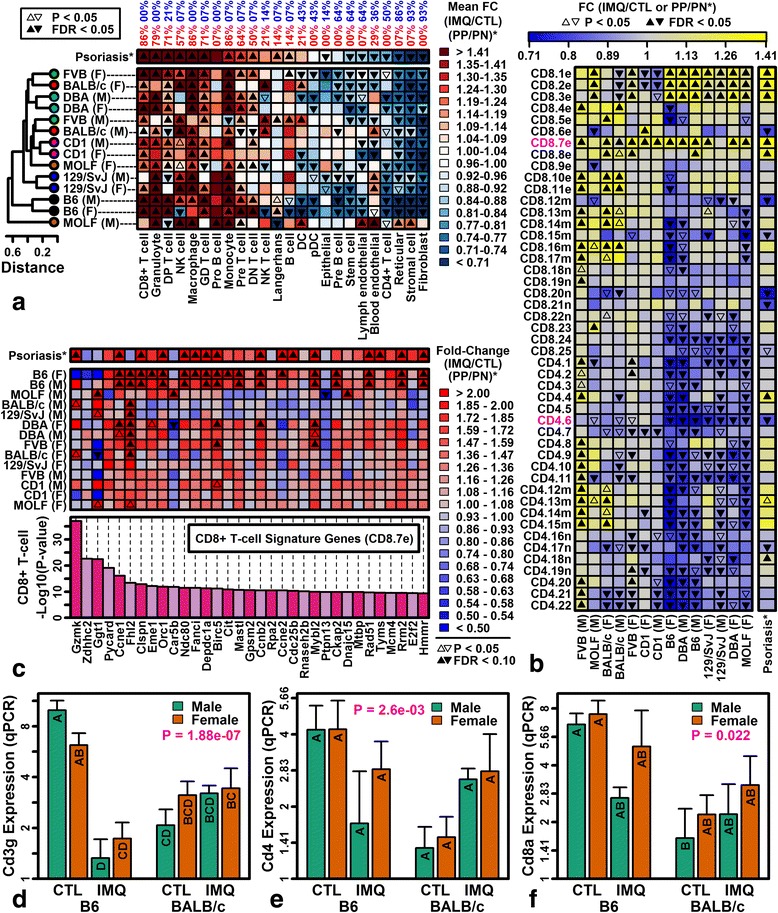
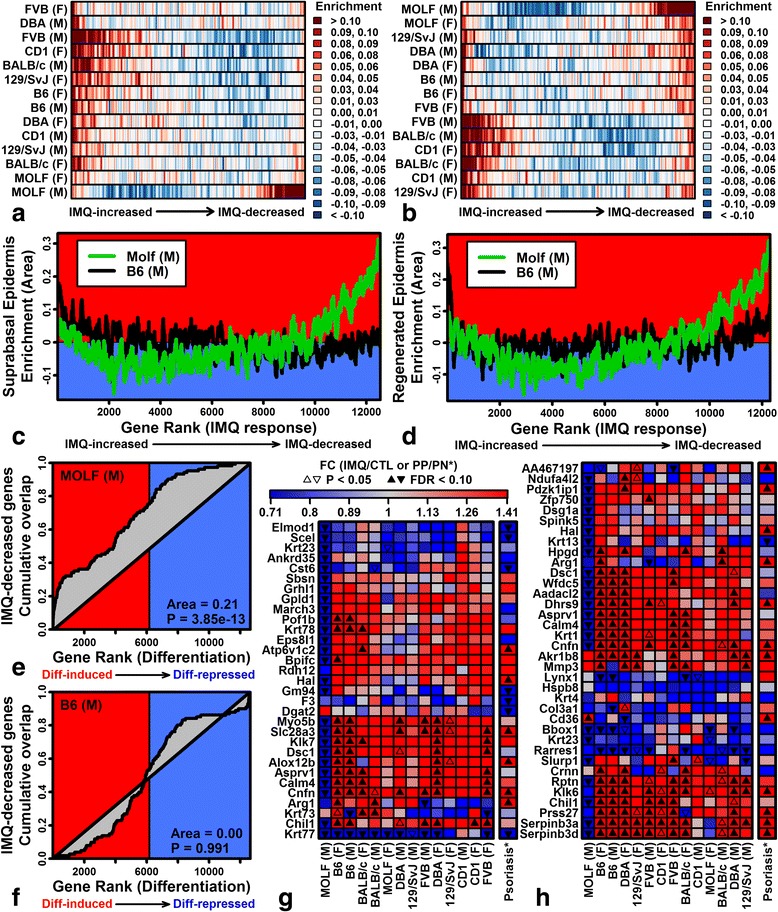
RNA-seq was used to evaluate the psoriasiform phenotype elicited by 6 days of Aldara (5% IMQ) treatment in both sexes of seven mouse strains (C57BL/6 J (B6), BALB/cJ, CD1, DBA/1 J, FVB/NJ, 129X1/SvJ, and MOLF/EiJ).
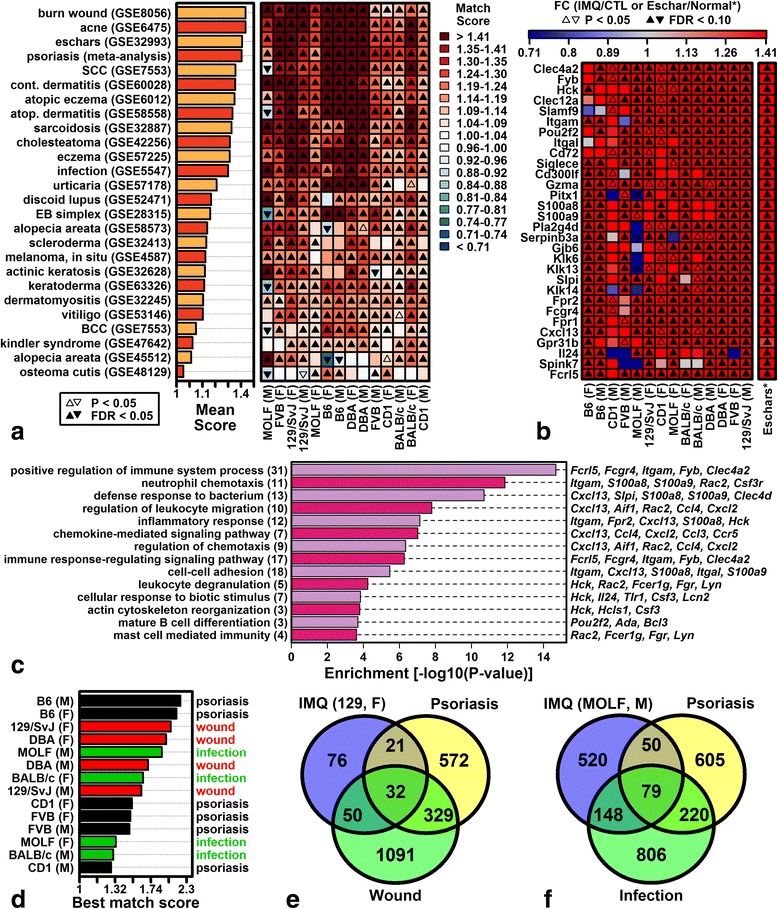
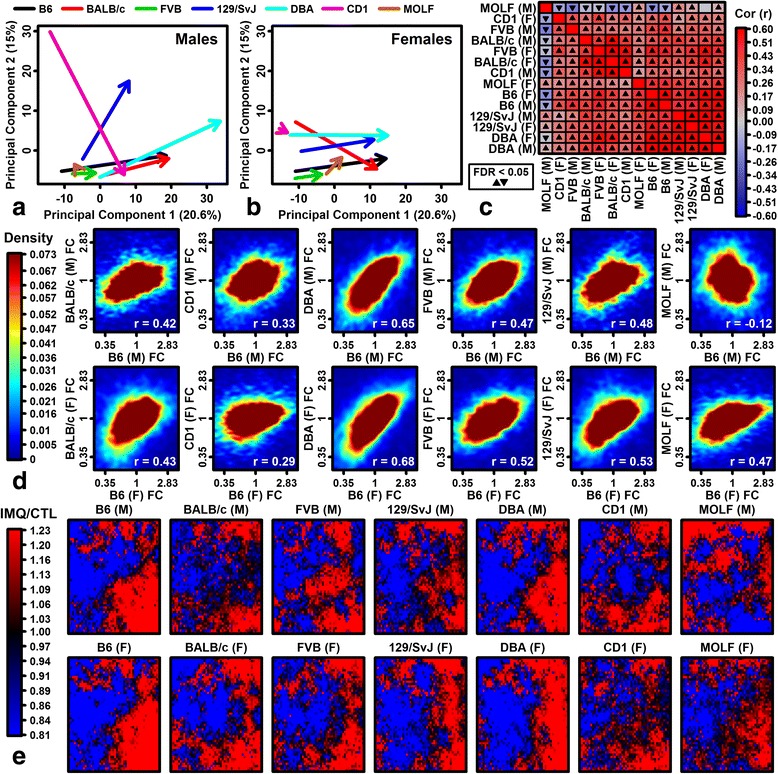
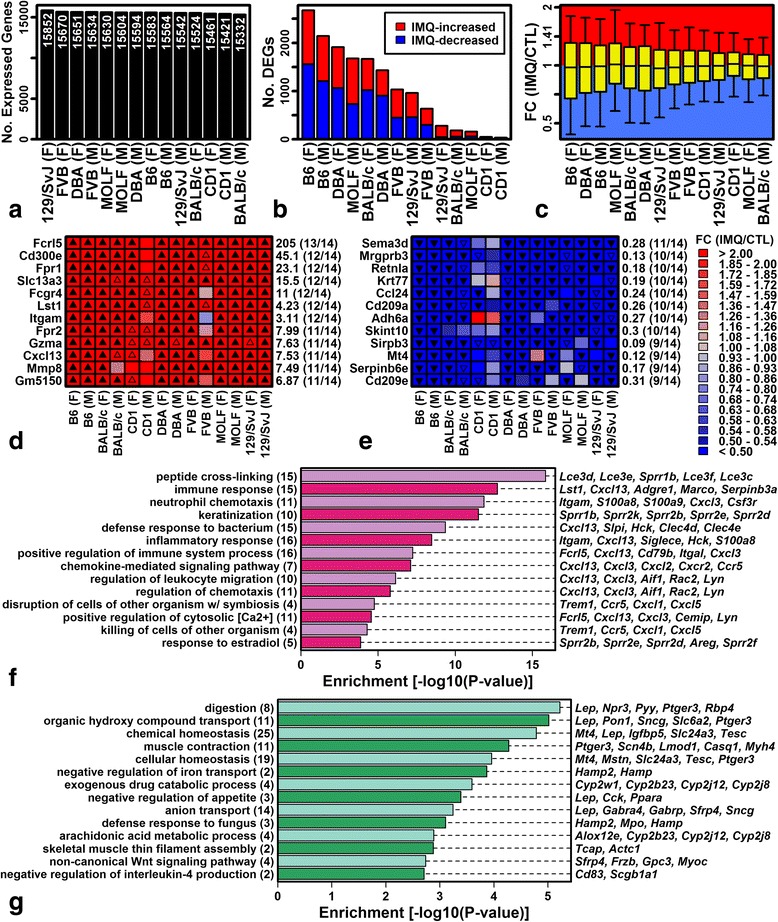
In most strains, IMQ altered gene expression in a manner consistent with human psoriasis, partly due to innate immune activation and decreased homeostatic gene expression. The response of MOLF males was aberrant, however, with decreased expression of differentiation-associated genes (elevated in other strains). Key aspects of the IMQ response differed between the two most commonly studied strains (BALB/c and B6). Compared with BALB/c, the B6 phenotype showed increased expression of genes associated with DNA replication, IL-17A stimulation, and activated CD8+ T cells, but decreased expression of genes associated with interferon signaling and CD4+ T cells. Although IMQ-induced expression shifts mirrored psoriasis, responses in BALB/c, 129/SvJ, DBA, and MOLF mice were more consistent with other human skin conditions (e.g., wounds or infections). IMQ responses in B6 mice were most consistent with human psoriasis and best replicated expression patterns specific to psoriasis lesions.
These findings demonstrate strain-dependent aspects of IMQ dermatitis in mice. We have shown that IMQ does not uniquely model psoriasis but in fact triggers a core set of pathways active in diverse skin diseases. Nonetheless, our findings suggest that B6 mice provide a better background than other strains for modeling psoriasis disease mechanisms.
咪喹莫特(IMQ)可在小鼠中产生一种皮肤表型,常被用作人类银屑病的急性模型进行研究。这种表型是否取决于品系或性别从未在大规模研究中得到系统调查。然而,此类影响可能会导致研究之间产生冲突,同时进一步影响研究结果以及将研究成果转化应用的努力。
采用RNA测序技术评估了七种小鼠品系(C57BL/6 J(B6)、BALB/cJ、CD1、DBA/1 J、FVB/NJ、129X1/SvJ和MOLF/EiJ)的雌雄小鼠在接受6天的艾拉(5% IMQ)治疗后所引发的银屑病样表型。
在大多数品系中,IMQ以与人类银屑病一致的方式改变基因表达,部分原因是先天免疫激活和稳态基因表达降低。然而,MOLF雄性小鼠的反应异常,其分化相关基因的表达降低(在其他品系中升高)。在两个最常被研究的品系(BALB/c和B6)之间,IMQ反应的关键方面存在差异。与BALB/c相比,B6表型显示与DNA复制、IL-17A刺激和活化的CD8 + T细胞相关的基因表达增加,但与干扰素信号传导和CD4 + T细胞相关的基因表达降低。尽管IMQ诱导的表达变化反映了银屑病,但BALB/c、129/SvJ、DBA和MOLF小鼠的反应与其他人类皮肤状况(如伤口或感染)更为一致。B6小鼠中的IMQ反应与人类银屑病最为一致,并且能最好地复制银屑病皮损特有的表达模式。
这些发现证明了小鼠中IMQ性皮炎的品系依赖性特征。我们已经表明,IMQ并非银屑病的独特模型,实际上它会触发一系列在多种皮肤疾病中活跃的核心通路。尽管如此,我们的研究结果表明,与其他品系相比,B6小鼠为模拟银屑病疾病机制提供了更好的背景。