de la Rosa-Prieto Carlos, Laterza Cecilia, Gonzalez-Ramos Ana, Wattananit Somsak, Ge Ruimin, Lindvall Olle, Tornero Daniel, Kokaia Zaal
Laboratory of Stem Cells and Restorative Neurology, Lund Stem Cell Center, University Hospital, 221 84, Lund, Sweden.
Present address: Laboratory of Human Neuroanatomy, Department of Health Sciences, Faculty of Medicine, CRIB, University of Castilla-La Mancha, 02008, Albacete, Spain.
Stem Cell Res Ther. 2017 Mar 9;8(1):59. doi: 10.1186/s13287-017-0513-6.
Intracerebral transplantation of human induced pluripotent stem cells (iPSCs) can ameliorate behavioral deficits in animal models of stroke. How the ischemic lesion affects the survival of the transplanted cells, their proliferation, migration, differentiation, and function is only partly understood.
Here we have assessed the influence of the stroke-induced injury on grafts of human skin iPSCs-derived long-term neuroepithelial-like stem cells using transplantation into the rostral migratory stream (RMS), adjacent to the neurogenic subventricular zone, in adult rats as a model system.
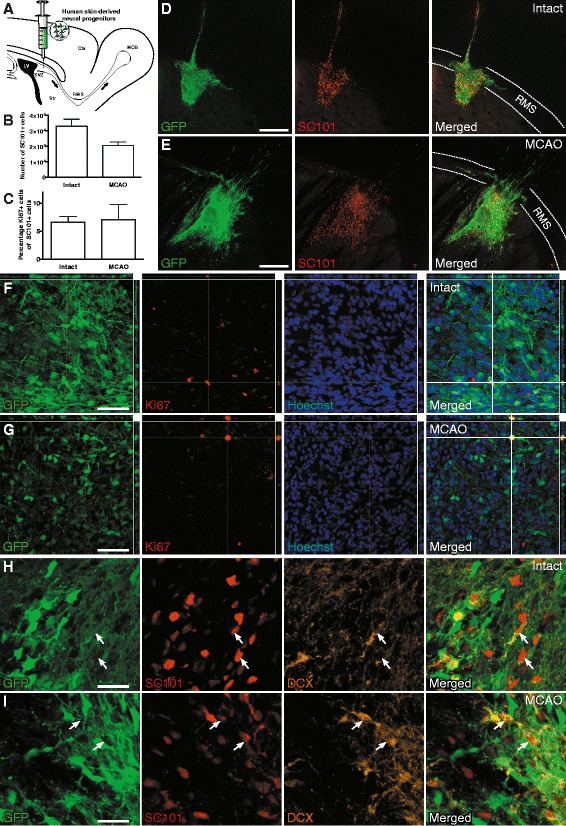
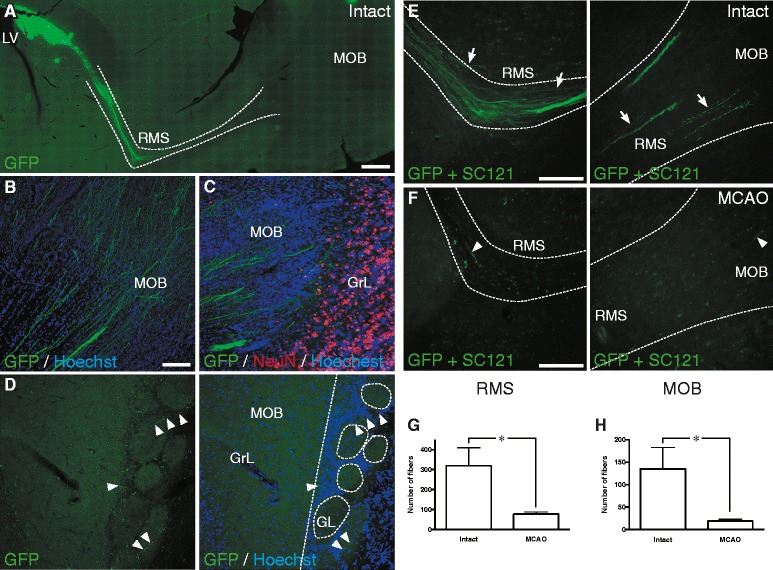
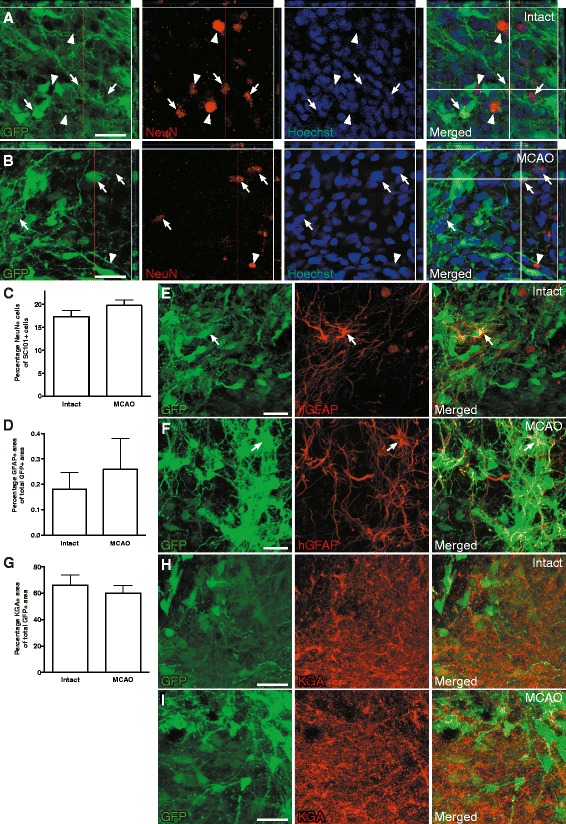
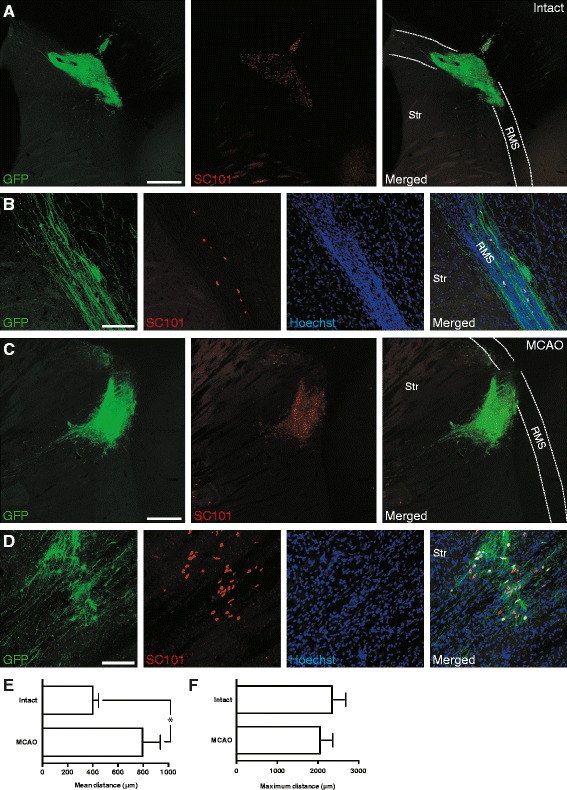
We show that the occurrence of an ischemic lesion, induced by middle cerebral artery occlusion, in the striatum close to the transplant does not alter the survival, proliferation, or generation of neuroblasts or mature neurons or astrocytes from the grafted progenitors. In contrast, the migration and axonal projection patterns of the transplanted cells are markedly influenced. In the intact brain, the grafted cells send many fibers to the main olfactory bulb through the RMS and a few of them migrate in the same direction, reaching the first one third of this pathway. In the stroke-injured brain, on the other hand, the grafted cells only migrate toward the ischemic lesion and virtually no axonal outgrowth is observed in the RMS.
Our findings indicate that signals released from the stroke-injured area regulate the migration of and fiber outgrowth from grafted human skin-derived neural progenitors and overcome the influence on these cellular properties exerted by the neurogenic area/RMS in the intact brain.
人诱导多能干细胞(iPSC)的脑内移植可改善中风动物模型的行为缺陷。缺血性损伤如何影响移植细胞的存活、增殖、迁移、分化和功能,目前仅部分为人所知。
在此,我们以成年大鼠为模型系统,通过将人皮肤iPSC来源的长期神经上皮样干细胞移植到与神经源性脑室下区相邻的吻侧迁移流(RMS)中,评估中风诱导损伤对移植细胞的影响。
我们发现,靠近移植部位的纹状体内由大脑中动脉闭塞诱导的缺血性损伤,不会改变移植祖细胞的存活、增殖,也不会改变神经母细胞、成熟神经元或星形胶质细胞的生成。相反,移植细胞的迁移和轴突投射模式受到显著影响。在完整大脑中,移植细胞通过RMS向主嗅球发出许多纤维,其中一些细胞沿相同方向迁移,到达该通路的前三分之一处。另一方面,在中风损伤的大脑中,移植细胞仅向缺血性损伤部位迁移,在RMS中几乎未观察到轴突生长。
我们的研究结果表明,中风损伤区域释放的信号调节移植的人皮肤来源神经祖细胞的迁移和纤维生长,并克服了完整大脑中神经源性区域/RMS对这些细胞特性的影响。