Nakase Hiroshi, Sakuma Shinji, Fukuchi Takumi, Yoshino Takuya, Mohri Kohta, Miyata Kohei, Kumagai Hironori, Hiwatari Ken-Ichiro, Tsubaki Kazufumi, Ikejima Tetsuya, Tobita Etsuo, Zhu Meiying, Wilson Kevin J, Washington Kay, Gore John C, Pham Wellington
Division of Endoscopy, Kyoto University Hospital, Kyoto, Japan; Department of Gastroenterology and Hepatology, Sapporo Medical University School of Medicine, Sapporo, Hokkaido, Japan.
Faculty of Pharmaceutical Sciences, Setsunan University, Hirakata, Osaka, Japan.
Int J Nanomedicine. 2017 Mar 2;12:1747-1755. doi: 10.2147/IJN.S124174. eCollection 2017.
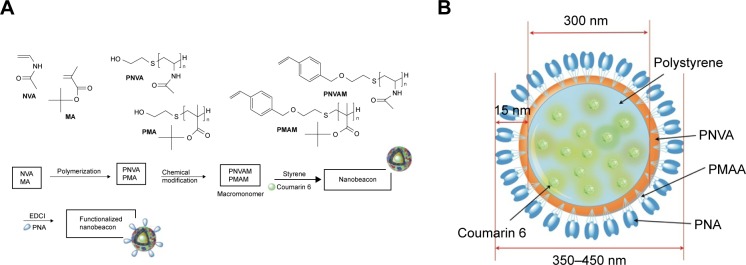
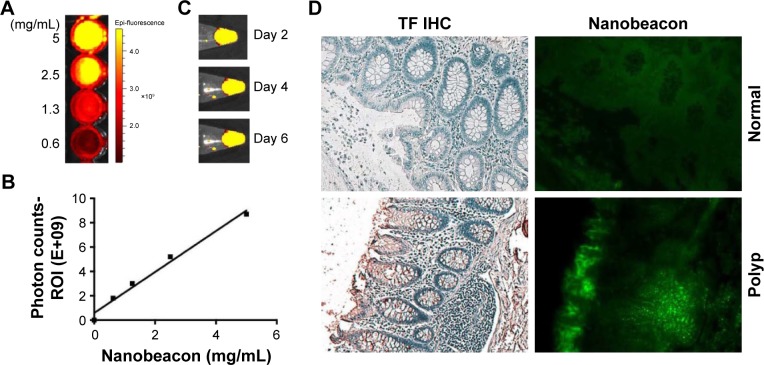
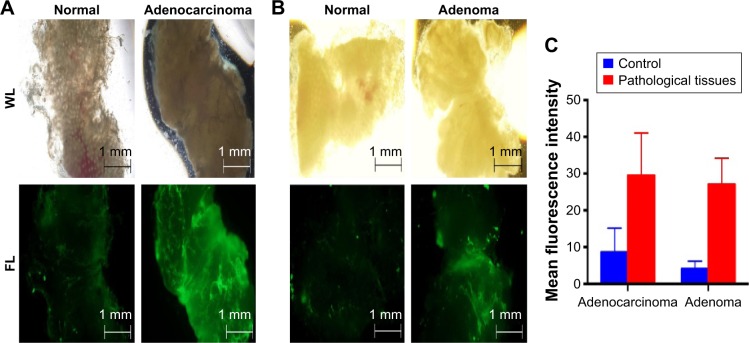
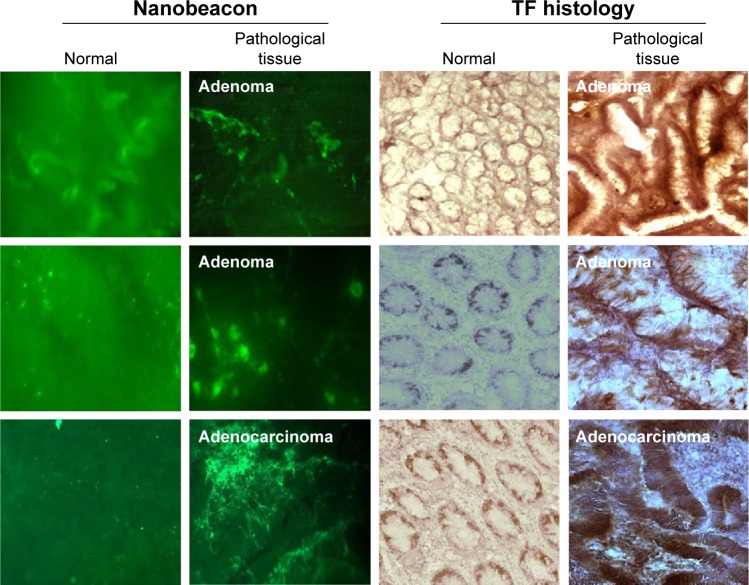
The Thomsen-Friedenreich (TF) antigen represents a prognostic biomarker of colorectal carcinoma. Here, using a nanobeacon, the surface of which was fabricated with peanut agglutinin as TF-binding molecules, we demonstrate that the nanobeacon is able to detect TF antigen in frozen and freshly biopsied polyps using fluorescence microscopy. Our results provide important clues about how to detect aberrant colonic tissues in the most timely fashion. Given the versatile application method for this topical nanobeacon, the protocol used in this work is amenable to clinical colonoscopy. Moreover, the prospects of clinical translation of this technology are evident.
汤姆森 - 弗里登赖希(TF)抗原是结直肠癌的一种预后生物标志物。在此,我们使用一种表面用花生凝集素作为TF结合分子构建的纳米信标,证明该纳米信标能够通过荧光显微镜在冷冻和新鲜活检的息肉中检测TF抗原。我们的结果为如何以最及时的方式检测异常结肠组织提供了重要线索。鉴于这种局部纳米信标的通用应用方法,本研究中使用的方案适用于临床结肠镜检查。此外,这项技术的临床转化前景明显。