Hao Marlene M, Capoccia Elena, Cirillo Carla, Boesmans Werend, Vanden Berghe Pieter
Laboratory for Enteric Neuroscience, Translational Research in GastroIntestinal Disorders, KU Leuven Leuven, Belgium.
Laboratory for Enteric Neuroscience, Translational Research in GastroIntestinal Disorders, KU LeuvenLeuven, Belgium; Department of Physiology and Pharmacology, Sapienza University of RomeRome, Italy.
Front Cell Neurosci. 2017 Feb 23;11:42. doi: 10.3389/fncel.2017.00042. eCollection 2017.
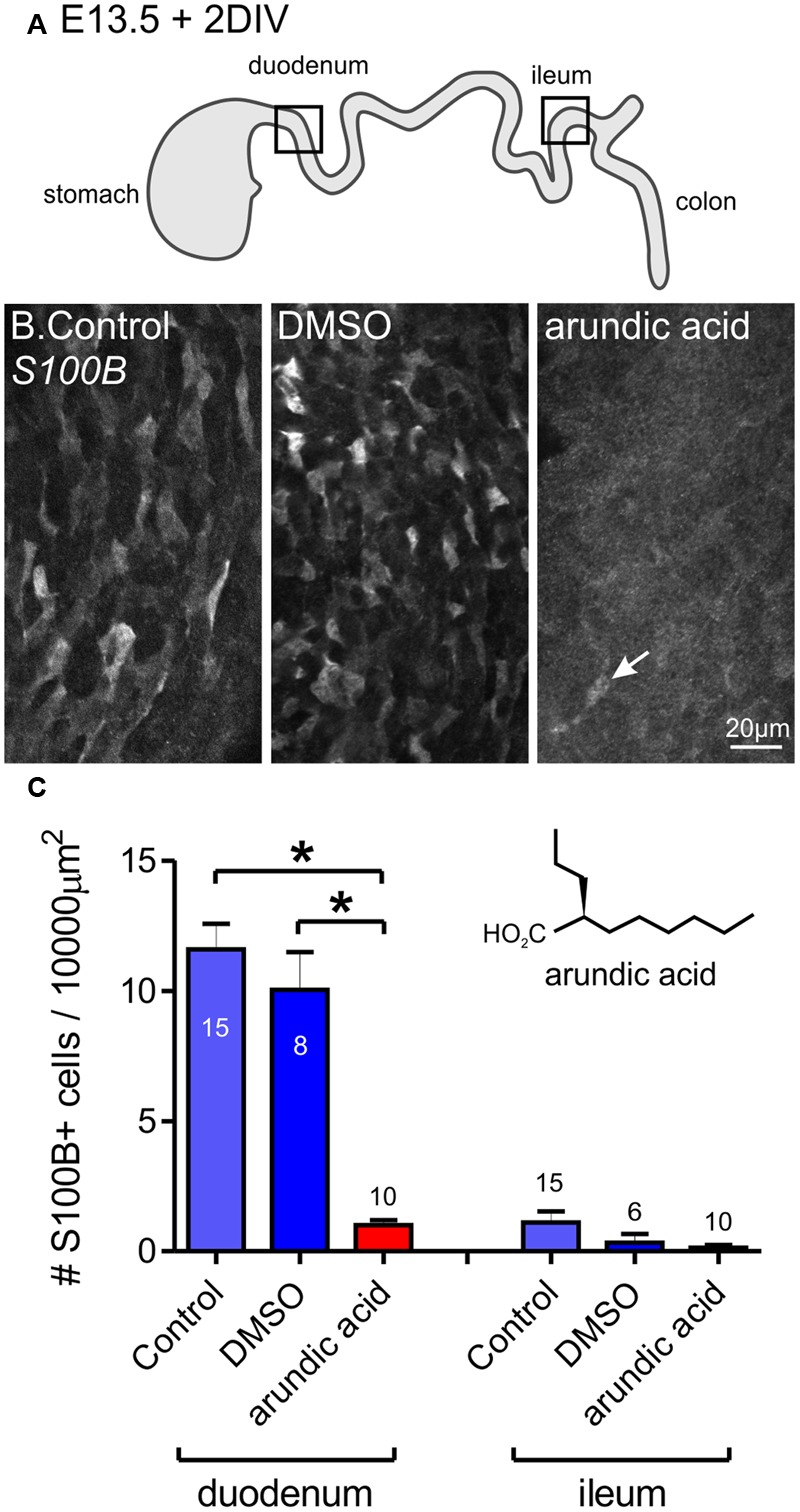
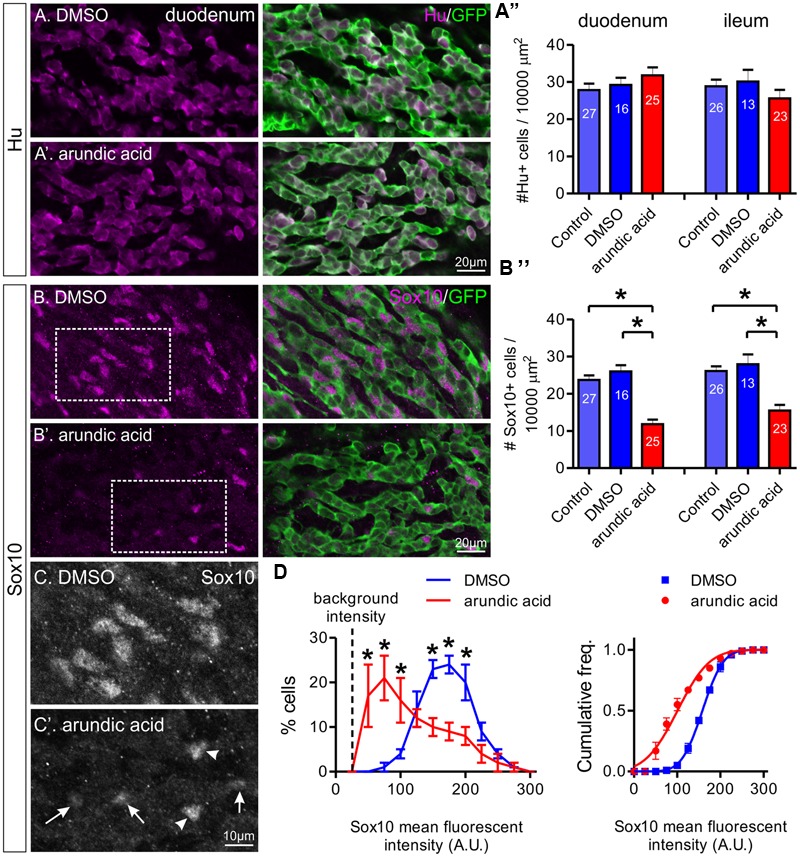
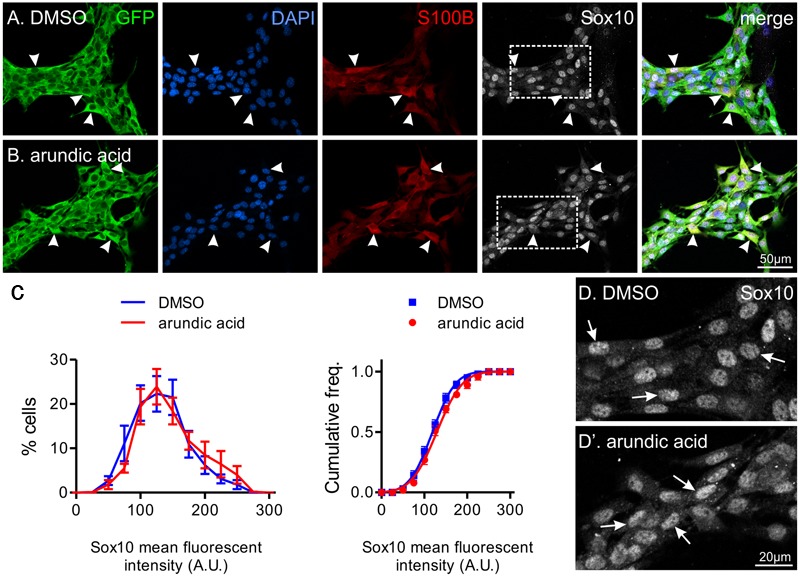
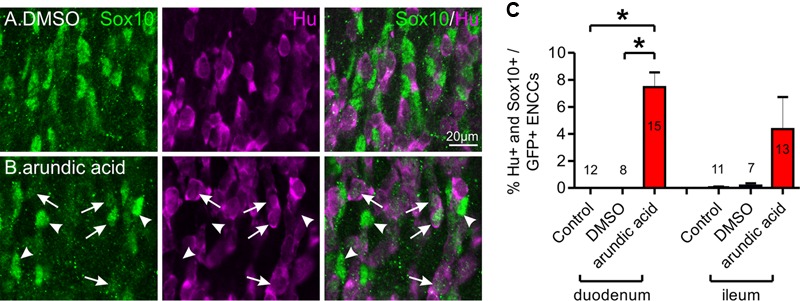
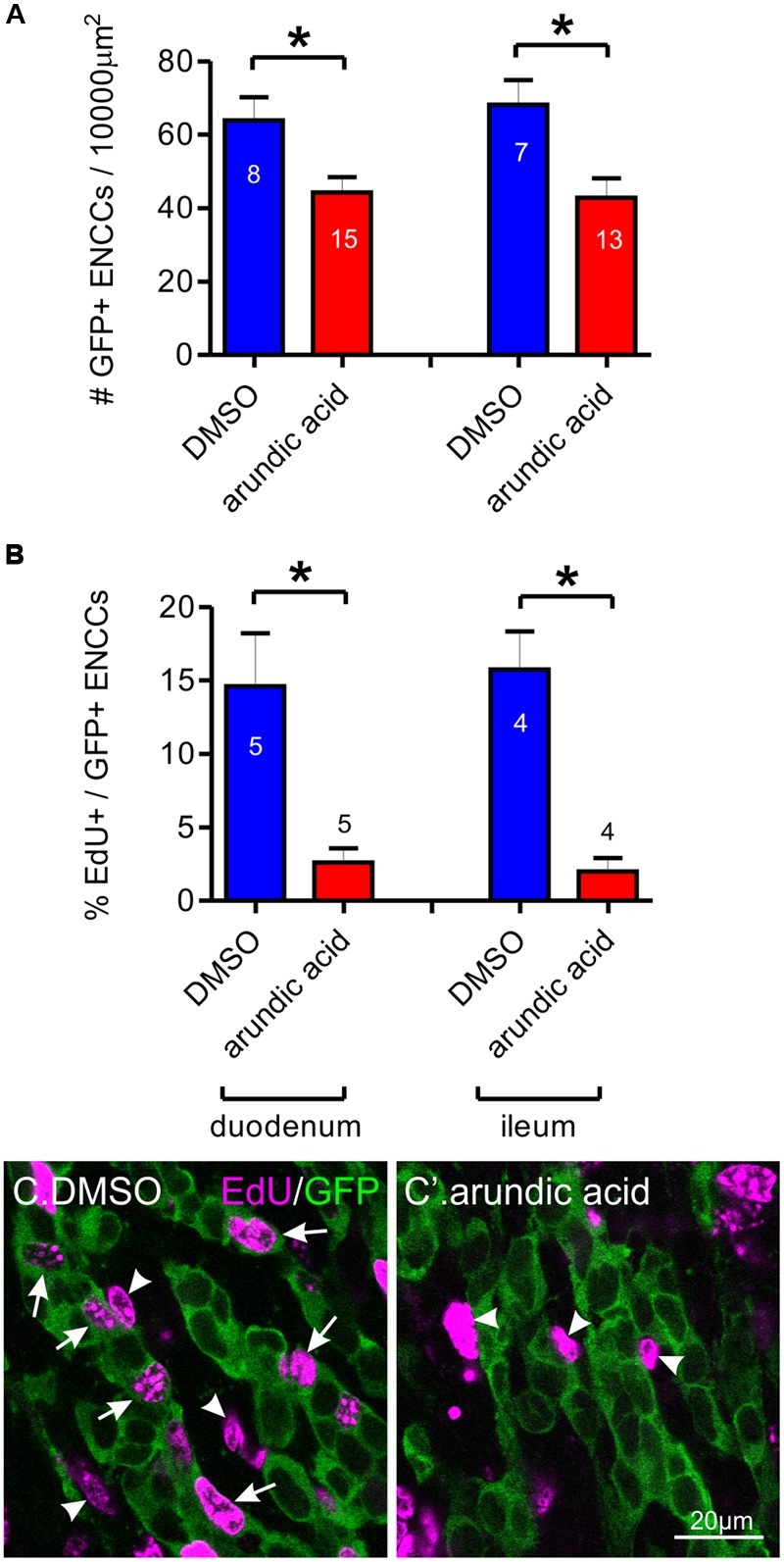
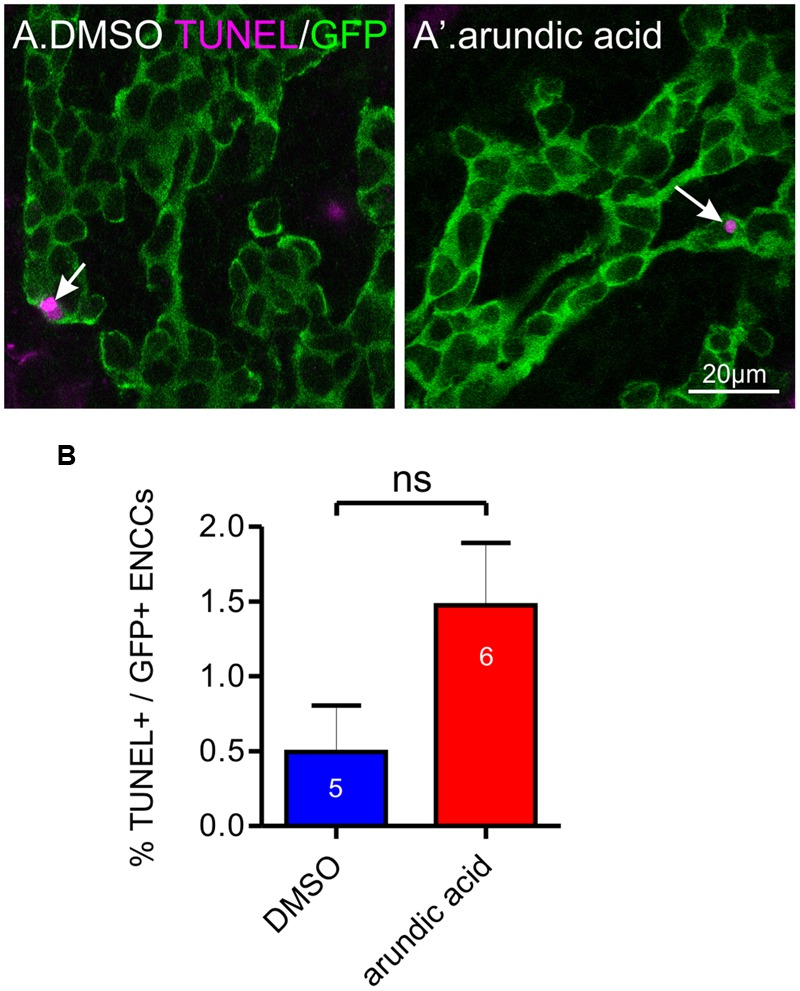
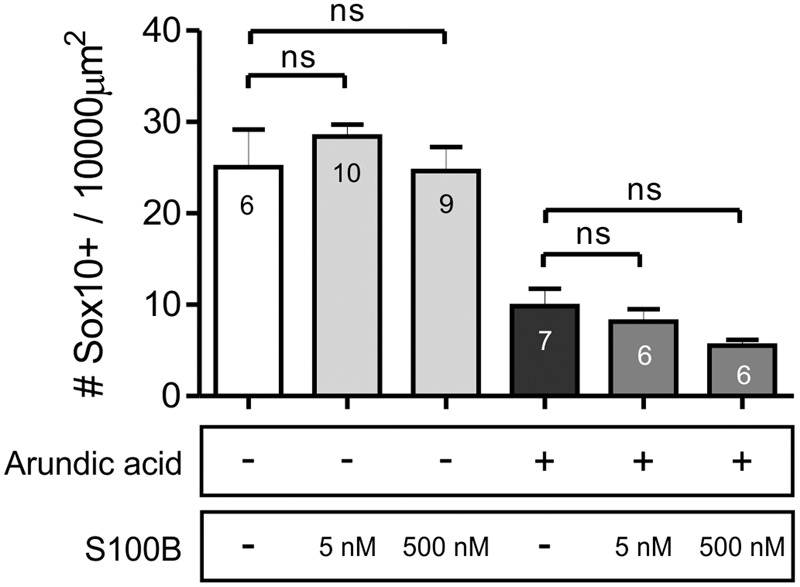
S100B is expressed in various types of glial cells and is involved in regulating many aspects of their function. However, little is known about its role during nervous system development. In this study, we investigated the effect of inhibiting the onset of S100B synthesis in the development of the enteric nervous system, a network of neurons and glia located in the wall of the gut that is vital for control of gastrointestinal function. Intact gut explants were taken from embryonic day (E)13.5 mice, the day before the first immunohistochemical detection of S100B, and cultured in the presence of arundic acid, an inhibitor of S100B synthesis, for 48 h. The effects on Sox10-immunoreactive enteric neural crest progenitors and Hu-immunoreactive enteric neurons were then analyzed. Culture in arundic acid reduced the proportion of Sox10+ cells and decreased cell proliferation. There was no change in the density of Hu+ enteric neurons, however, a small population of cells exhibited atypical co-expression of both Sox10 and Hu, which was not observed in control cultures. Addition of exogenous S100B to the cultures did not change Sox10+ cell numbers. Overall, our data suggest that cell-intrinsic intracellular S100B is important for maintaining Sox10 and proliferation of the developing enteric glial lineage.
S100B在多种类型的神经胶质细胞中表达,并参与调节其功能的许多方面。然而,关于其在神经系统发育过程中的作用却知之甚少。在本研究中,我们调查了抑制S100B合成起始对肠神经系统发育的影响,肠神经系统是位于肠壁的神经元和神经胶质细胞网络,对胃肠功能的控制至关重要。完整的肠道外植体取自胚胎第13.5天(E13.5)的小鼠,即首次免疫组化检测到S100B的前一天,并在S100B合成抑制剂阿仑酸存在的情况下培养48小时。然后分析对Sox10免疫反应性肠神经嵴祖细胞和Hu免疫反应性肠神经元的影响。在阿仑酸中培养降低了Sox10+细胞的比例并减少了细胞增殖。Hu+肠神经元的密度没有变化,然而,一小部分细胞表现出Sox10和Hu的非典型共表达,这在对照培养物中未观察到。向培养物中添加外源性S100B并没有改变Sox10+细胞的数量。总体而言,我们的数据表明,细胞内源性细胞内S100B对于维持发育中的肠神经胶质谱系的Sox10和增殖很重要。