Jenkinson Stephen P, Grandgirard Denis, Heidemann Martina, Tscherter Anne, Avondet Marc-André, Leib Stephen L
Neuroinfection Laboratory, Institute for Infectious Diseases, University of BernBern, Switzerland; Biology Division, Spiez Laboratory, Swiss Federal Office for Civil ProtectionSpiez, Switzerland; Cluster for Regenerative Neuroscience, Department for Clinical Research, University of BernBern, Switzerland; Graduate School for Cellular and Biomedical Sciences, University of BernBern, Switzerland.
Neuroinfection Laboratory, Institute for Infectious Diseases, University of BernBern, Switzerland; Cluster for Regenerative Neuroscience, Department for Clinical Research, University of BernBern, Switzerland.
Front Pharmacol. 2017 Feb 23;8:73. doi: 10.3389/fphar.2017.00073. eCollection 2017.
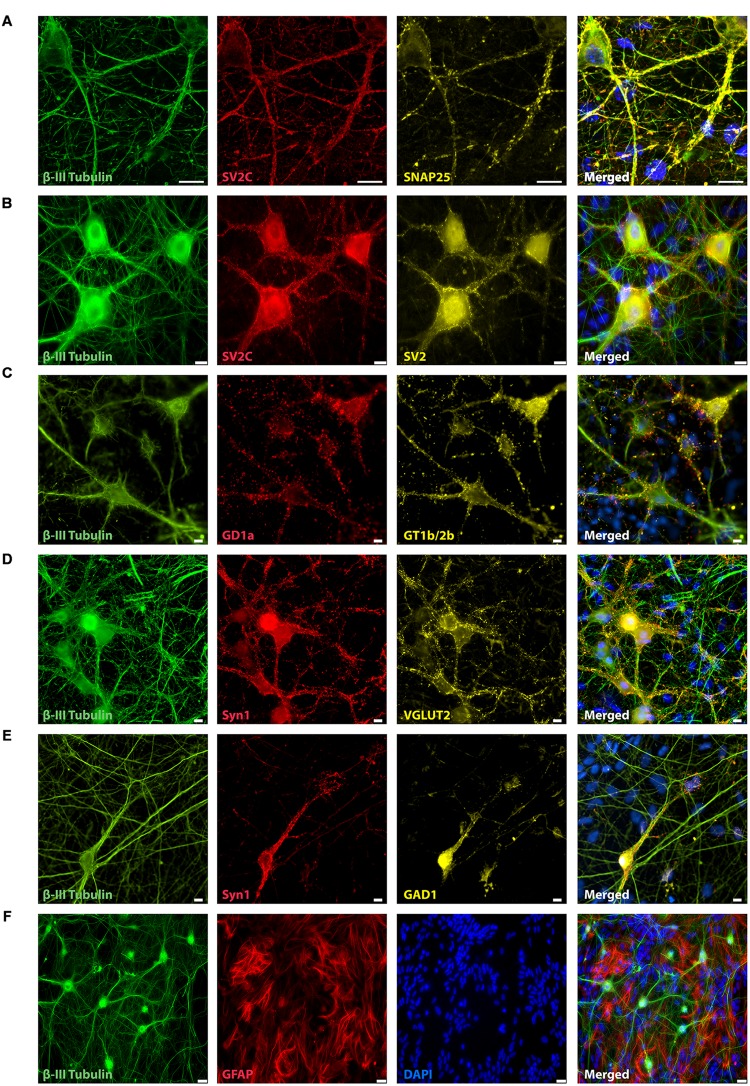
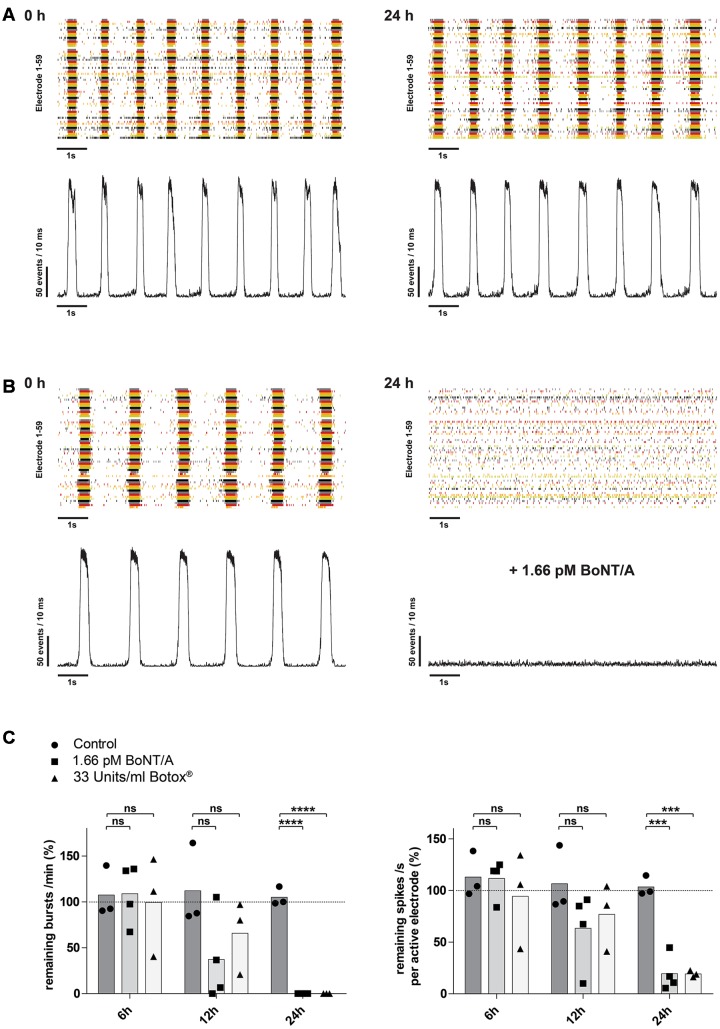
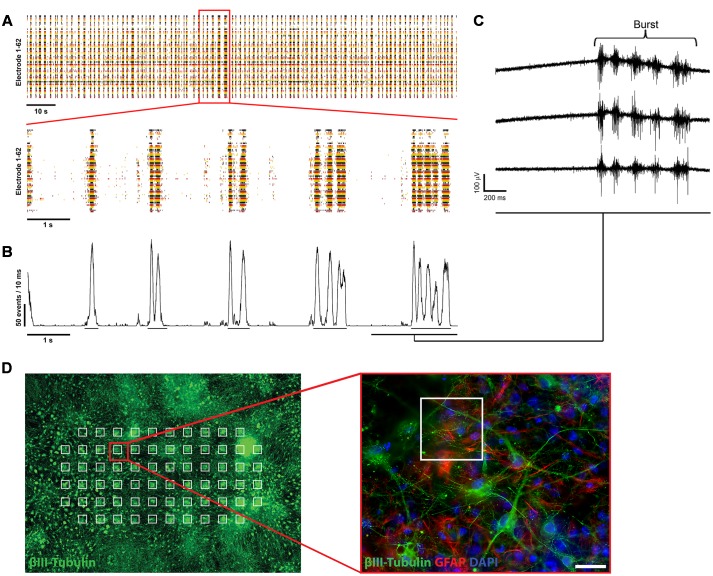
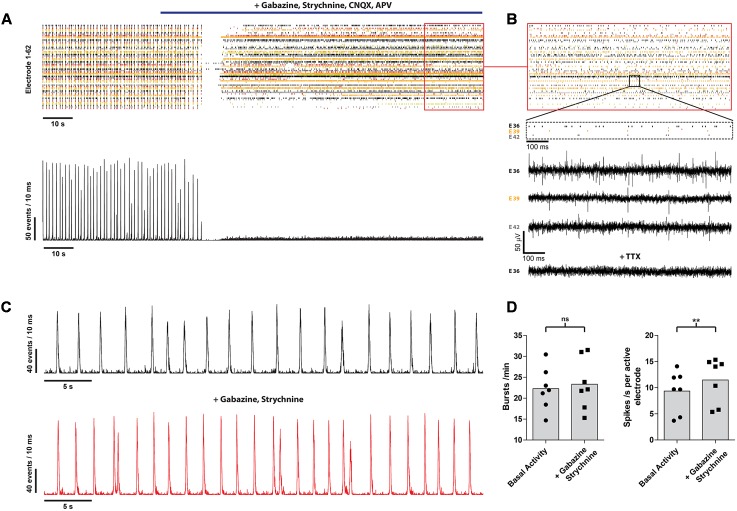
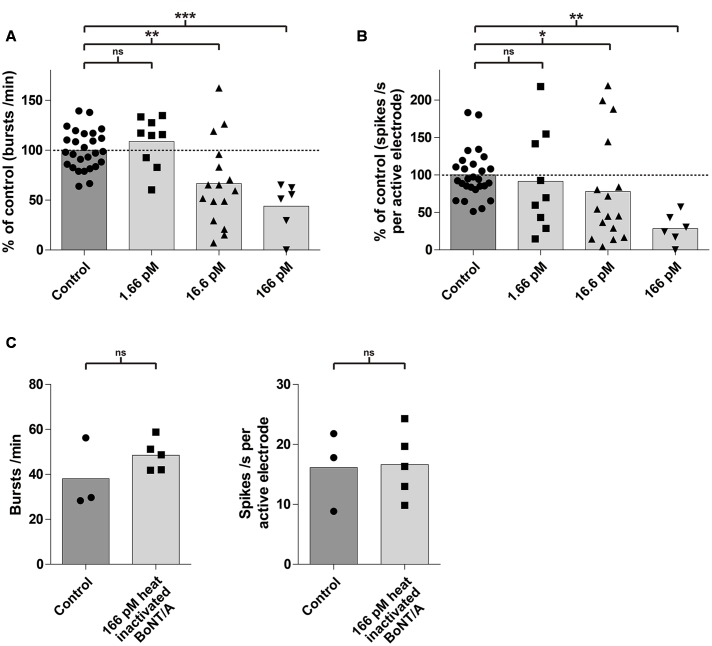
neurotoxins (BoNTs) are the most poisonous naturally occurring protein toxins known to mankind and are the causative agents of the severe and potentially life-threatening disease botulism. They are also known for their application as cosmetics and as unique bio-pharmaceuticals to treat an increasing number of neurological and non-neurological disorders. Currently, the potency of biologically active BoNT for therapeutic use is mainly monitored by the murine LD-assay, an ethically disputable test causing suffering and death of a considerable number of mice. The aim of this study was to establish an assay as an alternative to the widely used mouse bioassay. We report a novel BoNT detection assay using mouse embryonic stem cell-derived neurons (mESN) cultured on multi-electrode arrays (MEAs). After 21 days in culture, the mESN formed a neuronal network showing spontaneous bursting activity based on functional synapses and express the necessary target proteins for BoNTs. Treating cultures for 6 h with 16.6 pM of BoNT serotype A and incubation with 1.66 pM BoNT/A or 33 Units/ml of Botox for 24 h lead to a significant reduction of both spontaneous network bursts and average spike rate. This data suggests that mESN cultured on MEAs pose a novel, biologically relevant model that can be used to detect and quantify functional BoNT effects, thus accelerating BoNT research while decreasing animal use.
肉毒杆菌神经毒素(BoNTs)是人类已知的毒性最强的天然蛋白质毒素,是严重且可能危及生命的肉毒中毒的病原体。它们还因其在化妆品中的应用以及作为独特的生物药物来治疗越来越多的神经和非神经疾病而闻名。目前,用于治疗的生物活性BoNT的效力主要通过小鼠致死剂量测定法来监测,这是一种在伦理上存在争议的测试,会导致大量小鼠遭受痛苦并死亡。本研究的目的是建立一种检测方法,作为广泛使用的小鼠生物测定法的替代方法。我们报告了一种新型的BoNT检测方法,该方法使用在多电极阵列(MEA)上培养的小鼠胚胎干细胞衍生神经元(mESN)。培养21天后,mESN形成了一个基于功能性突触显示出自发性爆发活动的神经网络,并表达了BoNTs所需的靶蛋白。用16.6 pM的A型BoNT处理培养物6小时,并与1.66 pM BoNT/A或33单位/毫升的肉毒杆菌毒素孵育24小时,会导致自发网络爆发和平均尖峰率显著降低。这些数据表明,在MEA上培养的mESN构成了一种新型的、具有生物学相关性的模型,可用于检测和量化功能性BoNT效应,从而加速BoNT研究,同时减少动物使用。