Mendell Nicole L, Bouyer Donald H, Walker David H
Department of Pathology, Center for Biodefense and Emerging Infectious Diseases, Center for Tropical Diseases, Sealy Center for Vaccine Development, Institute of Human Infections and Immunity, School of Medicine, University of Texas Medical Branch, Galveston, Texas, United States of America.
PLoS Negl Trop Dis. 2017 Mar 10;11(3):e0005453. doi: 10.1371/journal.pntd.0005453. eCollection 2017 Mar.
Scrub typhus, a febrile illness of substantial incidence and mortality, is caused by infection with the obligately intracellular bacterium Orientia tsutsugamushi. It is estimated that there are more than one million cases annually transmitted by the parasitic larval stage of trombiculid mites in the Asia-Pacific region. The antigenic and genetic diversity of the multiple strains of O. tsutsugamushi hinders the advancement of laboratory diagnosis, development of long-lasting vaccine-induced protection, and interpretation of clinical infection. Despite the life-threatening severity of the illness in hundreds of thousands of cases annually, 85-93% of patients survive, often without anti-rickettsial treatment. To more completely understand the disease caused by Orientia infection, animal models which closely correlate with the clinical manifestations, target cells, organ involvement, and histopathologic lesions of human cases of scrub typhus should be employed. Previously, our laboratory has extensively characterized two relevant C57BL/6 mouse models using O. tsutsugamushi Karp strain: a route-specific intradermal model of infection and persistence and a hematogenously disseminated dose-dependent lethal model.
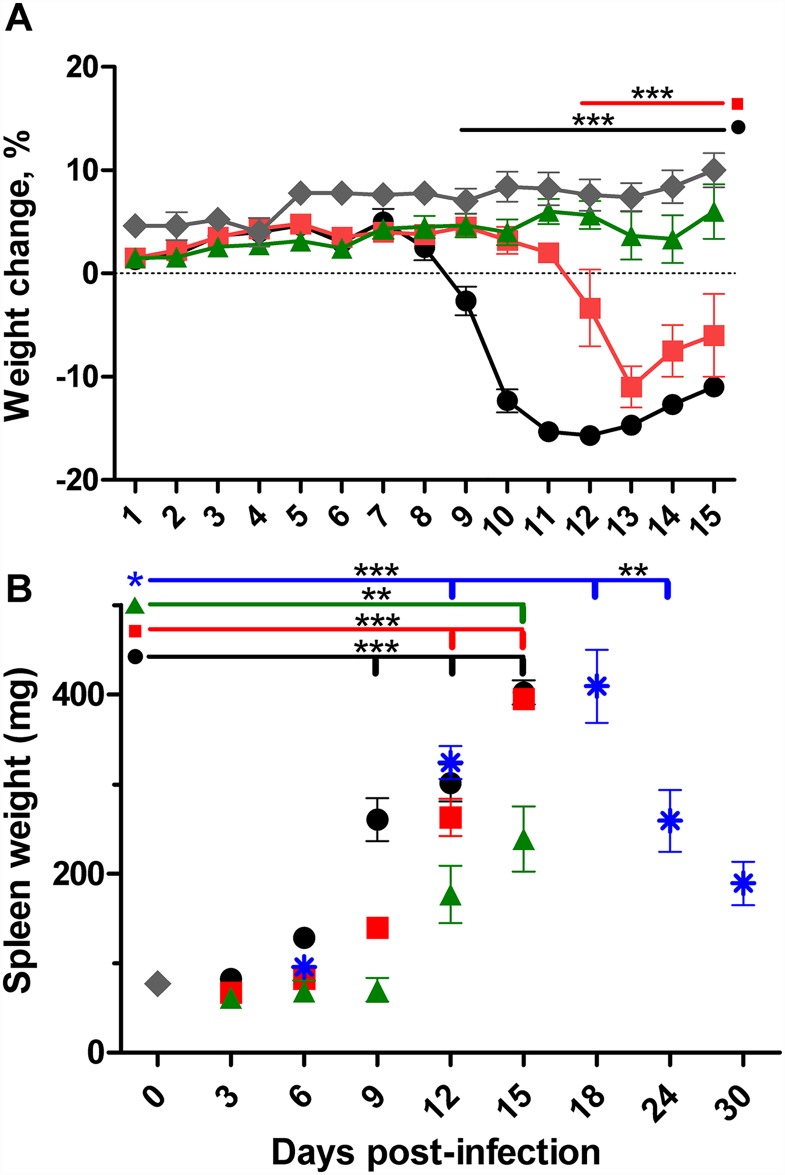
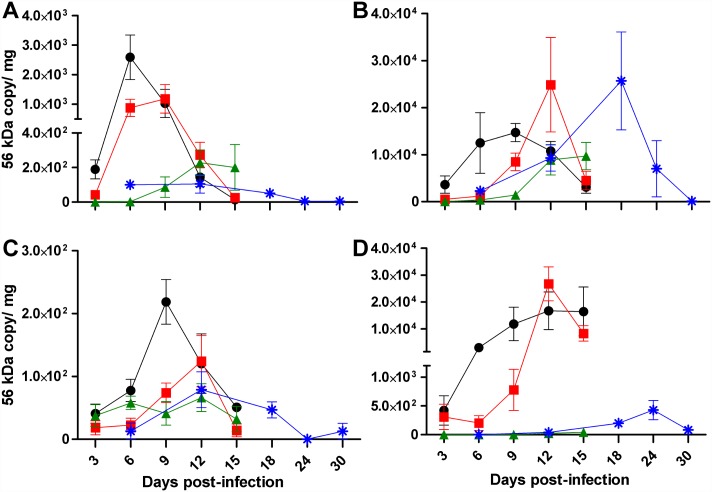
To complement the lethal model, here we illustrate a sublethal model in the same mouse strain using the O. tsutsugamushi Gilliam strain, which resulted in dose-dependent severity of illness, weight loss, and systemic dissemination to endothelial cells of the microcirculation and mononuclear phagocytic cells. Histopathologic lesions included expansion of the pulmonary interstitium by inflammatory cell infiltrates and multifocal hepatic lesions with mononuclear cellular infiltrates, renal interstitial lymphohistiocytic inflammation, mild meningoencephalitis, and characteristic typhus nodules.
These models parallel characteristics of human cases of scrub typhus, and will be used in concert to understand differences in severity which lead to lethality or host control of the infection and to address the explanation for short duration of heterologous immunity in Orientia infection.
恙虫病是一种发病率和死亡率较高的发热性疾病,由专性细胞内细菌恙虫病东方体感染引起。据估计,在亚太地区,每年由恙螨幼虫传播的病例超过100万例。恙虫病东方体多种菌株的抗原性和基因多样性阻碍了实验室诊断的进展、长效疫苗诱导保护的研发以及临床感染的解读。尽管每年有数十万病例病情严重危及生命,但85%至93%的患者存活下来,且通常未经抗立克次体治疗。为了更全面地了解东方体感染所致疾病,应采用与人类恙虫病病例的临床表现、靶细胞、器官受累情况及组织病理学病变密切相关的动物模型。此前,我们实验室已广泛描述了两种使用恙虫病东方体Karp株的相关C57BL/6小鼠模型:一种感染和持续存在的途径特异性皮内模型,以及一种血行播散的剂量依赖性致死模型。
为补充致死模型,我们在此展示了同一小鼠品系中使用恙虫病东方体Gilliam株的亚致死模型,该模型导致疾病严重程度、体重减轻呈剂量依赖性,并向微循环内皮细胞和单核吞噬细胞发生全身播散。组织病理学病变包括炎症细胞浸润导致肺间质扩张、多灶性肝脏病变伴单核细胞浸润、肾间质淋巴组织细胞性炎症、轻度脑膜脑炎以及特征性的恙虫病结节。
这些模型与人类恙虫病病例的特征相似,将协同用于了解导致致死或宿主控制感染的严重程度差异,并解释东方体感染中异源免疫持续时间较短的原因。