Mao Yimin, Kuo Su-Wei, Chen Le, Heckman C J, Jiang M C
Applied Science Institute, Jiangxi University of Science and Technology, Jiangxi, China.
Department of Physiology, Northwestern University, Chicago, Illinois, United States of America.
PLoS One. 2017 Mar 10;12(3):e0172246. doi: 10.1371/journal.pone.0172246. eCollection 2017.
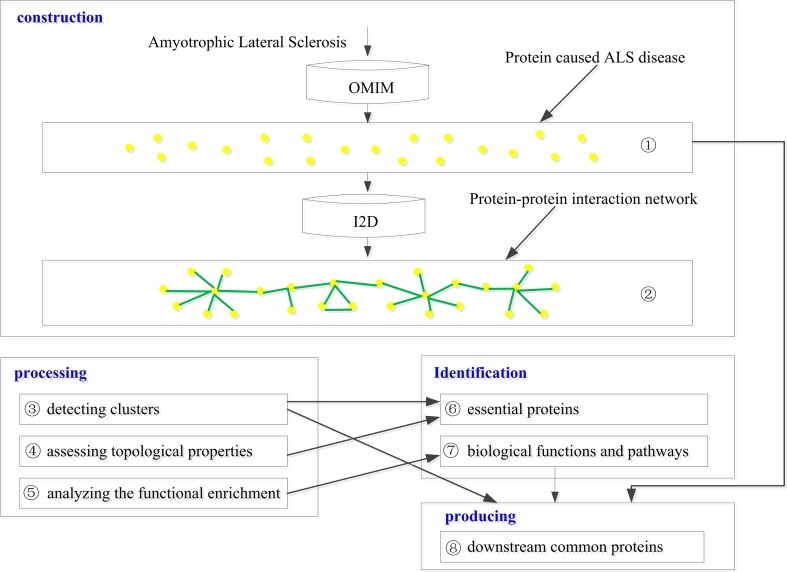
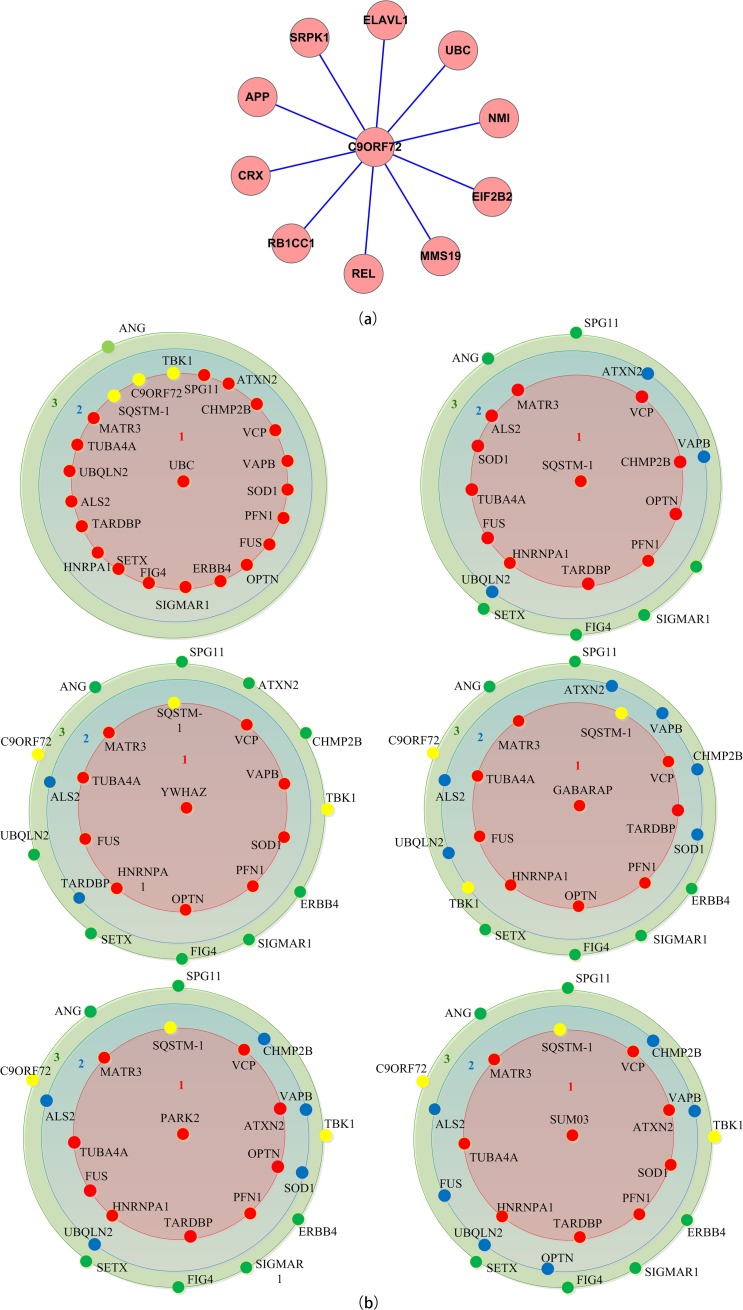
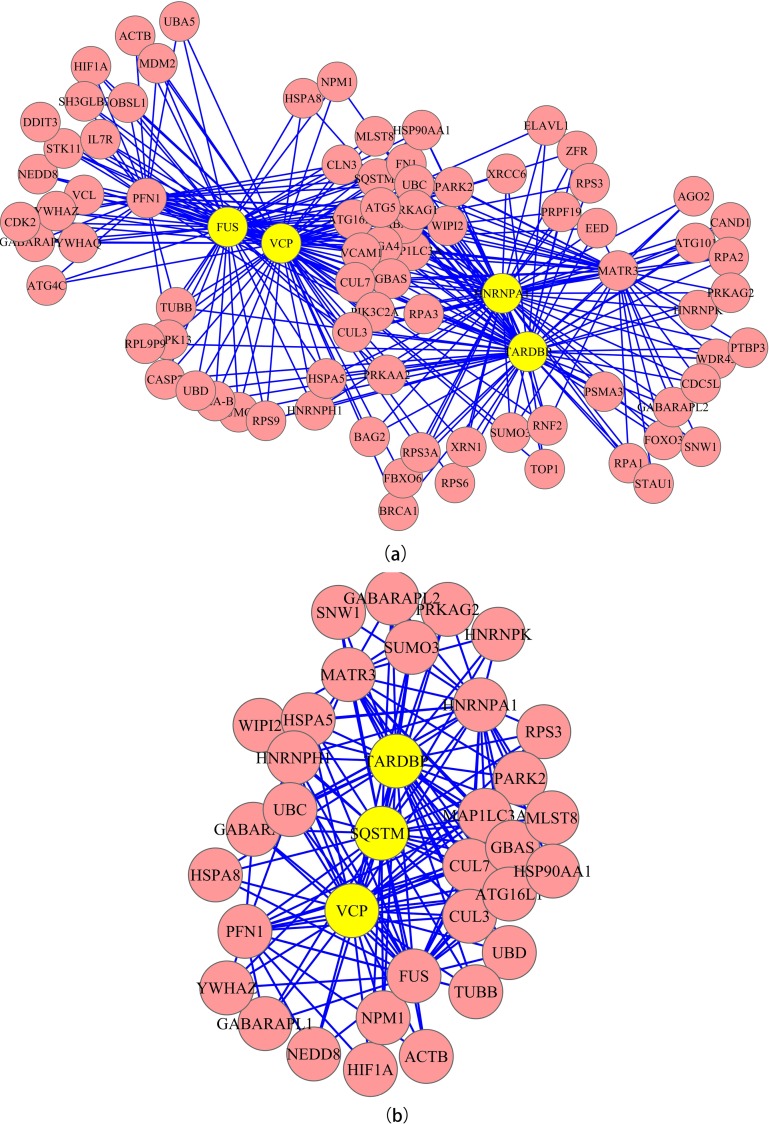
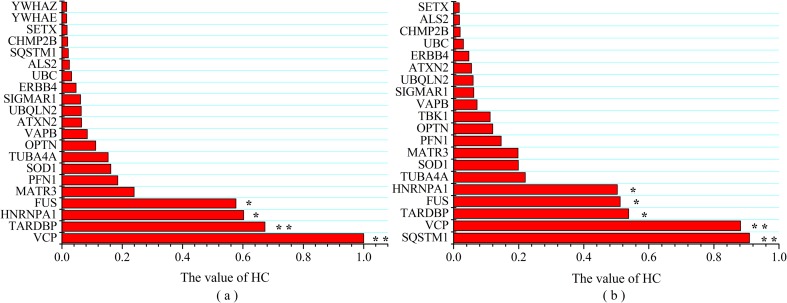
Amyotrophic Lateral Sclerosis (ALS) is a devastative neurodegenerative disease characterized by selective loss of motoneurons. While several breakthroughs have been made in identifying ALS genetic defects, the detailed molecular mechanisms are still unclear. These genetic defects involve in numerous biological processes, which converge to a common destiny: motoneuron degeneration. In addition, the common comorbid Frontotemporal Dementia (FTD) further complicates the investigation of ALS etiology. In this study, we aimed to explore the protein-protein interaction network built on known ALS-causative genes to identify essential proteins and common downstream proteins between classical ALS and ALS+FTD (classical ALS + ALS/FTD) groups. The results suggest that classical ALS and ALS+FTD share similar essential protein set (VCP, FUS, TDP-43 and hnRNPA1) but have distinctive functional enrichment profiles. Thus, disruptions to these essential proteins might cause motoneuron susceptible to cellular stresses and eventually vulnerable to proteinopathies. Moreover, we identified a common downstream protein, ubiquitin-C, extensively interconnected with ALS-causative proteins (22 out of 24) which was not linked to ALS previously. Our in silico approach provides the computational background for identifying ALS therapeutic targets, and points out the potential downstream common ground of ALS-causative mutations.
肌萎缩侧索硬化症(ALS)是一种毁灭性的神经退行性疾病,其特征是运动神经元选择性丧失。虽然在识别ALS基因缺陷方面已经取得了一些突破,但详细的分子机制仍不清楚。这些基因缺陷涉及众多生物过程,最终都导致一个共同的结果:运动神经元变性。此外,常见的共病额颞叶痴呆(FTD)进一步使ALS病因的研究变得复杂。在本研究中,我们旨在探索基于已知的ALS致病基因构建的蛋白质-蛋白质相互作用网络,以识别经典ALS组和ALS+FTD(经典ALS + ALS/FTD)组之间的必需蛋白和常见下游蛋白。结果表明,经典ALS和ALS+FTD共享相似的必需蛋白集(VCP、FUS、TDP-43和hnRNPA1),但具有独特的功能富集谱。因此,这些必需蛋白的破坏可能导致运动神经元易受细胞应激影响,并最终易患蛋白病。此外,我们鉴定出一种常见的下游蛋白泛素-C,它与24种ALS致病蛋白中的22种广泛相互连接,而此前未发现其与ALS有关。我们的计算机模拟方法为识别ALS治疗靶点提供了计算背景,并指出了ALS致病突变潜在的下游共同作用机制。