Webster Christopher P, Smith Emma F, Bauer Claudia S, Moller Annekathrin, Hautbergue Guillaume M, Ferraiuolo Laura, Myszczynska Monika A, Higginbottom Adrian, Walsh Matthew J, Whitworth Alexander J, Kaspar Brian K, Meyer Kathrin, Shaw Pamela J, Grierson Andrew J, De Vos Kurt J
Sheffield Institute for Translational Neuroscience (SITraN), Department of Neuroscience University of Sheffield, Sheffield, UK.
Department of Biomedical Science, University of Sheffield, Sheffield, UK.
EMBO J. 2016 Aug 1;35(15):1656-76. doi: 10.15252/embj.201694401. Epub 2016 Jun 22.
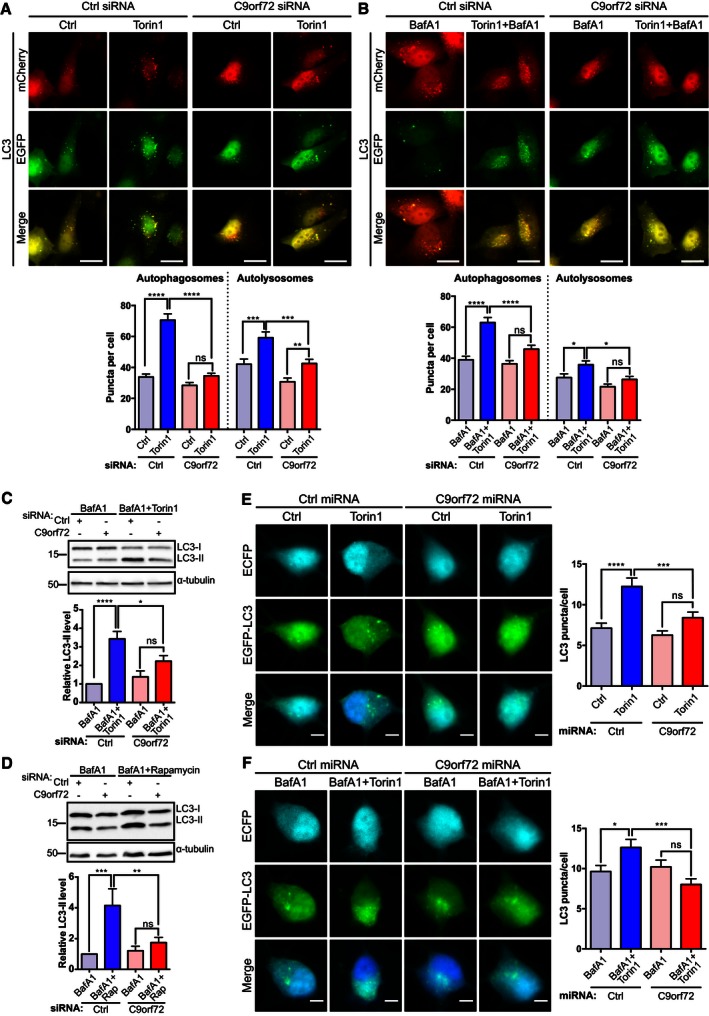
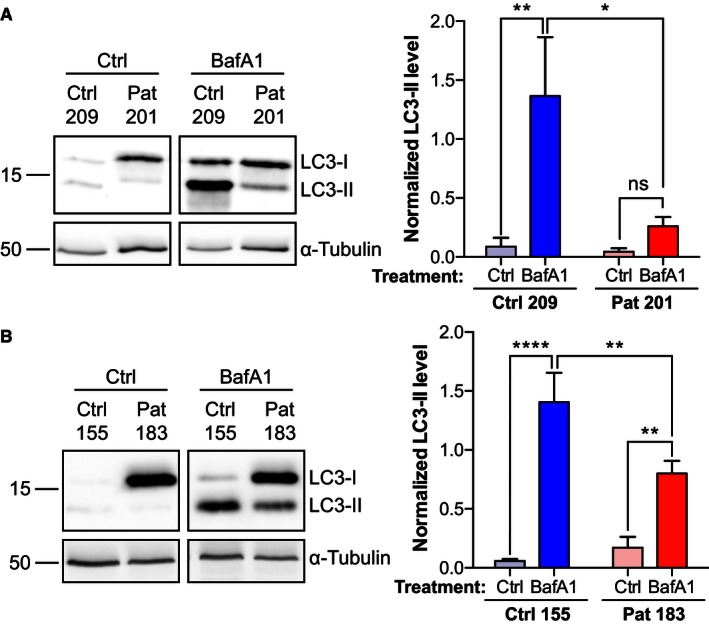
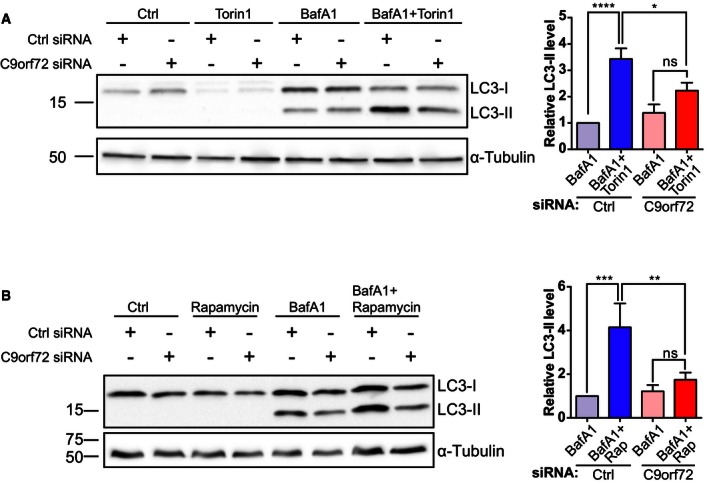
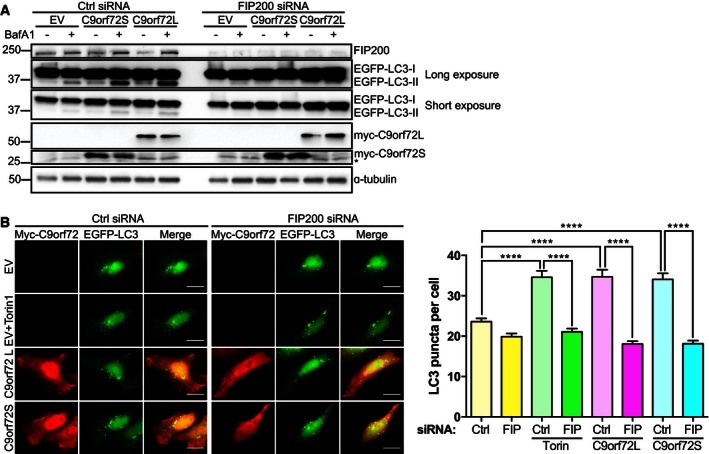
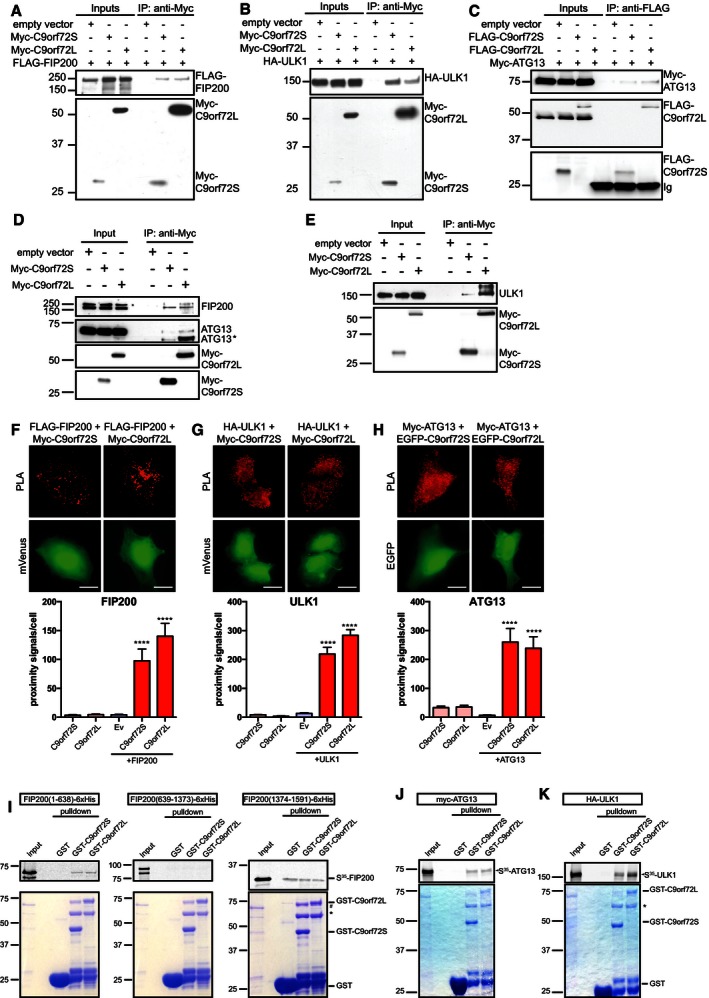
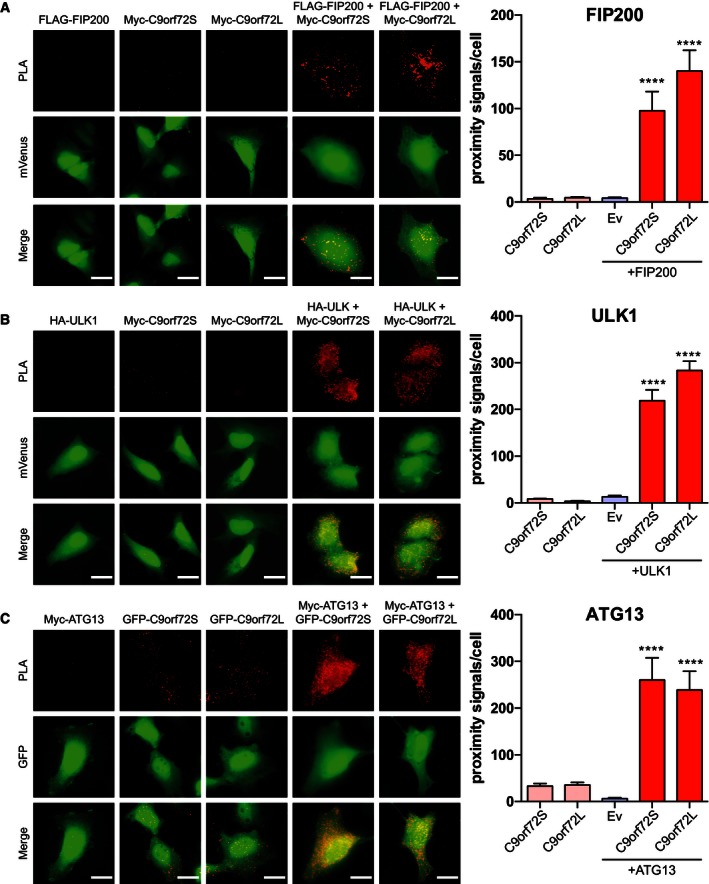
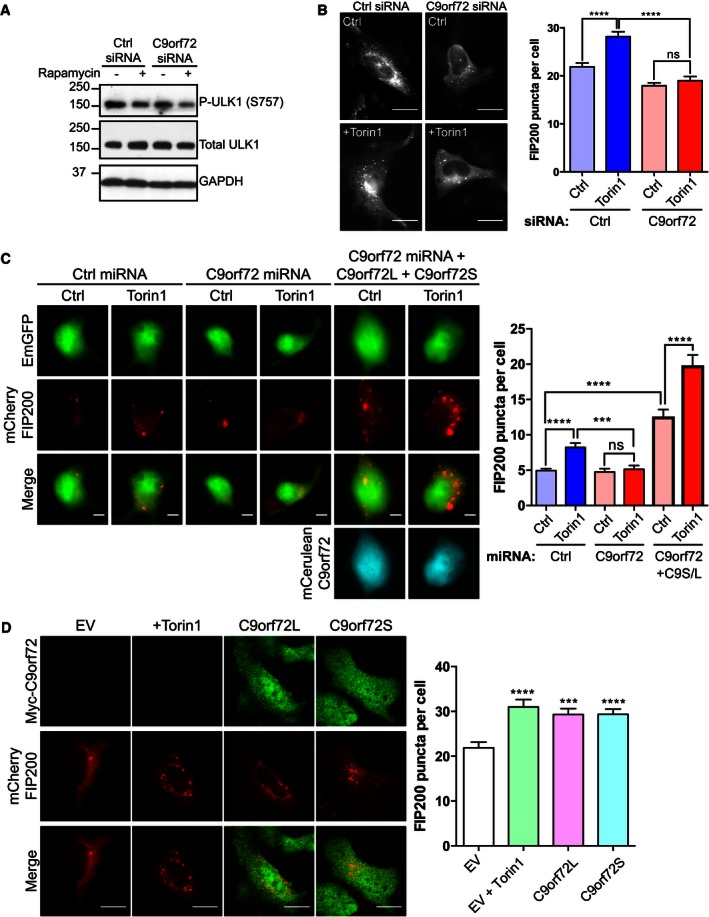
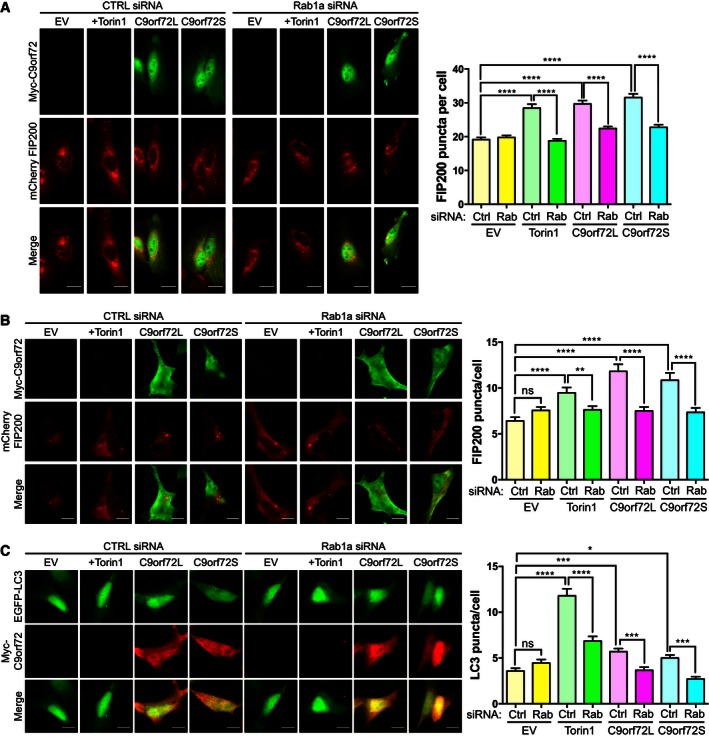
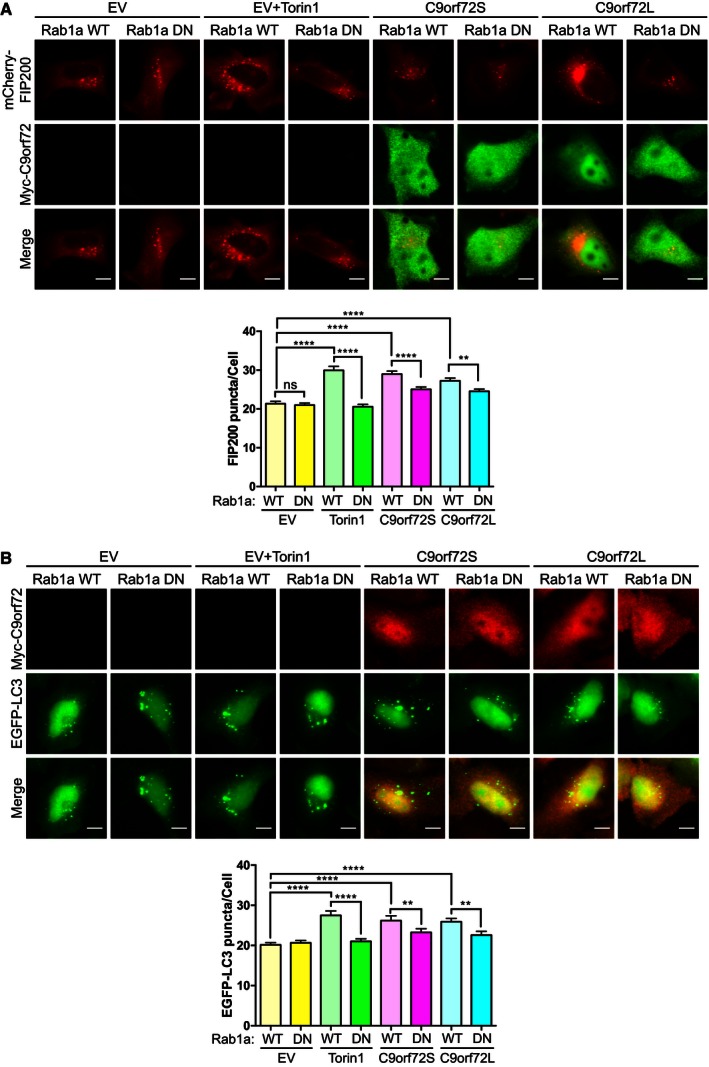
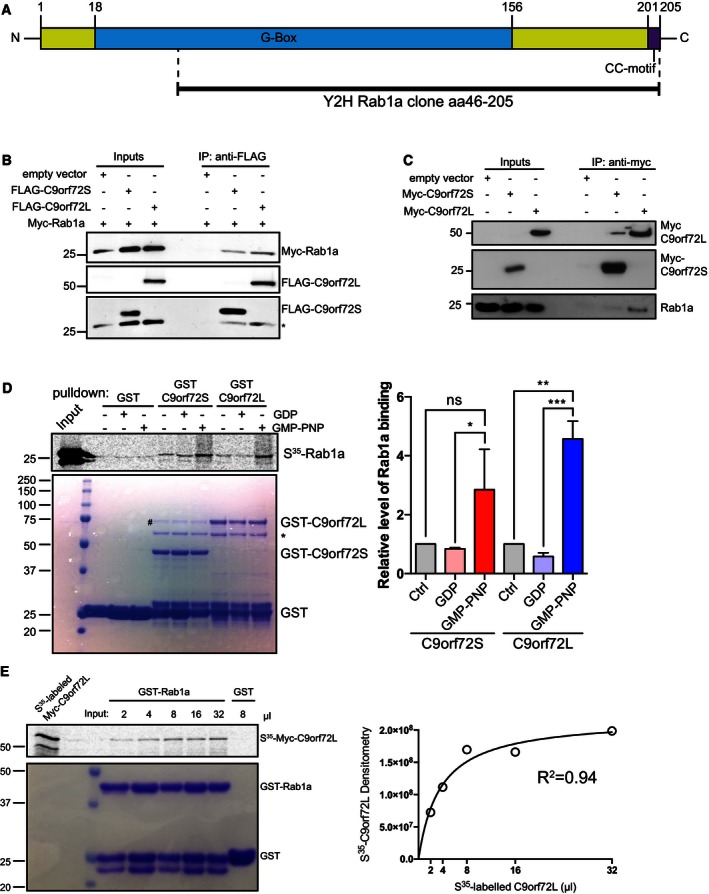
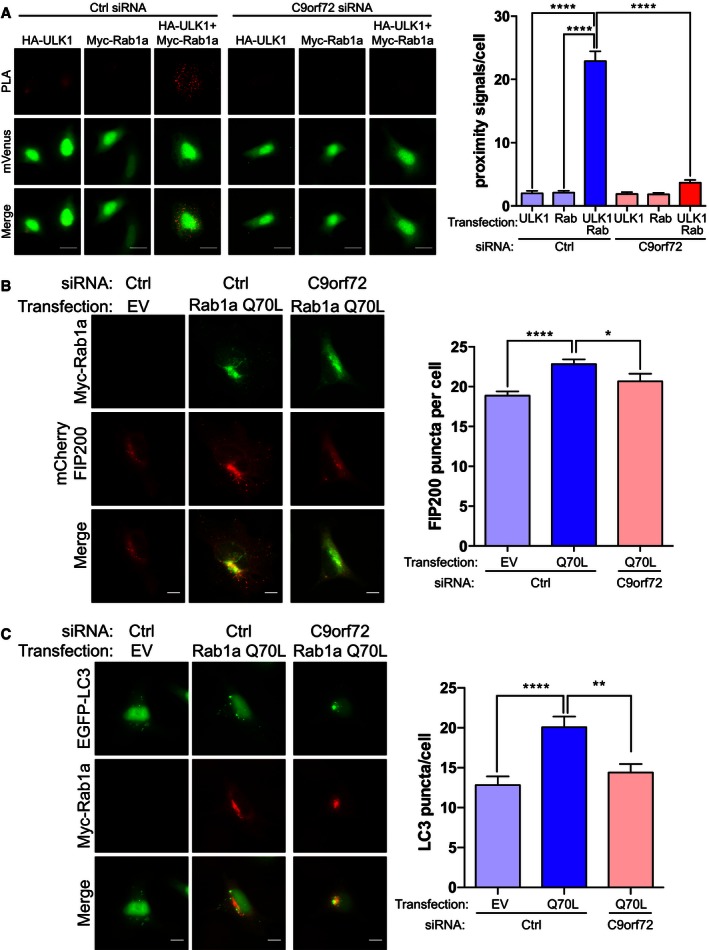
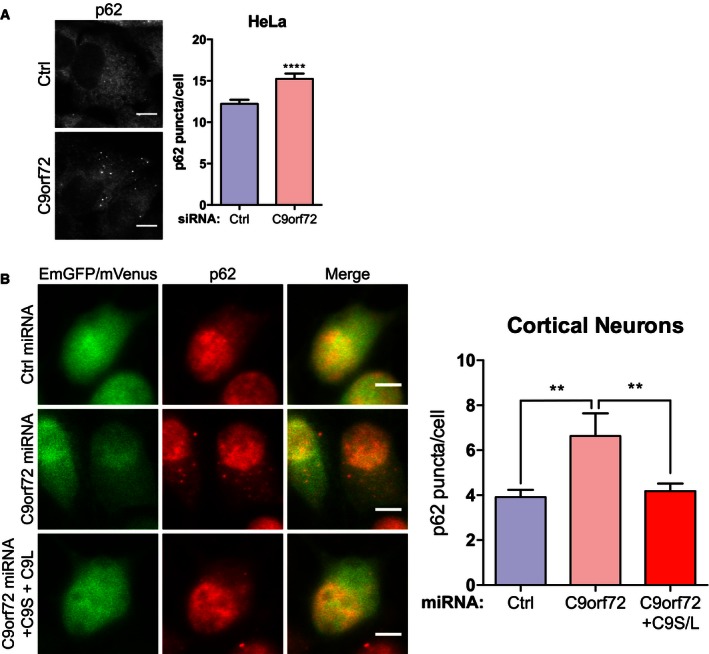
A GGGGCC hexanucleotide repeat expansion in the C9orf72 gene is the most common genetic cause of amyotrophic lateral sclerosis and frontotemporal dementia (C9ALS/FTD). C9orf72 encodes two C9orf72 protein isoforms of unclear function. Reduced levels of C9orf72 expression have been reported in C9ALS/FTD patients, and although C9orf72 haploinsufficiency has been proposed to contribute to C9ALS/FTD, its significance is not yet clear. Here, we report that C9orf72 interacts with Rab1a and the Unc-51-like kinase 1 (ULK1) autophagy initiation complex. As a Rab1a effector, C9orf72 controls initiation of autophagy by regulating the Rab1a-dependent trafficking of the ULK1 autophagy initiation complex to the phagophore. Accordingly, reduction of C9orf72 expression in cell lines and primary neurons attenuated autophagy and caused accumulation of p62-positive puncta reminiscent of the p62 pathology observed in C9ALS/FTD patients. Finally, basal levels of autophagy were markedly reduced in C9ALS/FTD patient-derived iNeurons. Thus, our data identify C9orf72 as a novel Rab1a effector in the regulation of autophagy and indicate that C9orf72 haploinsufficiency and associated reductions in autophagy might be the underlying cause of C9ALS/FTD-associated p62 pathology.
C9orf72基因中的GGGGCC六核苷酸重复扩增是肌萎缩侧索硬化症和额颞叶痴呆(C9ALS/FTD)最常见的遗传病因。C9orf72编码两种功能不明的C9orf72蛋白亚型。已有报道称C9ALS/FTD患者中C9orf72表达水平降低,尽管有人提出C9orf72单倍体不足可能导致C9ALS/FTD,但其意义尚不清楚。在此,我们报告C9orf72与Rab1a和Unc-51样激酶1(ULK1)自噬起始复合物相互作用。作为Rab1a效应器,C9orf72通过调节Rab1a依赖性的ULK1自噬起始复合物向吞噬泡的转运来控制自噬的起始。相应地,细胞系和原代神经元中C9orf72表达的降低减弱了自噬,并导致p62阳性斑点的积累,这让人联想到在C9ALS/FTD患者中观察到的p62病理学特征。最后,C9ALS/FTD患者来源的诱导神经元中自噬的基础水平明显降低。因此,我们的数据确定C9orf72是自噬调节中一种新的Rab1a效应器,并表明C9orf72单倍体不足及相关的自噬减少可能是C9ALS/FTD相关p62病理学的根本原因。