Drążewski Damian, Grzymisławska Małgorzata, Korybalska Katarzyna, Czepulis Natasza, Grzymisławski Marian, Witowski Janusz, Surdacka Anna
Department of Conservative Dentistry and Periodontology, Poznan University of Medical Sciences, 60-812 Poznan, Poland.
Department of Anatomy, Poznan University of Medical Sciences, 61-781 Poznan, Poland.
Int J Environ Res Public Health. 2017 Mar 9;14(3):281. doi: 10.3390/ijerph14030281.
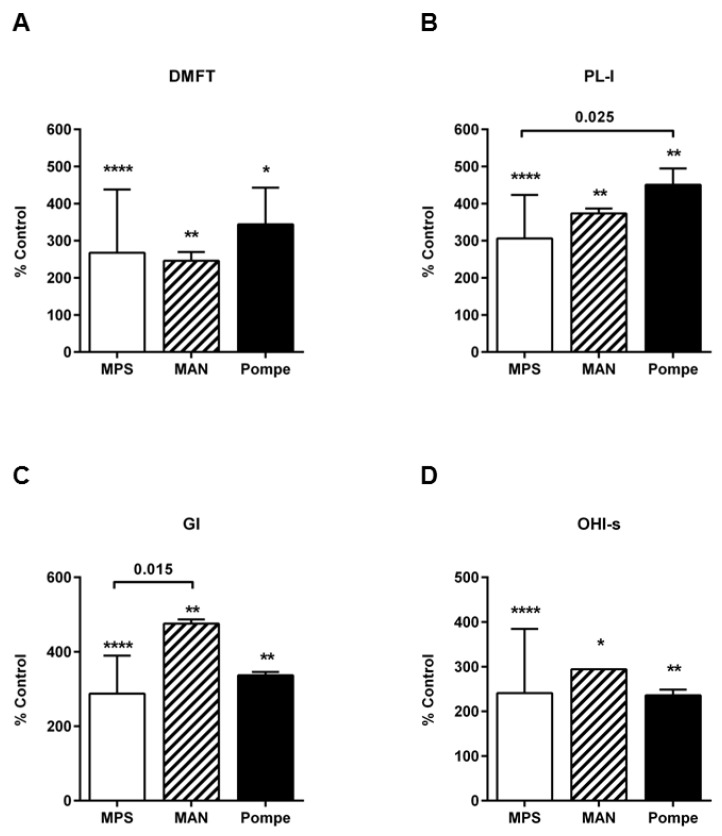
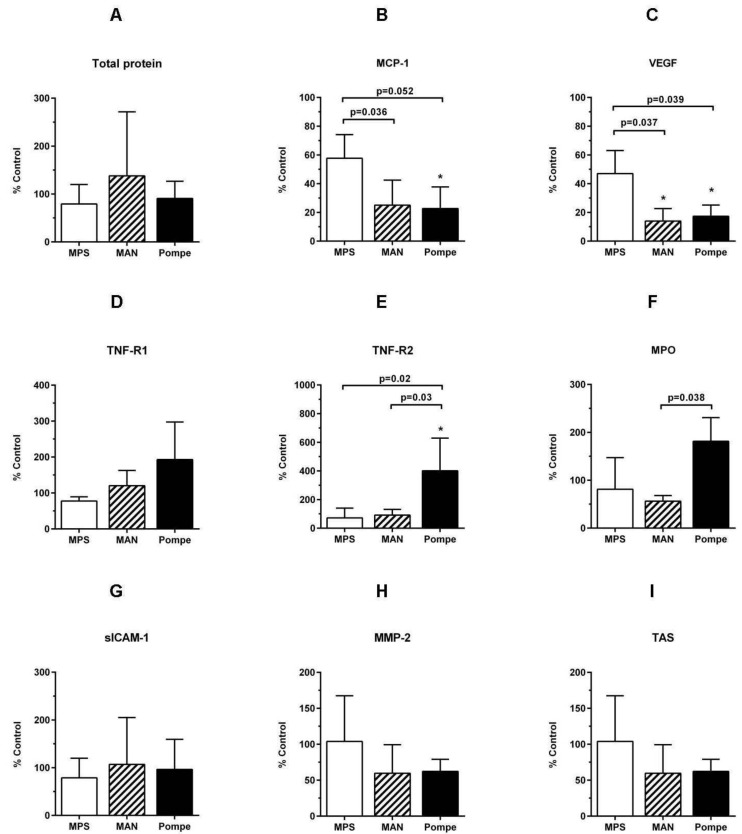
Patients with lysosomal storage diseases (LSDs) suffer from physical and mental disabilities, which together with poor access to professional care may lead to impaired oral health. This cross-sectional case-control study characterized the status of oral health in patients with LSDs in Poland. Thirty-six children and young adults with various forms of LSDs were examined. The data were compared with those from age- and sex-matched healthy controls. Exemplary cases were presented to highlight typical problems in oral care associated with LSDs. When possible, saliva was collected and analyzed for total protein, inflammatory mediators, and antioxidant status. Generally, patients with LSDs had significantly higher prevalence of caries, inferior gingival status, and inadequate oral hygiene. The severity of oral health impairment in mucopolysaccaridoses, the most common LSD in Poland, was similar to that seen in patients with mannosidoses or Pompe disease. Saliva could be collected only from few less handicapped patients. In MPS, it did not appear to differ significantly from the controls, but in patients with Pompe disease it contained lower concentrations of vascular endothelial growth factor (VEGF) and monocyte chemoattractant protein-1 (MCP-1), but higher levels of tumor necrosis factor receptors 1 and 2 (TNF-R1, TNF-R2) and myeloperoxidase (MPO). In conclusion, Polish patients with LSDs have an inadequate level of oral hygiene and substantially deteriorated oral health.
溶酶体贮积症(LSDs)患者存在身体和精神残疾,加上难以获得专业护理,可能导致口腔健康受损。这项横断面病例对照研究对波兰LSDs患者的口腔健康状况进行了特征描述。对36名患有各种形式LSDs的儿童和年轻人进行了检查。将这些数据与年龄和性别匹配的健康对照者的数据进行了比较。展示了一些典型病例,以突出与LSDs相关的口腔护理中的典型问题。在可能的情况下,收集唾液并分析其总蛋白、炎症介质和抗氧化状态。一般来说,LSDs患者的龋齿患病率显著更高,牙龈状况较差,口腔卫生不足。黏多糖贮积症是波兰最常见的LSD,其口腔健康损害的严重程度与甘露糖苷贮积症或庞贝病患者相似。仅能从少数残疾程度较轻的患者中收集唾液。在黏多糖贮积症患者中,唾液与对照组相比似乎没有显著差异,但在庞贝病患者中,唾液中血管内皮生长因子(VEGF)和单核细胞趋化蛋白-1(MCP-1)的浓度较低,但肿瘤坏死因子受体1和2(TNF-R1、TNF-R2)以及髓过氧化物酶(MPO)的水平较高。总之,波兰LSDs患者的口腔卫生水平不足,口腔健康严重恶化。