Ho Chia Chi M, Chhabra Akanksha, Starkl Philipp, Schnorr Peter-John, Wilmes Stephan, Moraga Ignacio, Kwon Hye-Sook, Gaudenzio Nicolas, Sibilano Riccardo, Wehrman Tom S, Gakovic Milica, Sockolosky Jonathan T, Tiffany Matthew R, Ring Aaron M, Piehler Jacob, Weissman Irving L, Galli Stephen J, Shizuru Judith A, Garcia K Christopher
Department of Bioengineering, Stanford University School of Engineering, 443 Via Ortega, Stanford, CA 94305, USA; Department of Molecular and Cellular Physiology, Stanford University School of Medicine, 279 Campus Drive, Stanford, CA 94305, USA; Institute for Stem Cell Biology and Regenerative Medicine, Stanford University School of Medicine, 265 Campus Drive, Stanford, CA 94305, USA.
Department of Blood and Marrow Transplantation, Stanford University School of Medicine, 300 Pasteur Drive, Stanford, CA 94305, USA; Stanford Cancer Institute, Stanford University School of Medicine, 265 Campus Drive, Stanford, CA 94305, USA.
Cell. 2017 Mar 9;168(6):1041-1052.e18. doi: 10.1016/j.cell.2017.02.011.
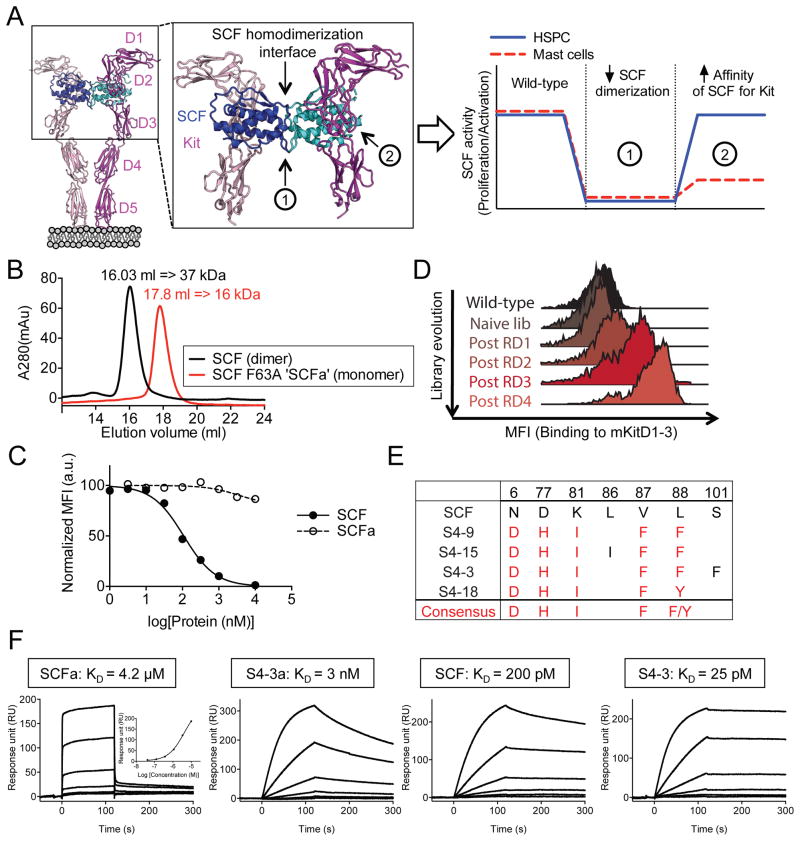
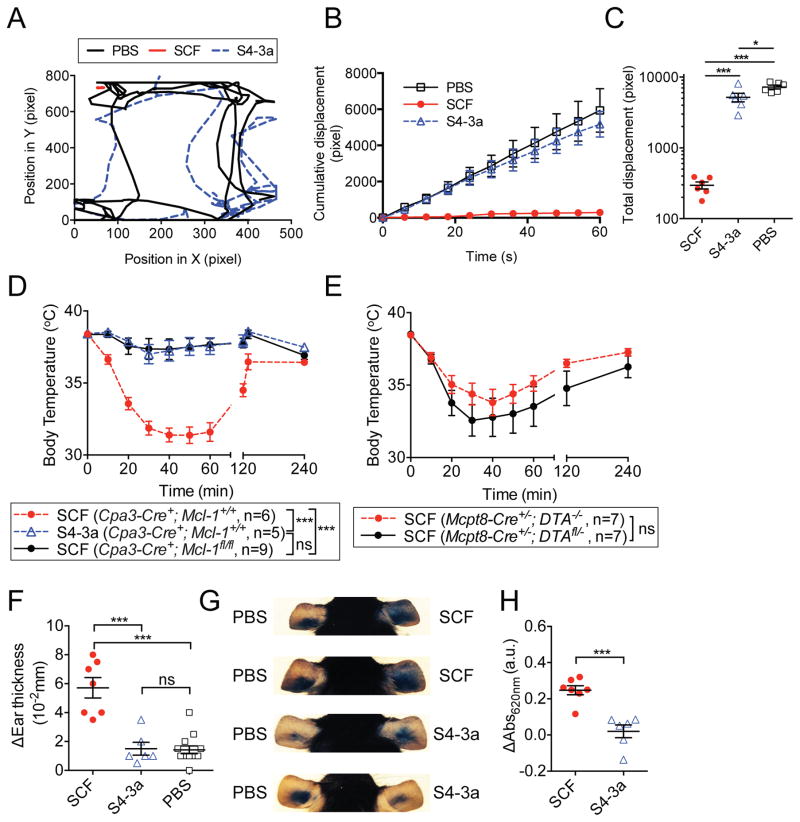
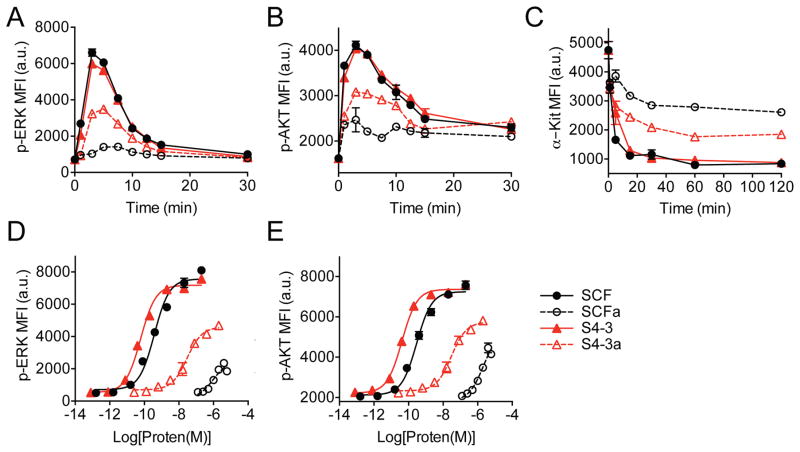
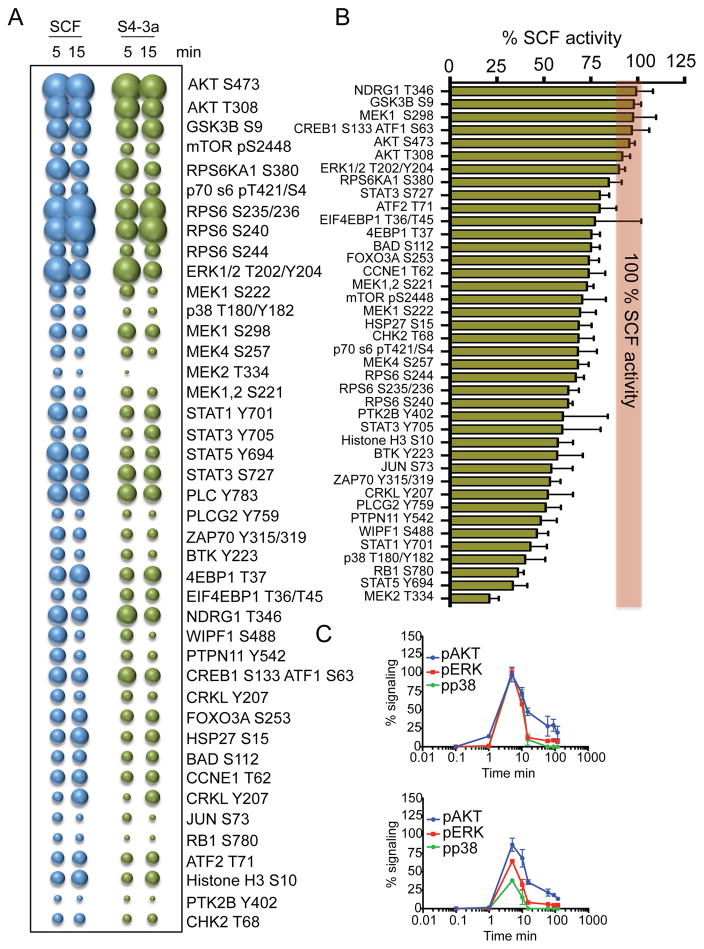
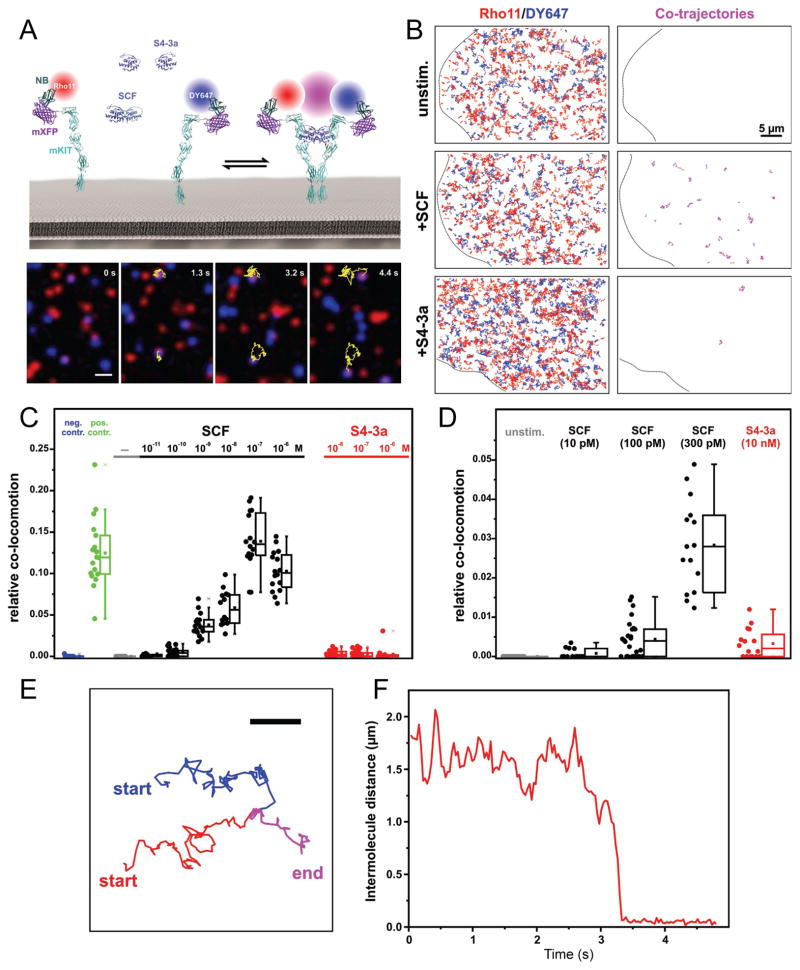
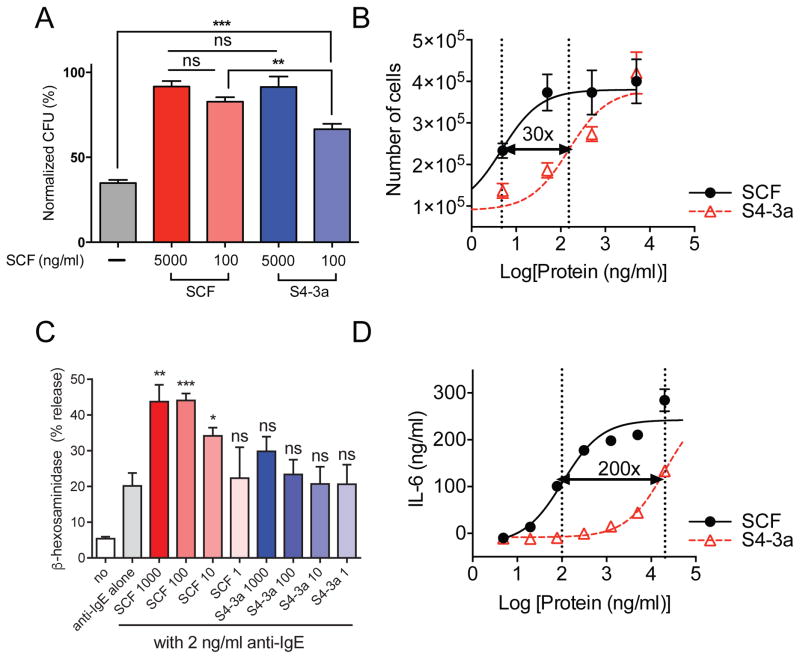
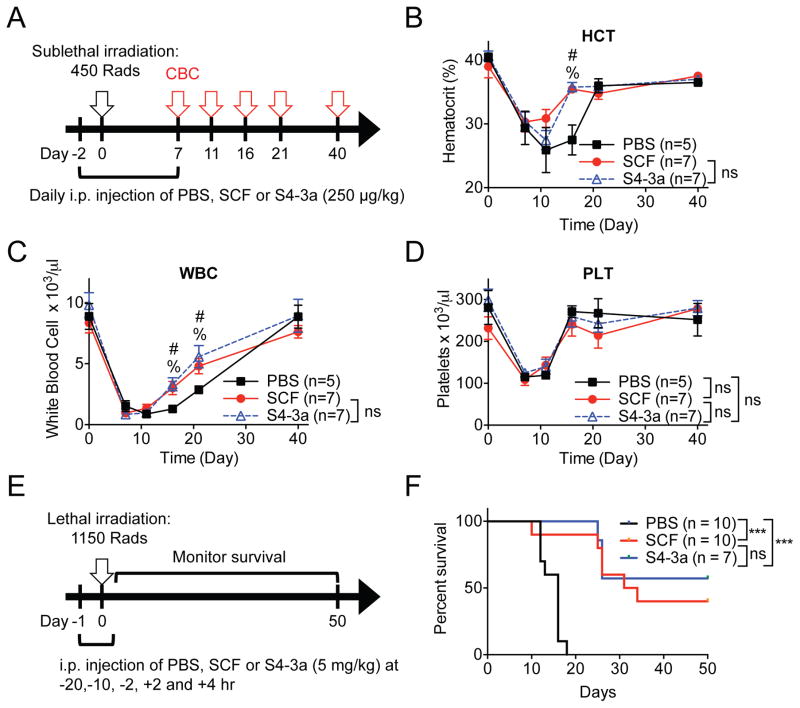
Most secreted growth factors and cytokines are functionally pleiotropic because their receptors are expressed on diverse cell types. While important for normal mammalian physiology, pleiotropy limits the efficacy of cytokines and growth factors as therapeutics. Stem cell factor (SCF) is a growth factor that acts through the c-Kit receptor tyrosine kinase to elicit hematopoietic progenitor expansion but can be toxic when administered in vivo because it concurrently activates mast cells. We engineered a mechanism-based SCF partial agonist that impaired c-Kit dimerization, truncating downstream signaling amplitude. This SCF variant elicited biased activation of hematopoietic progenitors over mast cells in vitro and in vivo. Mouse models of SCF-mediated anaphylaxis, radioprotection, and hematopoietic expansion revealed that this SCF partial agonist retained therapeutic efficacy while exhibiting virtually no anaphylactic off-target effects. The approach of biasing cell activation by tuning signaling thresholds and outputs has applications to many dimeric receptor-ligand systems.
大多数分泌型生长因子和细胞因子在功能上具有多效性,因为它们的受体在多种细胞类型上表达。虽然这对正常的哺乳动物生理学很重要,但多效性限制了细胞因子和生长因子作为治疗药物的疗效。干细胞因子(SCF)是一种生长因子,它通过c-Kit受体酪氨酸激酶发挥作用,以引发造血祖细胞的扩增,但在体内给药时可能有毒,因为它同时激活肥大细胞。我们设计了一种基于机制的SCF部分激动剂,它损害了c-Kit二聚化,截断了下游信号幅度。这种SCF变体在体外和体内引发了造血祖细胞相对于肥大细胞的偏向性激活。SCF介导的过敏反应、辐射防护和造血扩增的小鼠模型表明,这种SCF部分激动剂保留了治疗效果,同时几乎没有过敏脱靶效应。通过调节信号阈值和输出偏向细胞激活的方法可应用于许多二聚体受体-配体系统。