Department of Biomedical Engineering, University of Texas at Austin, Austin, TX, USA.
Department of Biochemistry & Molecular Biology, University of Texas Medical Branch, Galveston, TX, USA.
Nat Commun. 2022 May 6;13(1):2497. doi: 10.1038/s41467-022-30103-2.
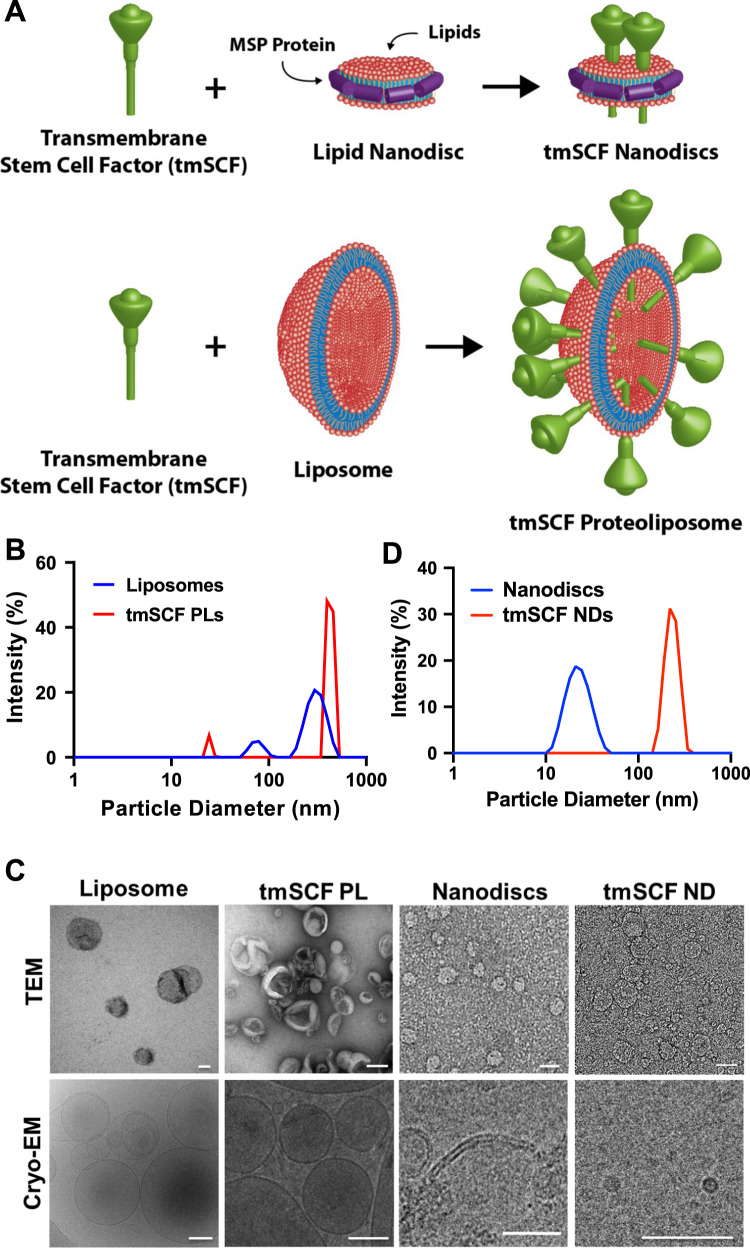
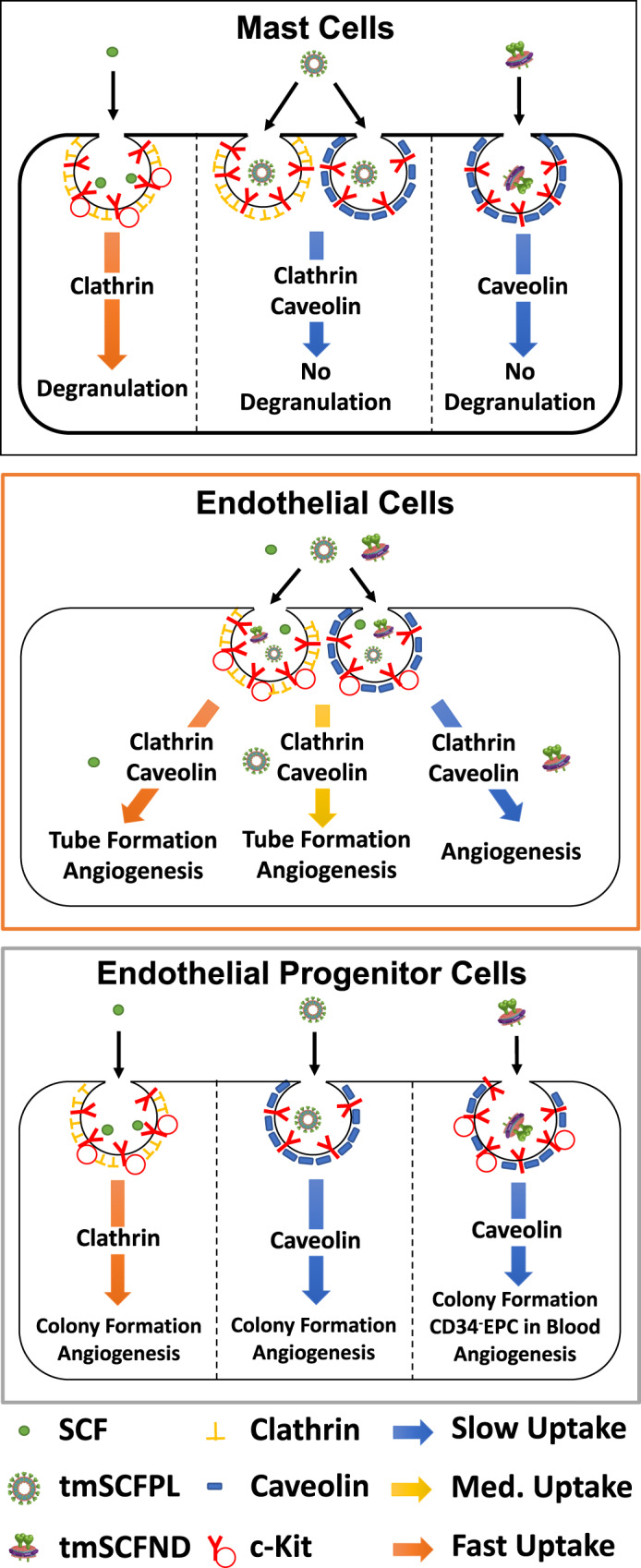
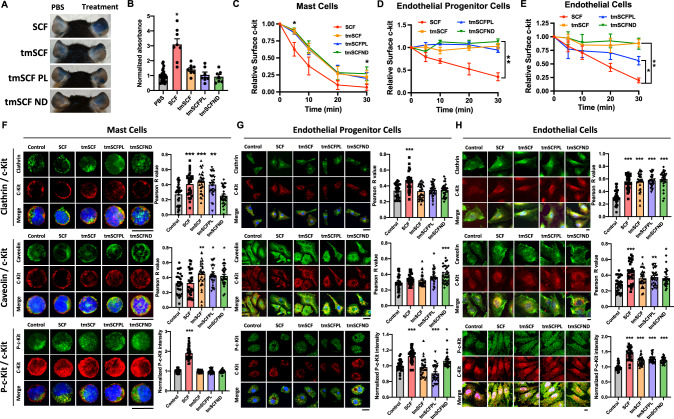
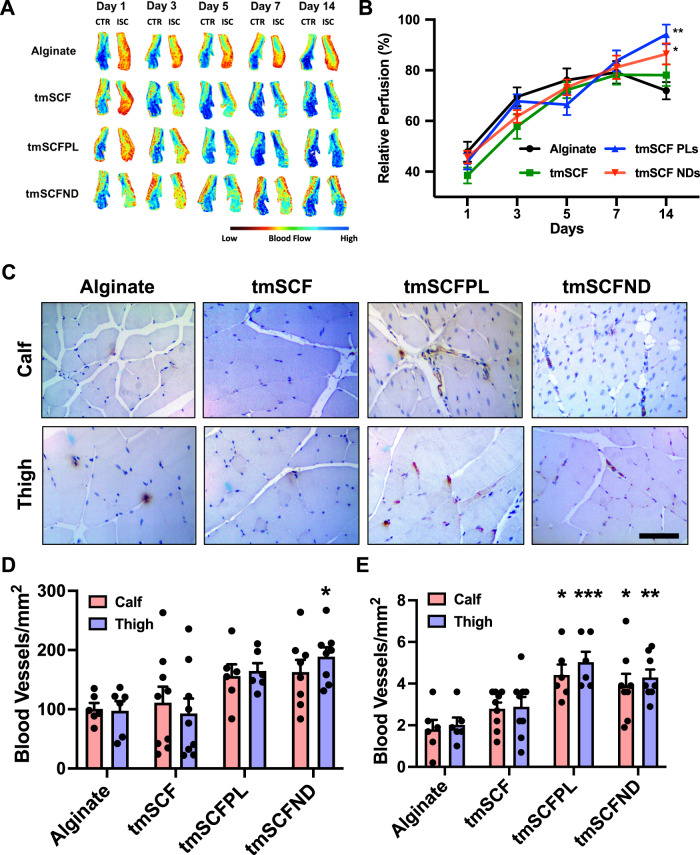
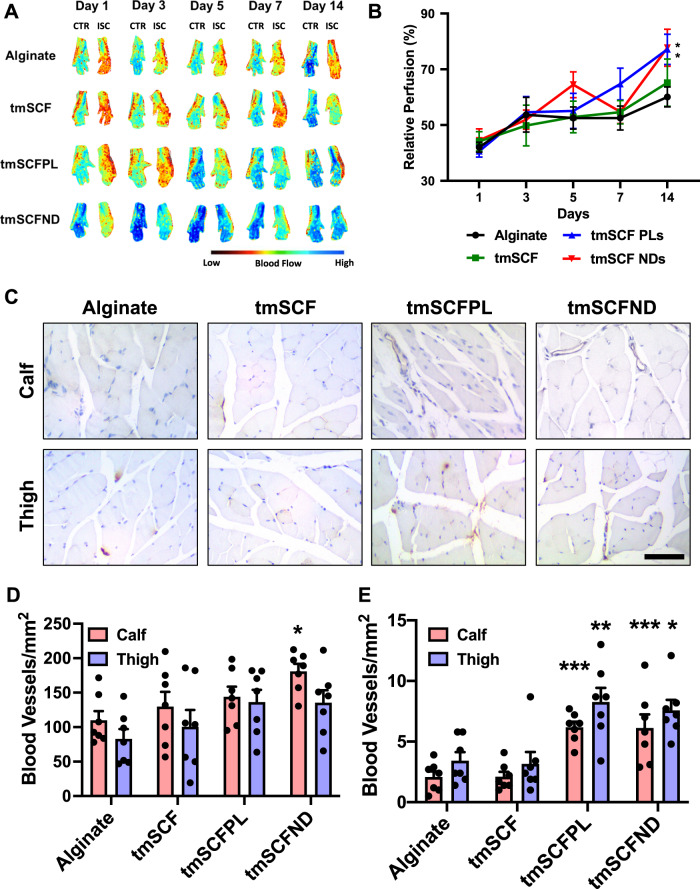
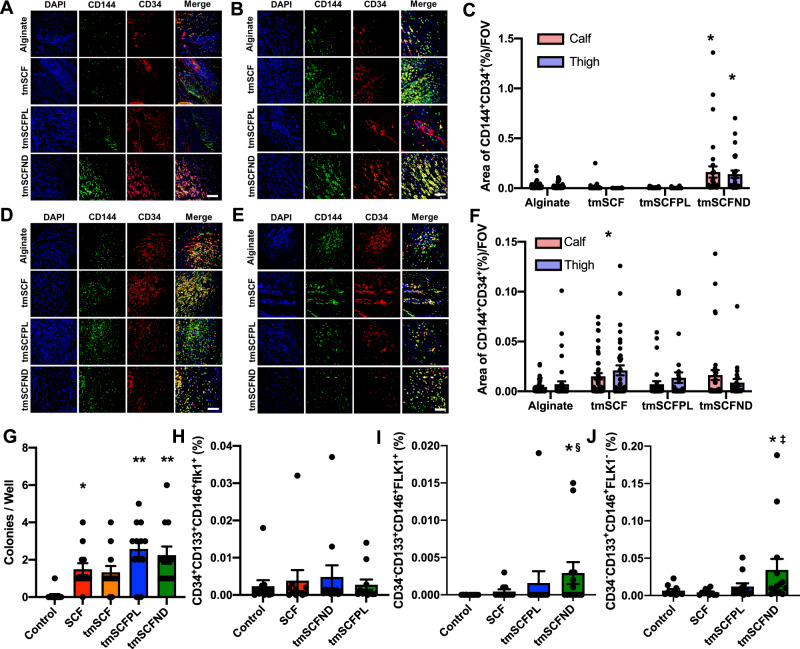
Stem cell factor (SCF) is a cytokine that regulates hematopoiesis and other biological processes. While clinical treatments using SCF would be highly beneficial, these have been limited by toxicity related to mast cell activation. Transmembrane SCF (tmSCF) has differential activity from soluble SCF and has not been explored as a therapeutic agent. We created novel therapeutics using tmSCF embedded in proteoliposomes or lipid nanodiscs. Mouse models of anaphylaxis and ischemia revealed the tmSCF-based therapies did not activate mast cells and improved the revascularization in the ischemic hind limb. Proteoliposomal tmSCF preferentially acted on endothelial cells to induce angiogenesis while tmSCF nanodiscs had greater activity in inducing stem cell mobilization and recruitment to the site of injury. The type of lipid nanocarrier used altered the relative cellular uptake pathways and signaling in a cell type dependent manner. Overall, we found that tmSCF-based therapies can provide therapeutic benefits without off target effects.
干细胞因子 (SCF) 是一种细胞因子,可调节造血和其他生物过程。虽然使用 SCF 的临床治疗将非常有益,但由于肥大细胞激活相关的毒性,这些治疗受到限制。跨膜 SCF (tmSCF) 与可溶性 SCF 具有不同的活性,尚未被探索作为治疗剂。我们使用嵌入蛋白脂质体或脂质纳米碟中的 tmSCF 来创建新型治疗方法。过敏和缺血的小鼠模型表明,基于 tmSCF 的治疗方法不会激活肥大细胞,并改善缺血后肢的血管再生成。蛋白脂质体 tmSCF 优先作用于内皮细胞以诱导血管生成,而 tmSCF 纳米碟在诱导干细胞动员和募集到损伤部位方面具有更大的活性。所使用的脂质纳米载体的类型以细胞类型依赖的方式改变了相对细胞摄取途径和信号转导。总的来说,我们发现基于 tmSCF 的治疗方法可以提供治疗益处而没有脱靶效应。