Toor Salman M, Syed Khaja Azharuddin Sajid, El Salhat Haytham, Faour Issam, Kanbar Jihad, Quadri Asif A, Albashir Mohamed, Elkord Eyad
College of Medicine and Health Sciences, United Arab Emirates University, Al Ain, United Arab Emirates.
Cancer Research Center, Qatar Biomedical Research Institute, College of Science and Engineering, Hamad Bin Khalifa University, Qatar Foundation, Doha, Qatar.
Cancer Immunol Immunother. 2017 Jun;66(6):753-764. doi: 10.1007/s00262-017-1977-z. Epub 2017 Mar 10.
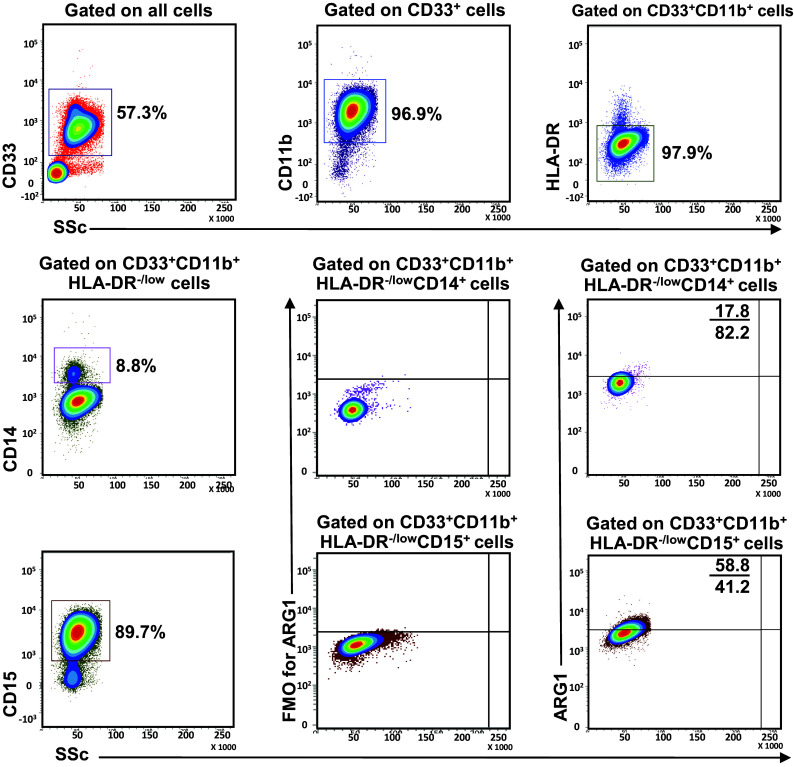
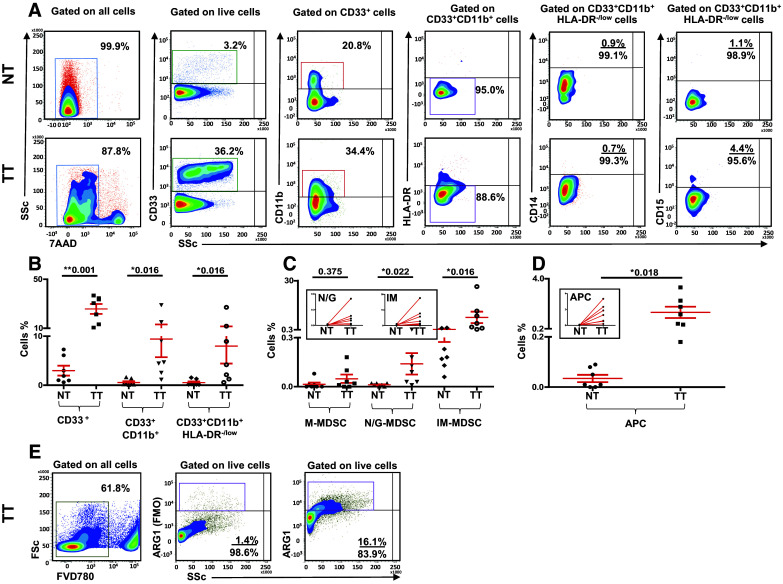
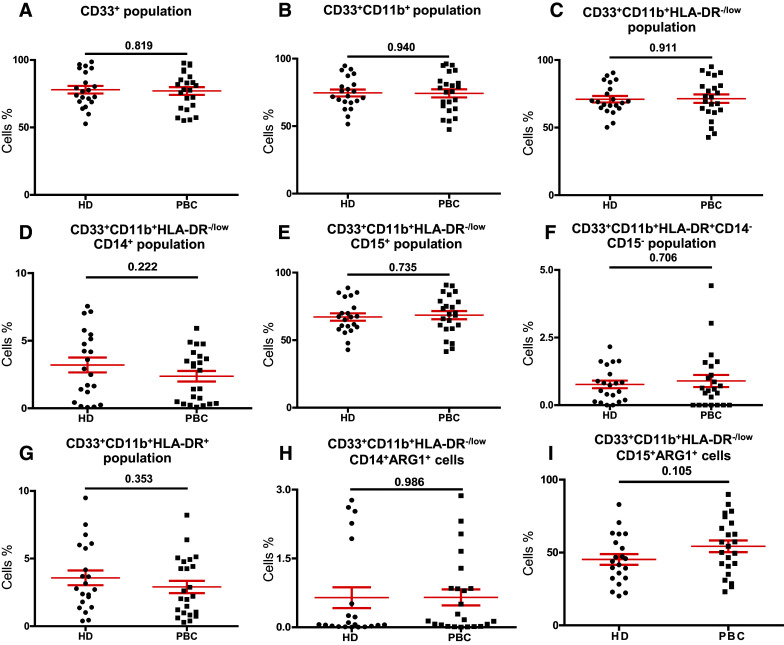
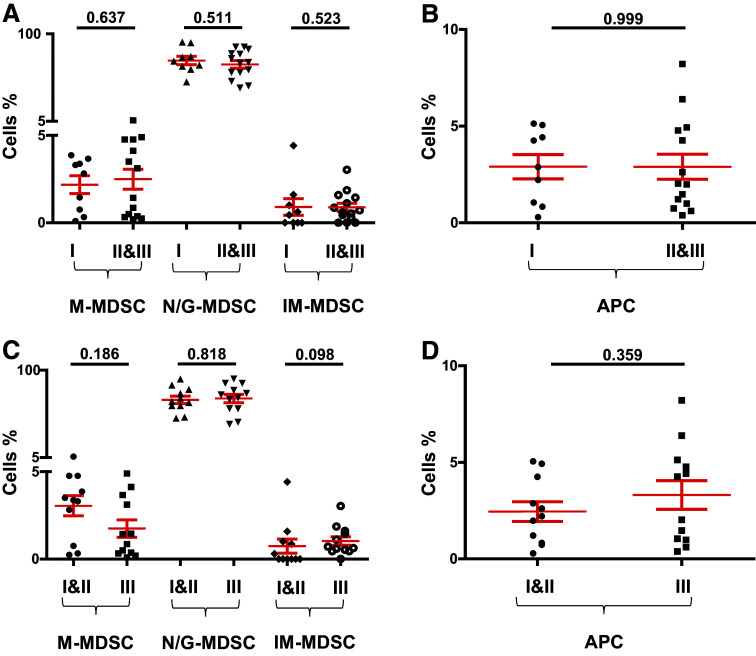
Pathological conditions including cancers lead to accumulation of a morphological mixture of highly immunosuppressive cells termed as myeloid-derived suppressor cells (MDSC). The lack of conclusive markers to identify human MDSC, due to their heterogeneous nature and close phenotypical and functional proximity with other cell subsets, made it challenging to identify these cells. Nevertheless, expansion of MDSC has been reported in periphery and tumor microenvironment of various cancers. The majority of studies on breast cancers were performed on murine models and hence limited literature is available on the relation of MDSC accumulation with clinical settings in breast cancer patients. The aim of this study was to investigate levels and phenotypes of myeloid cells in peripheral blood (n = 23) and tumor microenvironment of primary breast cancer patients (n = 7), compared with blood from healthy donors (n = 21) and paired non-tumor normal breast tissues from the same patients (n = 7). Using multicolor flow cytometric assays, we found that breast cancer patients had significantly higher levels of tumor-infiltrating myeloid cells, which comprised of granulocytes (P = 0.022) and immature cells that lack the expression of markers for fully differentiated monocytes or granulocytes (P = 0.016). Importantly, this expansion was not reflected in the peripheral blood. The immunosuppressive potential of these cells was confirmed by expression of Arginase 1 (ARG1), which is pivotal for T-cell suppression. These findings are important for developing therapeutic modalities to target mechanisms employed by immunosuppressive cells that generate an immune-permissive environment for the progression of cancer.
包括癌症在内的病理状况会导致一种被称为髓系来源抑制细胞(MDSC)的高度免疫抑制细胞的形态学混合物的积累。由于人类MDSC具有异质性,并且在表型和功能上与其他细胞亚群密切相关,缺乏明确的标志物来识别它们,这使得识别这些细胞具有挑战性。尽管如此,已有报道称在各种癌症的外周血和肿瘤微环境中MDSC会扩增。大多数关于乳腺癌的研究是在小鼠模型上进行的,因此关于MDSC积累与乳腺癌患者临床情况之间关系的文献有限。本研究的目的是调查原发性乳腺癌患者(n = 7)外周血(n = 23)和肿瘤微环境中髓系细胞的水平和表型,并与健康供体的血液(n = 21)以及同一患者配对的非肿瘤正常乳腺组织(n = 7)进行比较。使用多色流式细胞术检测,我们发现乳腺癌患者肿瘤浸润髓系细胞水平显著更高,其中包括粒细胞(P = 0.022)和缺乏完全分化单核细胞或粒细胞标志物表达的未成熟细胞(P = 0.016)。重要的是,这种扩增在外周血中并未体现。这些细胞的免疫抑制潜能通过精氨酸酶1(ARG1)的表达得到证实,ARG1对T细胞抑制至关重要。这些发现对于开发针对免疫抑制细胞所采用机制的治疗方式具有重要意义,这些机制为癌症进展创造了免疫许可环境。