Belair David G, Abbott Barbara D
US EPA, Office of Research and Development, National Health and Environmental Effects Research Laboratory, Toxicity Assessment Division, Developmental Toxicology Branch, Research Triangle Park, NC 27711, United States.
US EPA, Office of Research and Development, National Health and Environmental Effects Research Laboratory, Toxicity Assessment Division, Developmental Toxicology Branch, Research Triangle Park, NC 27711, United States.
Toxicology. 2017 May 1;382:93-107. doi: 10.1016/j.tox.2017.03.007. Epub 2017 Mar 8.
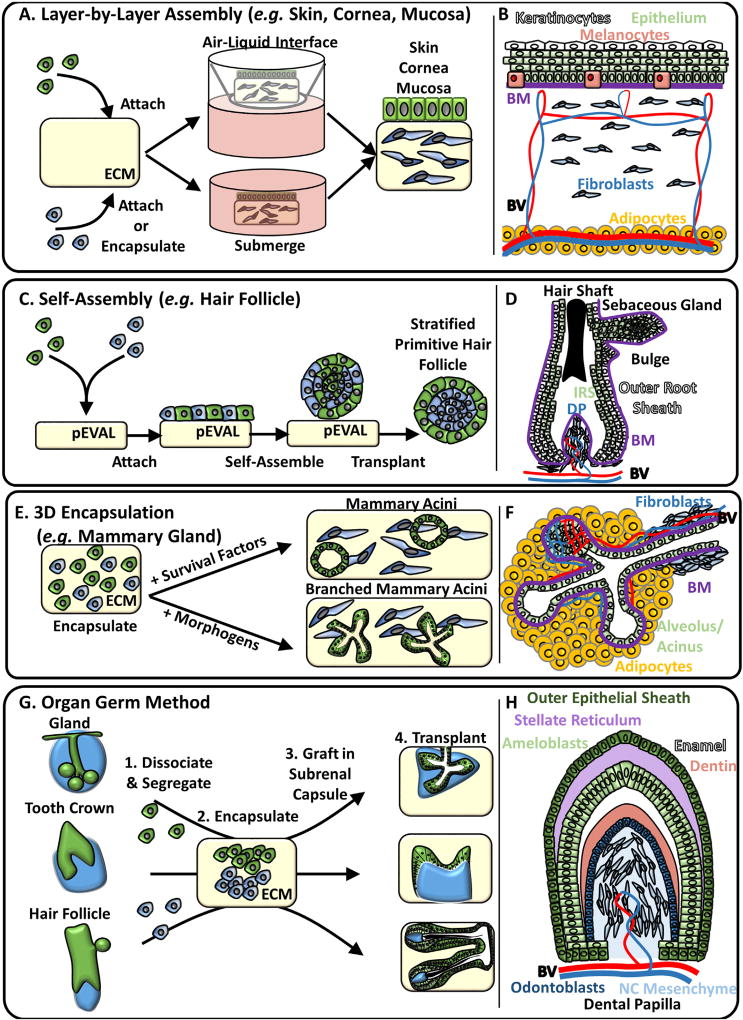
Crosstalk between epithelial and stromal cells drives the morphogenesis of ectodermal organs during development and promotes normal mature adult epithelial tissue homeostasis. Epithelial-stromal interactions (ESIs) have historically been examined using mammalian models and ex vivo tissue recombination. Although these approaches have elucidated signaling mechanisms underlying embryonic morphogenesis processes and adult mammalian epithelial tissue function, they are limited by the availability of tissue, low throughput, and human developmental or physiological relevance. In this review, we describe how bioengineered ESIs, using either human stem cells or co-cultures of human primary epithelial and stromal cells, have enabled the development of human in vitro epithelial tissue models that recapitulate the architecture, phenotype, and function of adult human epithelial tissues. We discuss how the strategies used to engineer mature epithelial tissue models in vitro could be extrapolated to instruct the design of organotypic culture models that can recapitulate the structure of embryonic ectodermal tissues and enable the in vitro assessment of events critical to organ/tissue morphogenesis. Given the importance of ESIs towards normal epithelial tissue development and function, such models present a unique opportunity for toxicological screening assays to incorporate ESIs to assess the impact of chemicals on mature and developing epidermal tissues.
上皮细胞与基质细胞之间的相互作用驱动了发育过程中外胚层器官的形态发生,并促进了正常成熟的成年上皮组织的稳态。历史上,上皮-基质相互作用(ESIs)一直通过哺乳动物模型和体外组织重组来研究。尽管这些方法已经阐明了胚胎形态发生过程和成年哺乳动物上皮组织功能背后的信号传导机制,但它们受到组织可用性、低通量以及与人类发育或生理相关性的限制。在这篇综述中,我们描述了如何利用人类干细胞或人类原代上皮细胞与基质细胞的共培养构建生物工程化的ESIs,从而开发出能够重现成年人类上皮组织结构、表型和功能的体外上皮组织模型。我们讨论了如何将体外构建成熟上皮组织模型所采用的策略推广到指导器官型培养模型的设计中,这些模型能够重现胚胎外胚层组织的结构,并能够在体外评估对器官/组织形态发生至关重要的事件。鉴于ESIs对正常上皮组织发育和功能的重要性,此类模型为毒理学筛选试验提供了一个独特的机会,可纳入ESIs来评估化学物质对成熟和发育中的表皮组织的影响。