Lv Hongming, Liu Qinmei, Wen Zhongmei, Feng Haihua, Deng Xuming, Ci Xinxin
Institute of Translational Medicine, The First Hospital, Jilin University, Changchun 130001, China; Key Laboratory of Zoonosis, Ministry of Education, College of Veterinary Medicine, Jilin University, Changchun 130061, China.
Institute of Translational Medicine, The First Hospital, Jilin University, Changchun 130001, China.
Redox Biol. 2017 Aug;12:311-324. doi: 10.1016/j.redox.2017.03.001. Epub 2017 Mar 2.
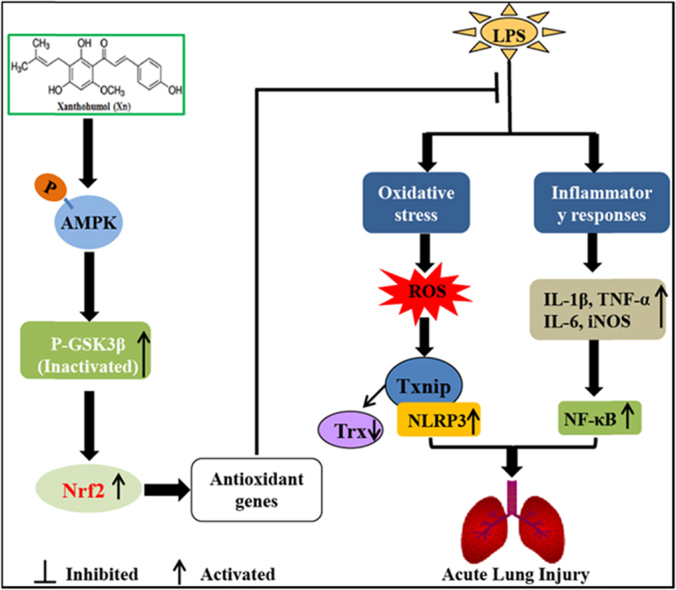
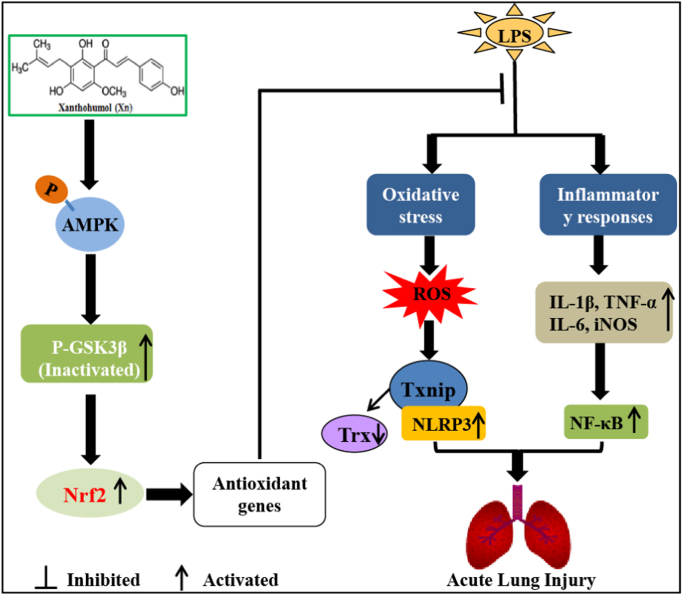
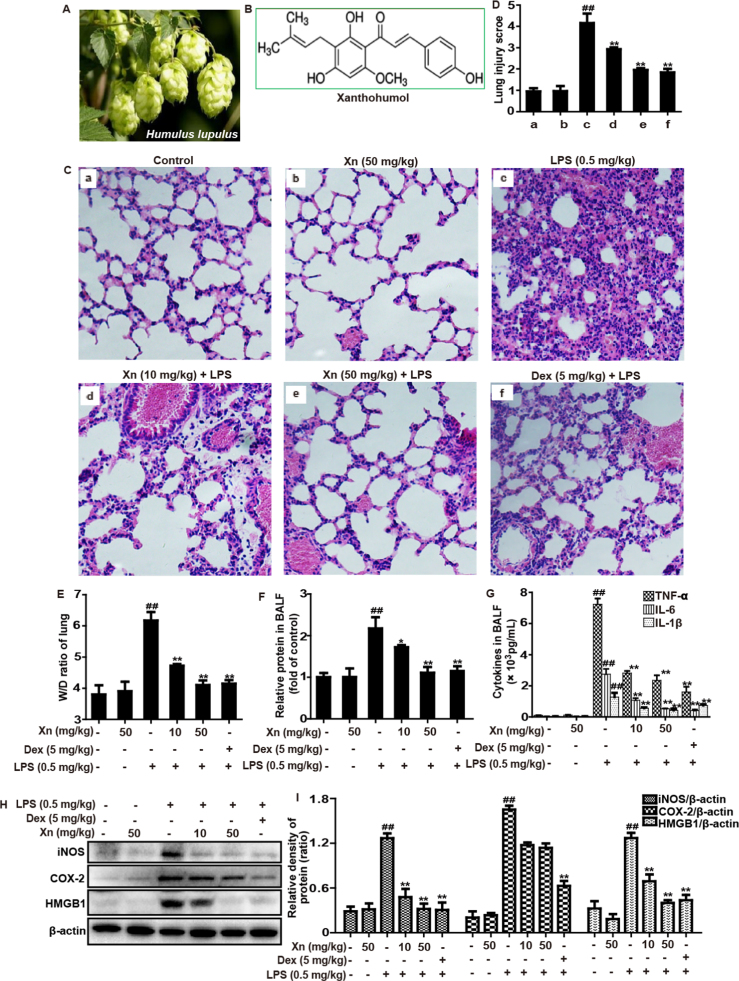
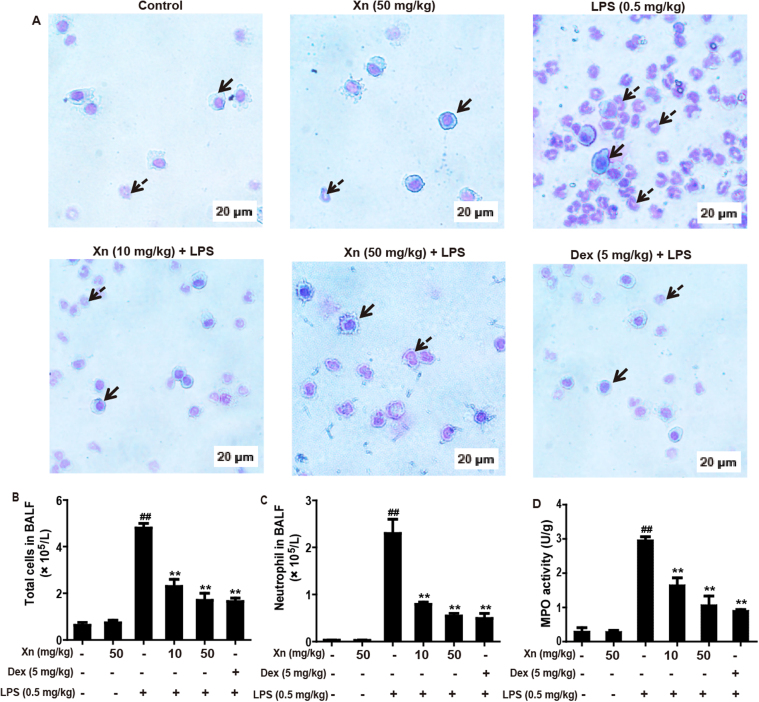
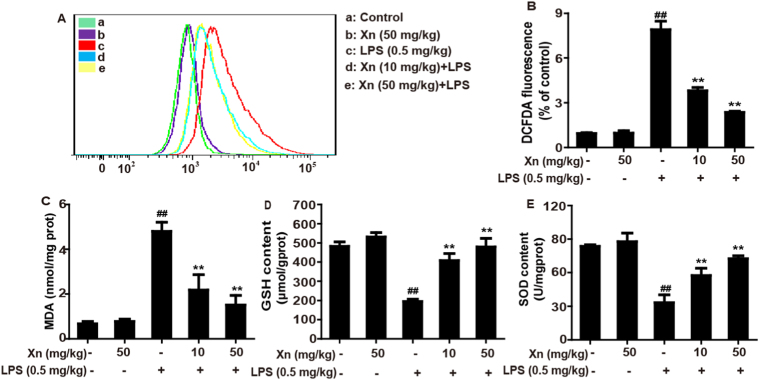
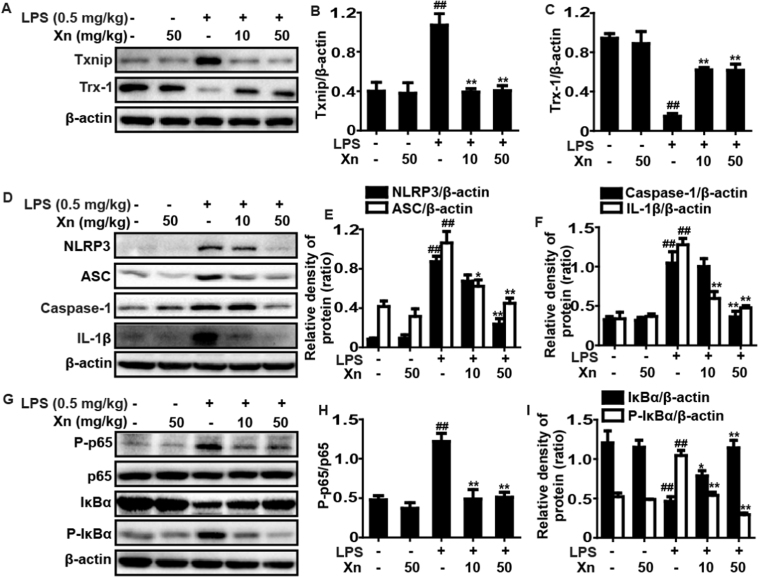
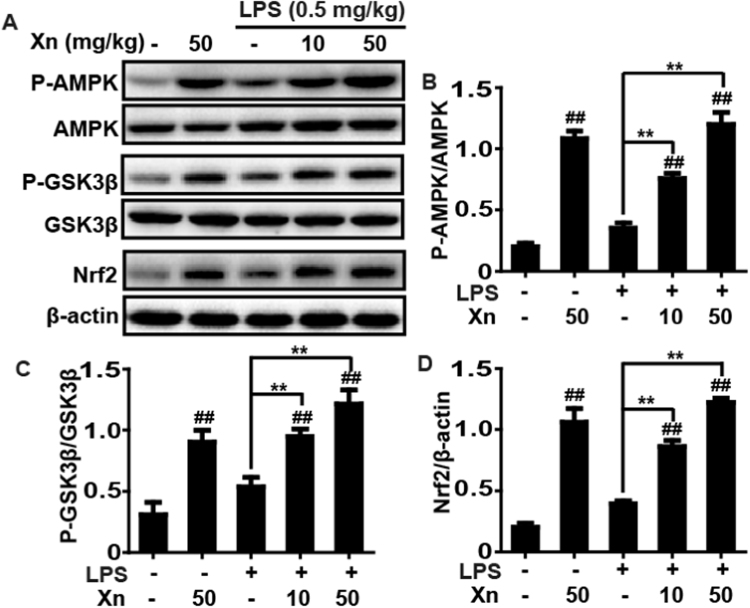
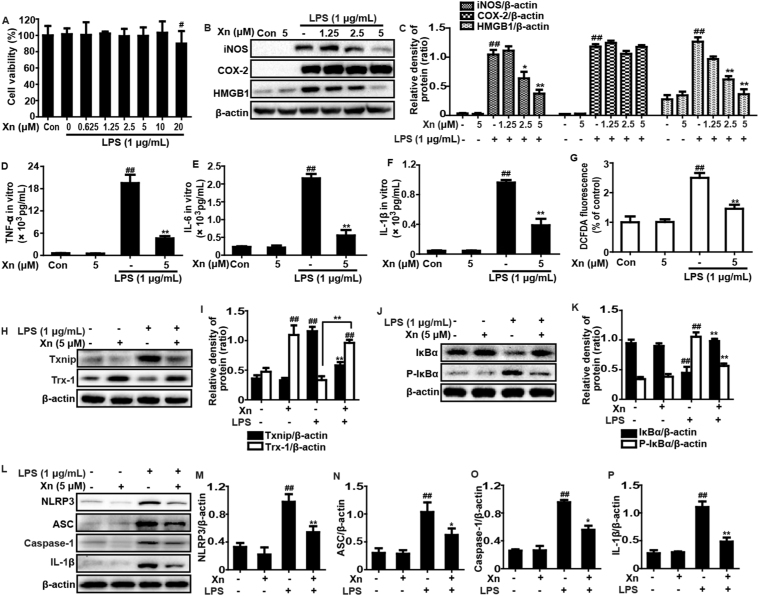
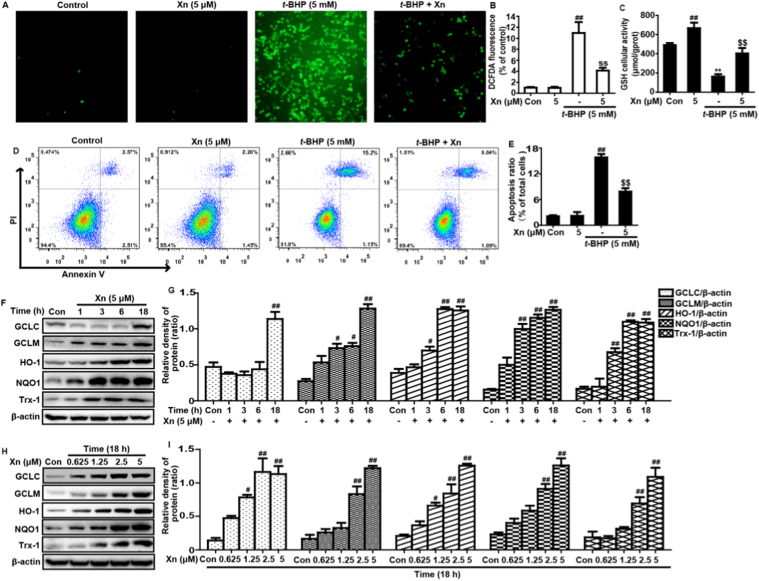
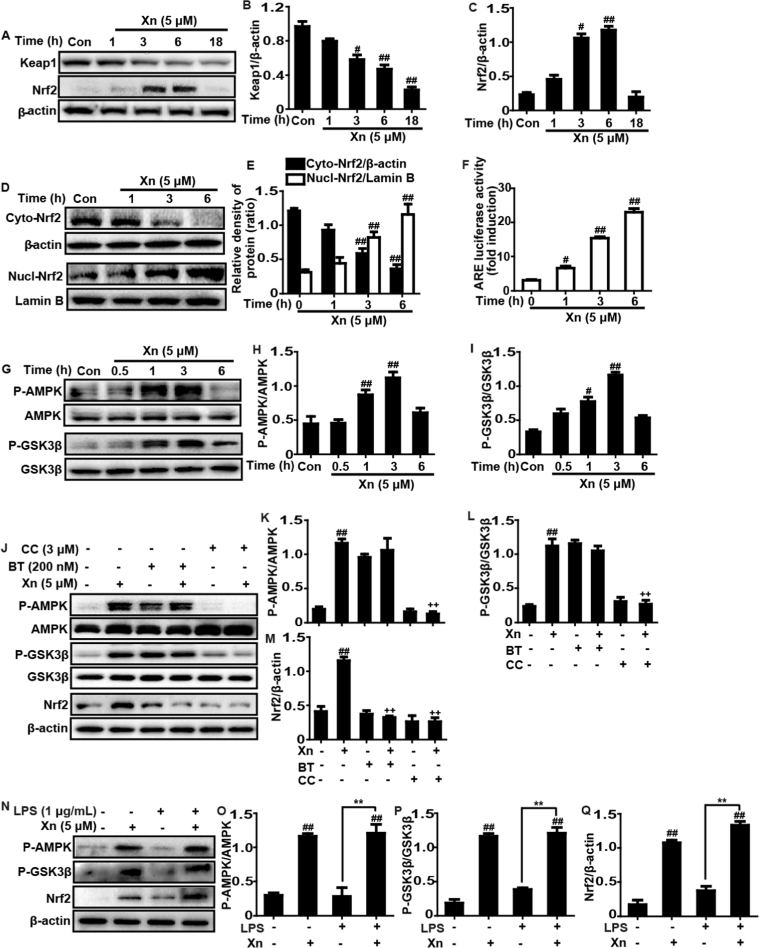
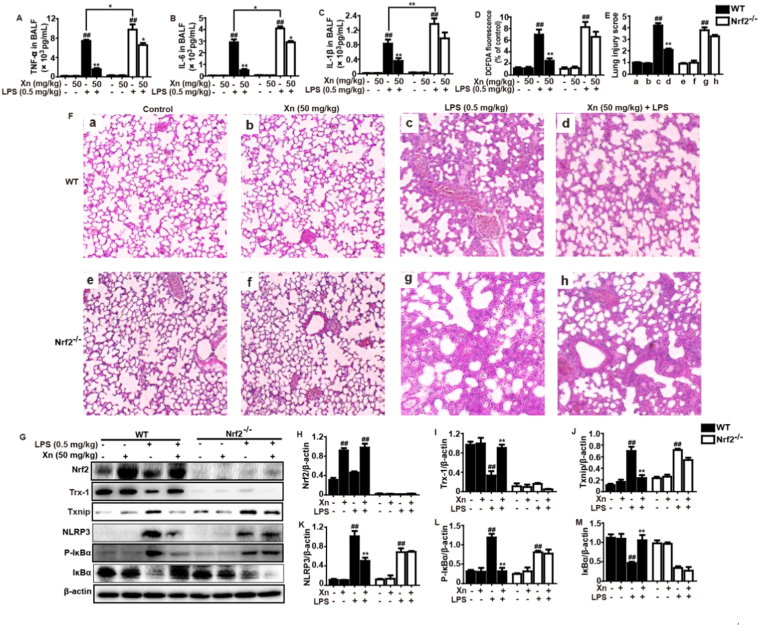
Abundant natural flavonoids can induce nuclear factor-erythroid 2 related factor 2 (Nrf2) and/or AMP-activated protein kinase (AMPK) activation, which play crucial roles in the amelioration of various inflammation- and oxidative stress-induced diseases, including acute lung injury (ALI). Xanthohumol (Xn), a principal prenylflavonoid, possesses anti-inflammation and anti-oxidant activities. However, whether Xn could protect from LPS-induced ALI through inducing AMPK/Nrf2 activation and its downstream signals, are still poorly elucidated. Accordingly, we focused on exploring the protective effect of Xn in the context of ALI and the involvement of underlying molecular mechanisms. Our findings indicated that Xn effectively alleviated lung injury by reduction of lung W/D ratio and protein levels, neutrophil infiltration, MDA and MPO formation, and SOD and GSH depletion. Meanwhile, Xn significantly lessened histopathological changes, reactive oxygen species (ROS) generation, several cytokines secretion, and iNOS and HMGB1 expression, and inhibited Txnip/NLRP3 inflammasome and NF-κB signaling pathway activation. Additionally, Xn evidently decreased t-BHP-stimulated cell apoptosis, ROS generation and GSH depletion but increased various anti-oxidative enzymes expression regulated by Keap1-Nrf2/ARE activation, which may be associated with AMPK and GSK3β phosphorylation. However, Xn-mediated inflammatory cytokines and ROS production, histopathological changes, Txnip/NLRP3 inflammasome and NF-κB signaling pathway in WT mice were remarkably abrogated in Nrf2 mice. Our experimental results firstly provided a support that Xn effectively protected LPS-induced ALI against oxidative stress and inflammation damage which are largely dependent upon upregulation of the Nrf2 pathway via activation of AMPK/GSK3β, thereby suppressing LPS-activated Txnip/NLRP3 inflammasome and NF-κB signaling pathway.
大量天然黄酮类化合物可诱导核因子红细胞2相关因子2(Nrf2)和/或AMP激活的蛋白激酶(AMPK)活化,这在在改善在改善包括急性肺损伤(ALI)在内的各种炎症和氧化应激诱导的疾病中发挥关键作用。黄腐酚(Xn)是一种主要的异戊烯基黄酮,具有抗炎和抗氧化活性。然而,Xn是否能通过诱导AMPK/Nrf2活化及其下游信号来保护免受LPS诱导的ALI,仍不清楚。因此,我们专注于探索Xn在ALI背景下的保护作用以及潜在分子机制的参与情况。我们的研究结果表明,Xn通过降低肺湿干比和蛋白质水平、中性粒细胞浸润、丙二醛和髓过氧化物酶形成以及超氧化物歧化酶和谷胱甘肽消耗,有效减轻了肺损伤。同时,Xn显著减轻了组织病理学变化、活性氧(ROS)生成、几种细胞因子分泌以及诱导型一氧化氮合酶和高迁移率族蛋白B1表达,并抑制硫氧还蛋白互作蛋白/NLRP3炎性小体和核因子κB信号通路活化。此外,Xn明显减少叔丁基过氧化氢刺激的细胞凋亡、ROS生成和谷胱甘肽消耗,但增加了由Keap1-Nrf2/ARE活化调节的各种抗氧化酶表达,这可能与AMPK和糖原合成酶激酶3β磷酸化有关。然而,在Nrf2基因敲除小鼠中,Xn介导的野生型小鼠炎性细胞因子和ROS产生、组织病理学变化、硫氧还蛋白互作蛋白/NLRP3炎性小体和核因子κB信号通路明显被消除。我们的实验结果首次提供了支持,即Xn有效保护LPS诱导的ALI免受氧化应激和炎症损伤,这在很大程度上依赖于通过激活AMPK/糖原合成酶激酶3β上调Nrf2途径,从而抑制LPS激活的硫氧还蛋白互作蛋白/NLRP3炎性小体和核因子κB信号通路。