Garcia T X, Hofmann M C
Department of Endocrine Neoplasia and Hormonal Disorders, University of Texas MD Anderson Cancer Center, Houston, TX, USA.
Anim Reprod. 2015 Jan-Mar;12(1):35-45.
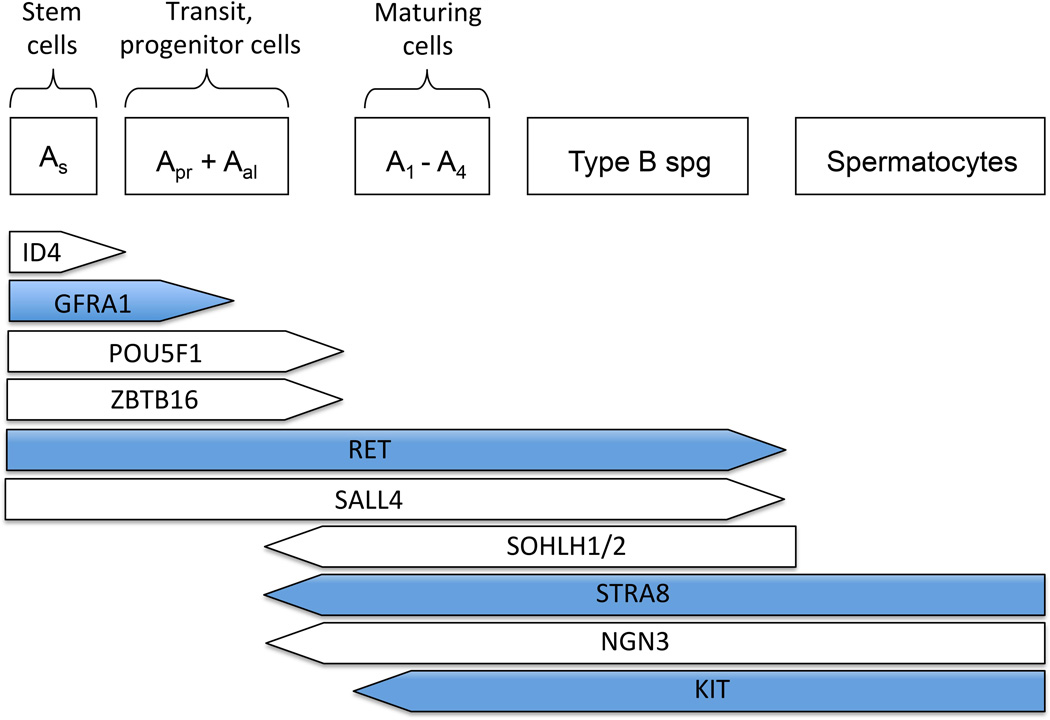
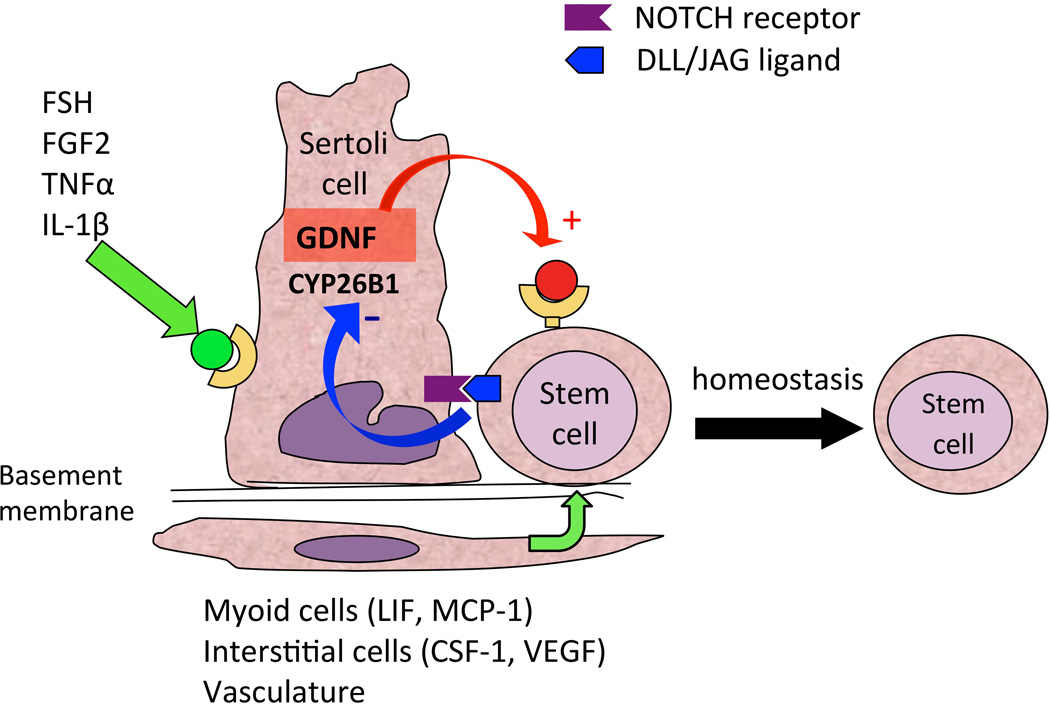
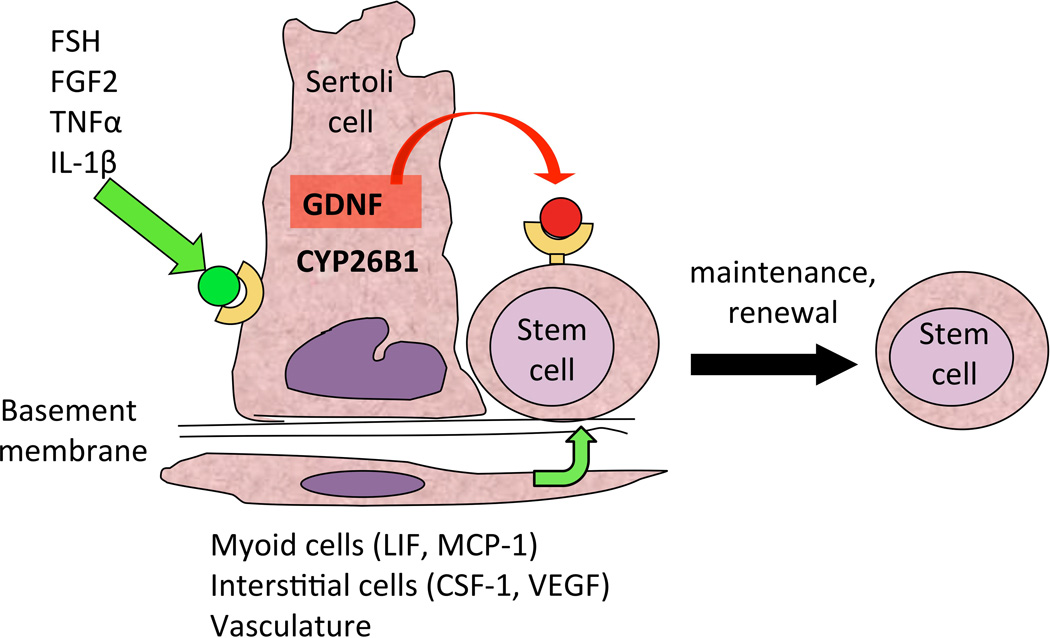
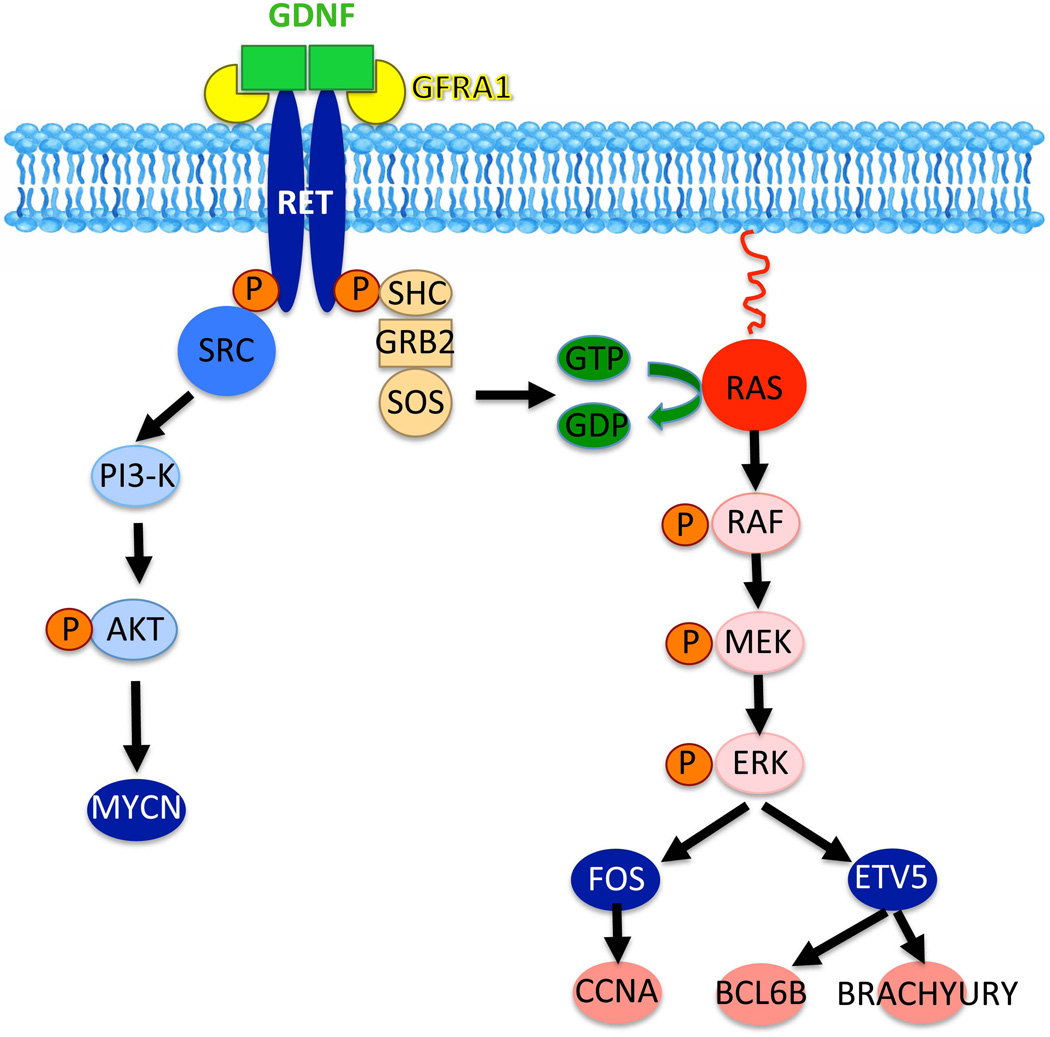
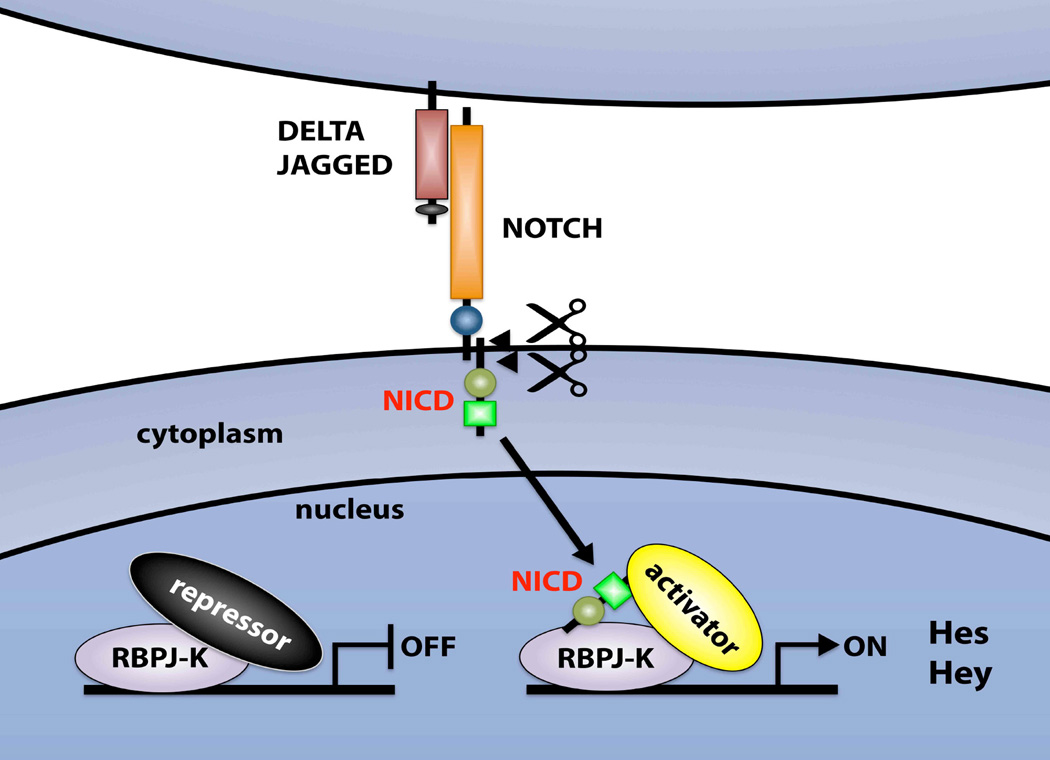
Mammalian spermatogenesis is a complex process in which spermatogonial stem cells of the testis (SSCs) develop to ultimately form spermatozoa. In the seminiferous epithelium, SSCs self-renew to maintain the pool of stem cells throughout life, or they differentiate to generate a large number of germ cells. A balance between SSC self-renewal and differentiation is therefore essential to maintain normal spermatogenesis and fertility. Stem cell homeostasis is tightly regulated by signals from the surrounding microenvironment, or SSC niche. By physically supporting the SSCs and providing them with these extrinsic molecules, the Sertoli cell is the main component of the niche. Earlier studies have demonstrated that GDNF and CYP26B1, produced by Sertoli cells, are crucial for self-renewal of the SSC pool and maintenance of the undifferentiated state. Down-regulating the production of these molecules is therefore equally important to allow germ cell differentiation. We propose that NOTCH signaling in Sertoli cells is a crucial regulator of germ cell fate by counteracting these stimulatory factors to maintain stem cell homeostasis. Dysregulation of this essential niche component can lead by itself to sterility or facilitate testicular cancer development.
哺乳动物的精子发生是一个复杂的过程,其中睾丸的精原干细胞(SSCs)发育最终形成精子。在生精上皮中,SSCs自我更新以终生维持干细胞库,或者它们分化产生大量生殖细胞。因此,SSC自我更新与分化之间的平衡对于维持正常的精子发生和生育能力至关重要。干细胞稳态受到来自周围微环境即SSC生态位信号的严格调控。通过物理支持SSCs并为它们提供这些外在分子,支持细胞是生态位的主要组成部分。早期研究表明,支持细胞产生的GDNF和CYP26B1对于SSC库的自我更新和未分化状态的维持至关重要。因此,下调这些分子的产生对于允许生殖细胞分化同样重要。我们提出,支持细胞中的NOTCH信号传导是生殖细胞命运的关键调节因子,它通过抵消这些刺激因子来维持干细胞稳态。这个重要的生态位成分失调本身可导致不育或促进睾丸癌的发展。