Breuning Johannes, Brown Marion H
Sir William Dunn School of Pathology, Oxford, United Kingdom.
Sir William Dunn School of Pathology, Oxford, United Kingdom
Mol Cell Biol. 2017 May 16;37(11). doi: 10.1128/MCB.00071-17. Print 2017 Jun 1.
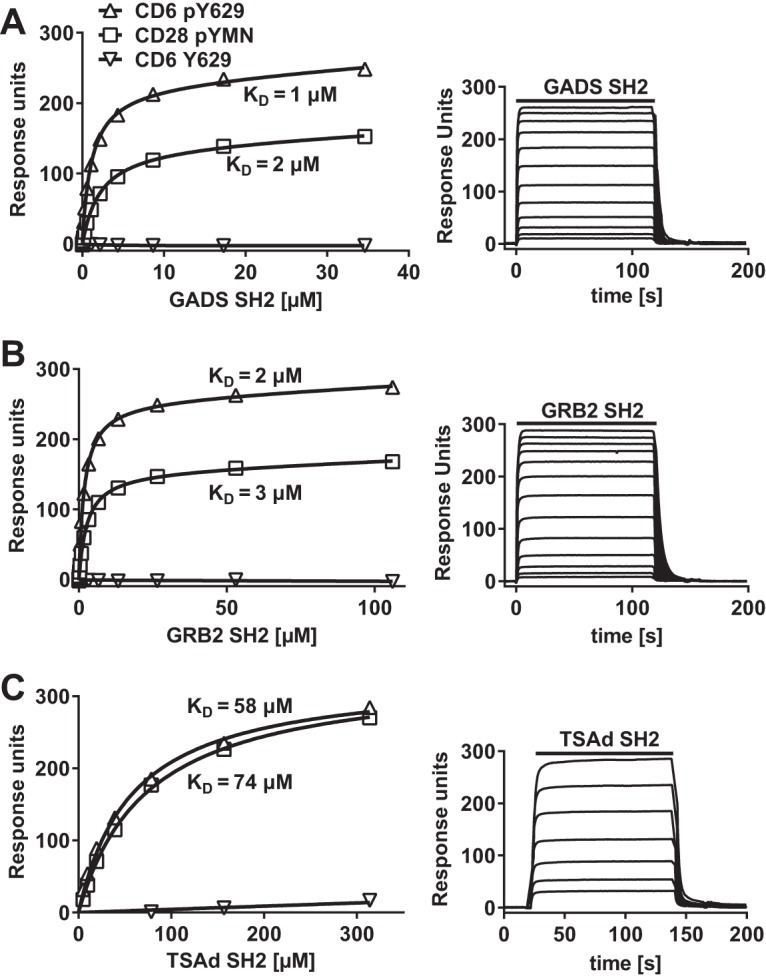
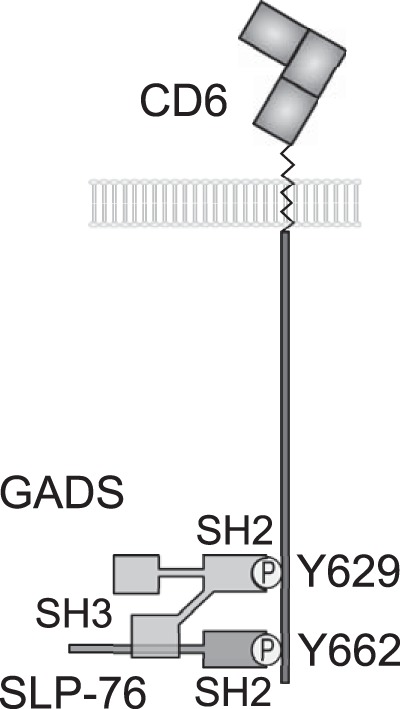
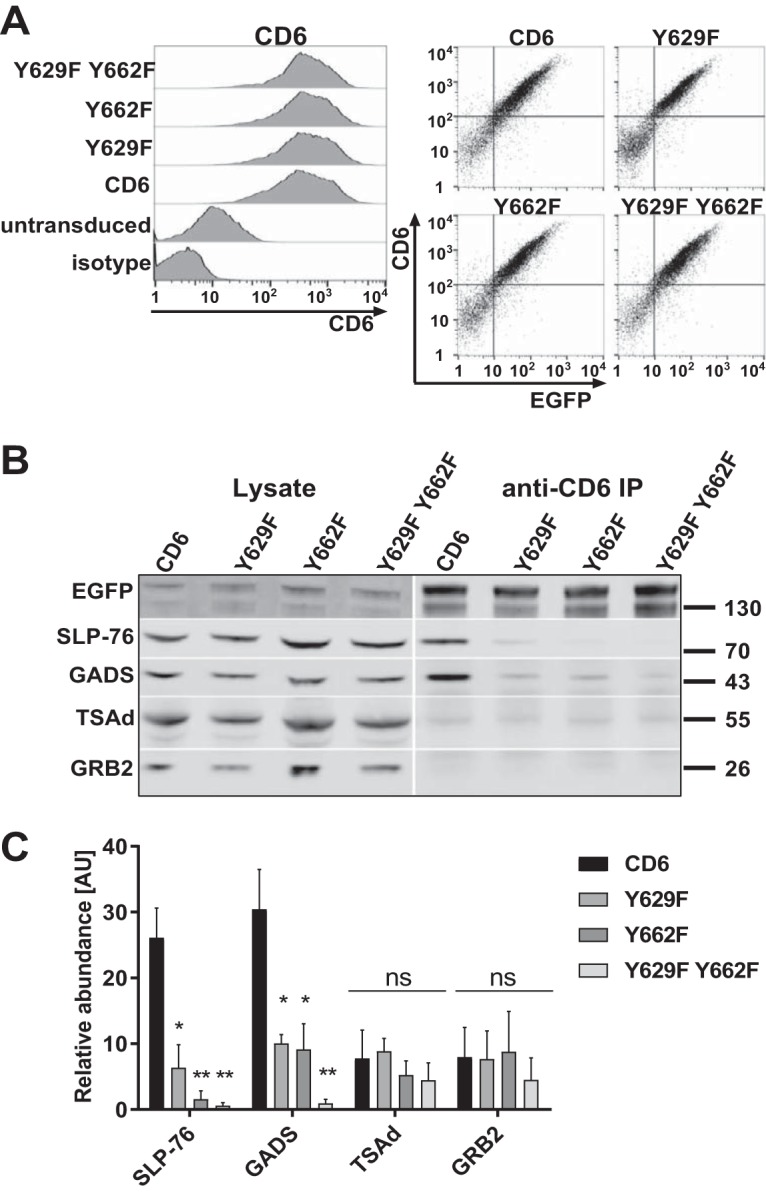
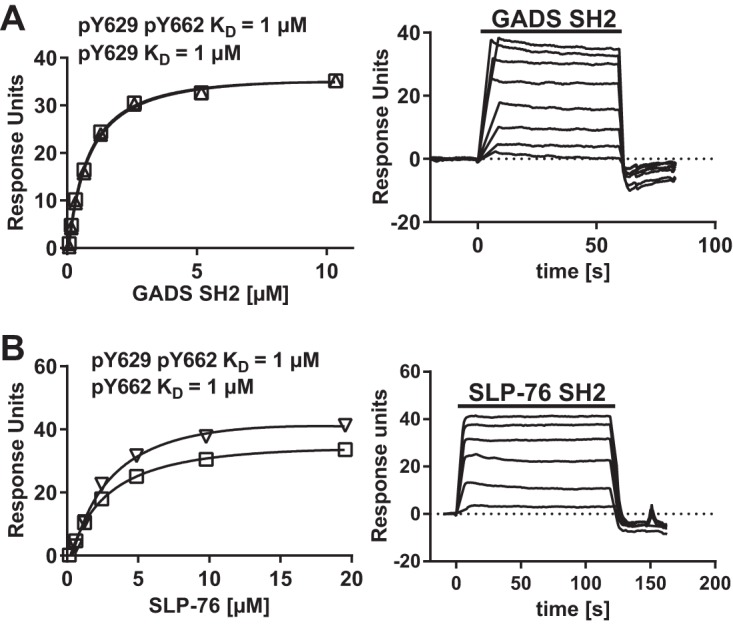
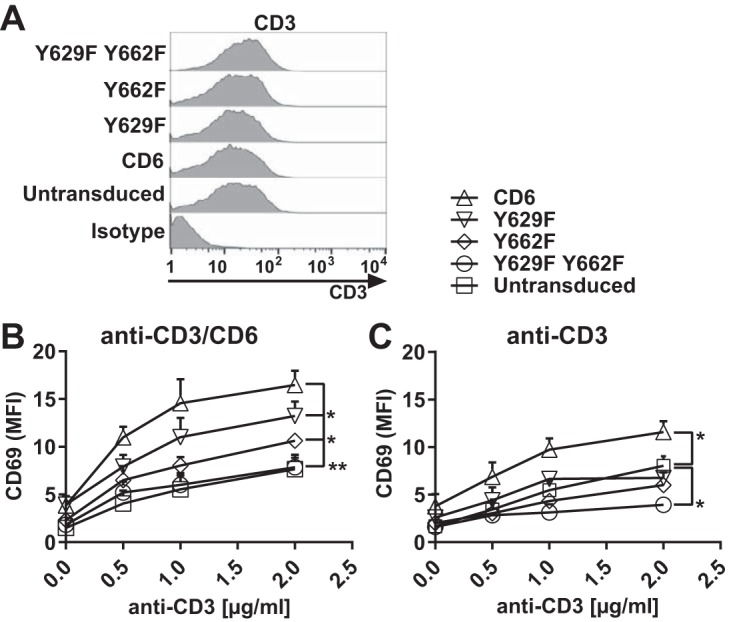
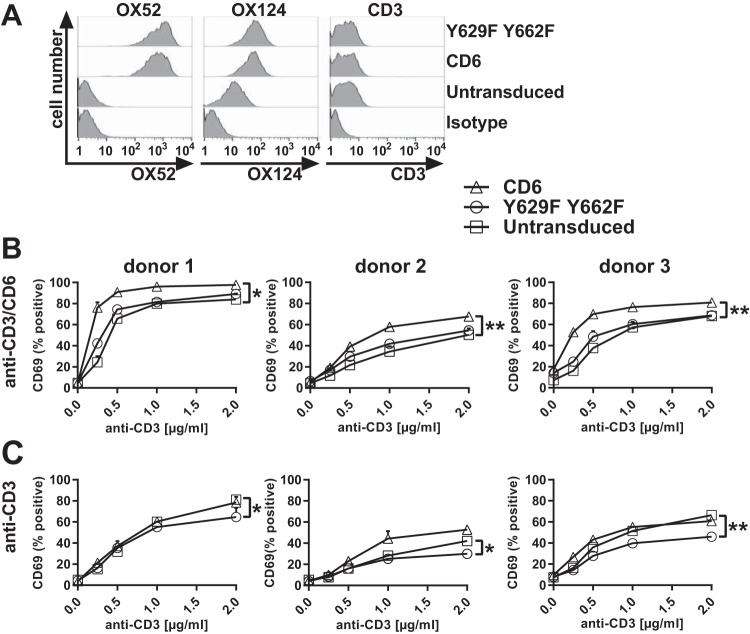
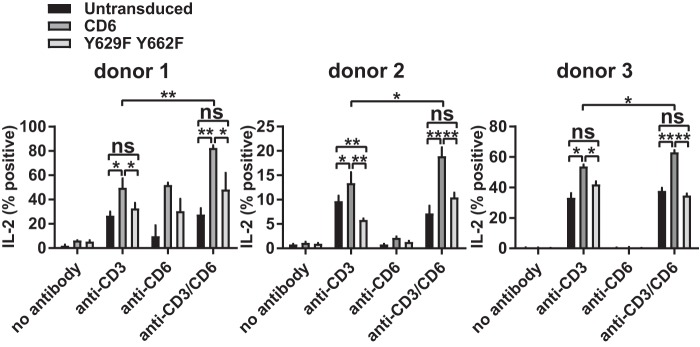
The cell surface receptor CD6 regulates T cell activation in both activating and inhibitory manners. The adaptor protein SLP-76 is recruited to the phosphorylated CD6 cytoplasmic Y662 residue during T cell activation, providing an activating signal to T cells. In this study, a biochemical approach identified the SH2 domain-containing adaptor protein GADS as the dominant interaction partner for the CD6 cytoplasmic Y629 residue. Functional experiments in human Jurkat and primary T cells showed that both mutations Y629F and Y662F abolished costimulation by CD6. In addition, a restraint on T cell activation by CD6 was revealed in primary T cells expressing CD6 mutated at Y629 and Y662. These data are consistent with a model in which bivalent recruitment of a GADS/SLP-76 complex is required for costimulation by CD6.
细胞表面受体CD6以激活和抑制两种方式调节T细胞活化。在T细胞活化过程中,接头蛋白SLP-76被招募到磷酸化的CD6细胞质Y662残基上,为T细胞提供激活信号。在本研究中,一种生化方法确定含SH2结构域的接头蛋白GADS是CD6细胞质Y629残基的主要相互作用伙伴。在人Jurkat细胞和原代T细胞中进行的功能实验表明,Y629F和Y662F突变均消除了CD6的共刺激作用。此外,在表达Y629和Y662处发生突变的CD6的原代T细胞中,发现CD6对T细胞活化有抑制作用。这些数据与一个模型一致,即CD6共刺激需要GADS/SLP-76复合物的二价招募。