Zhou Li, Wu Feifei, Jin Wangdong, Yan Bo, Chen Xin, He Yingfei, Yang Weiji, Du Wenlin, Zhang Qiang, Guo Yonghua, Yuan Qiang, Dong Xiaoqiao, Yu Wenhua, Zhang Jin, Xiao Luwei, Tong Peijian, Shan Letian, Efferth Thomas
Institute of Orthopaedics and Traumatology, Zhejiang Chinese Medical University Hangzhou, China.
Institute for Cell-Based Drug Development of Zhejiang Province, S-Evans Biosciences Inc. Hangzhou, China.
Front Pharmacol. 2017 Feb 27;8:75. doi: 10.3389/fphar.2017.00075. eCollection 2017.
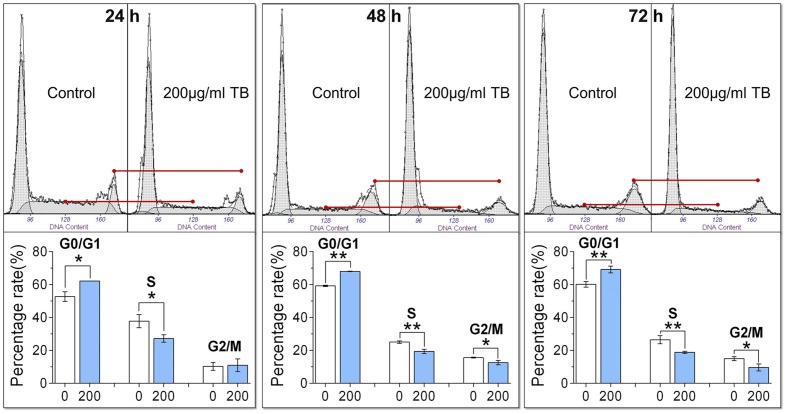
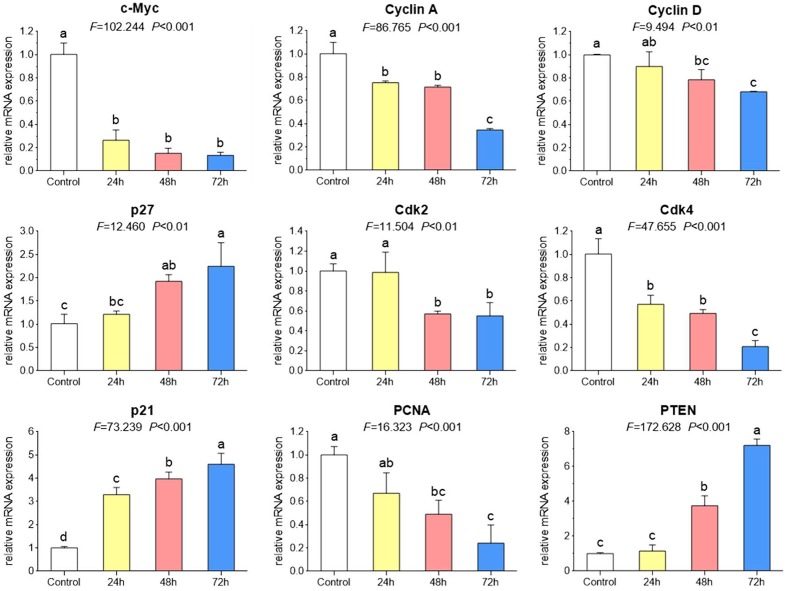
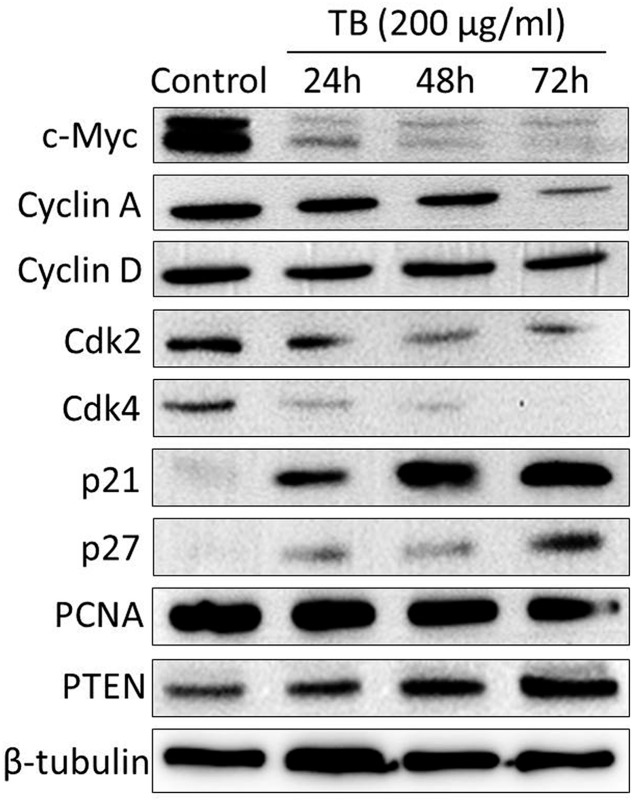
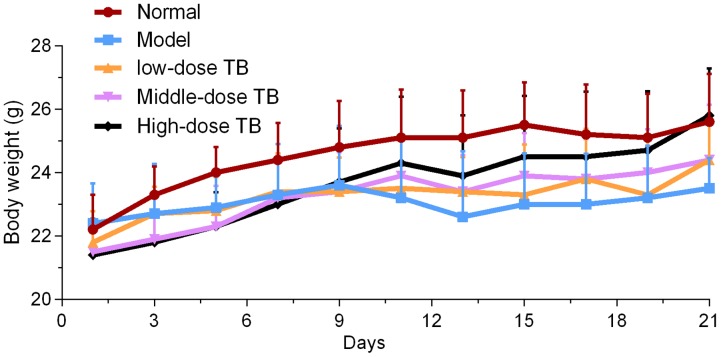
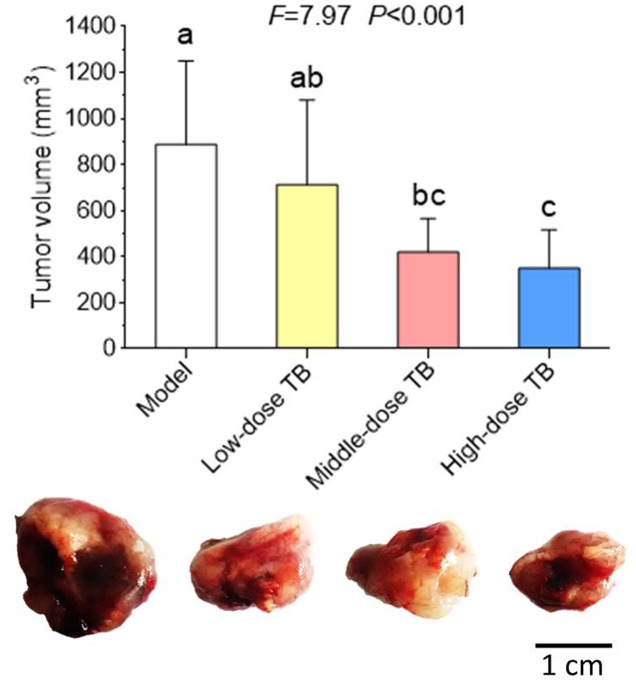
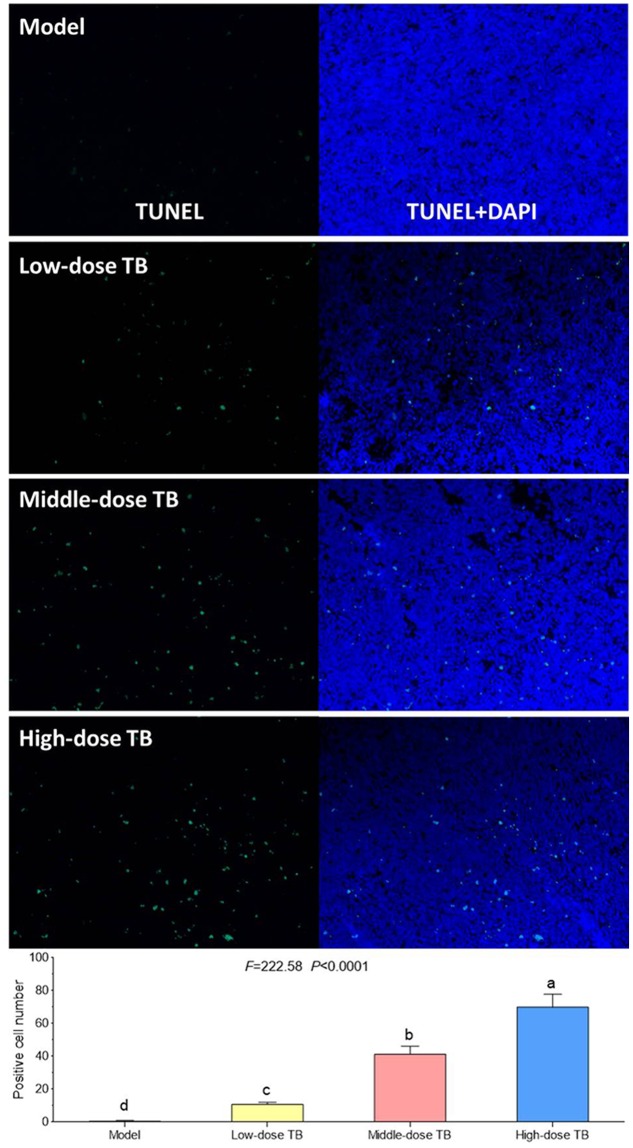
Green tea, the fresh leaves of , is not only a health-promoting beverage but also a traditional Chinese medicine used for prevention or treatment of cancer, such as lung cancer. Theabrownin (TB) is the main fraction responsible for the medicinal effects of green tea, but whether it possesses anti-cancer effect is unknown yet. This study aimed to determine the and anti-lung cancer effect of TB and explore the underlying molecular mechanism, by using A549 cell line and Lewis lung carcinoma-bearing mice. In cellular experiment, MTT assay was performed to evaluate the inhibitory effect and IC50 values of TB, and flow cytometry was conducted to analyze the cell cycle progression affected by TB. In animal experiment, mice body mass, tumor incidence, tumor size and tumor weight were measured, and histopathological analysis on tumor was performed with Transferase dUTP nick-end labeling staining. Real time PCR and western blot assays were adopted to detect the expression of associated genes and proteins for mechanism clarification. TB was found to inhibit A549 cell viability in a dose- and time-dependent manner and block A549 cell cycle at G0/G1 phase. Down-regulation of c-myc, cyclin A, cyclin D, cdk2, cdk4, proliferation of cell nuclear antigen and up-regulation of p21, p27, and phosphate and tension homolog in both gene and protein levels were observed with TB treatment. A c-myc-related mechanism was thereby proposed, since c-myc could transcriptionally regulate all other genes in its downstream region for G1/S transitions of cell cycle and proliferation of cancer cells. This is the first report regarding the anti-NSCLC effect and the underlying mechanism of TB on cell cycle progression and proliferation of A549 cells. The data verified the result that TB could significantly inhibit the lung cancer growth in mice and induce apoptosis on tumors in a dose-dependent manner. It provides a promising candidate of natural products for lung cancer therapy and new development of anti-cancer agent.
绿茶,即[茶树品种]的鲜叶,不仅是一种有益健康的饮品,也是一种用于预防或治疗癌症(如肺癌)的传统中药。茶褐素(TB)是绿茶发挥药用功效的主要成分,但其是否具有抗癌作用尚不清楚。本研究旨在通过使用A549细胞系和荷Lewis肺癌小鼠,确定茶褐素的体内外抗肺癌作用,并探讨其潜在的分子机制。在细胞实验中,采用MTT法评估茶褐素的抑制作用和IC50值,并用流式细胞术分析茶褐素对细胞周期进程的影响。在动物实验中,测量小鼠体重、肿瘤发生率、肿瘤大小和肿瘤重量,并用脱氧核糖核苷酸末端转移酶介导的缺口末端标记染色对肿瘤进行组织病理学分析。采用实时荧光定量PCR和蛋白质印迹法检测相关基因和蛋白的表达,以阐明作用机制。结果发现,茶褐素以剂量和时间依赖性方式抑制A549细胞活力,并将A549细胞周期阻滞在G0/G1期。茶褐素处理后,在基因和蛋白水平上均观察到c-myc、细胞周期蛋白A、细胞周期蛋白D、细胞周期蛋白依赖性激酶2、细胞周期蛋白依赖性激酶4、增殖细胞核抗原的下调以及p21、p27和张力蛋白同源物的上调。由此提出了一种与c-myc相关的机制,因为c-myc可以转录调控其下游区域的所有其他基因,从而参与细胞周期的G1/S转换和癌细胞的增殖。这是关于茶褐素对A549细胞周期进程和增殖的抗非小细胞肺癌作用及其潜在机制的首次报道。体内数据验证了体外结果,即茶褐素可显著抑制小鼠肺癌生长,并以剂量依赖性方式诱导肿瘤细胞凋亡。它为肺癌治疗提供了一种有前景的天然产物候选物,并为抗癌药物的新开发提供了依据。