Wu Feifei, Zhou Li, Jin Wangdong, Yang Weiji, Wang Ying, Yan Bo, Du Wenlin, Zhang Qiang, Zhang Lei, Guo Yonghua, Zhang Jin, Shan Letian, Efferth Thomas
Institute for Cell-Based Drug Development of Zhejiang Province, S-Evans Biosciences, Ltd. Hangzhou, China.
Institute of Orthopaedics and Traumatology, Zhejiang Chinese Medical University Hangzhou, China.
Front Pharmacol. 2016 Dec 2;7:465. doi: 10.3389/fphar.2016.00465. eCollection 2016.
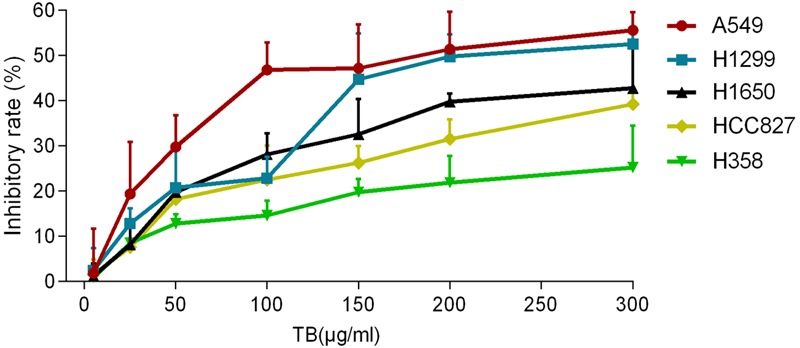
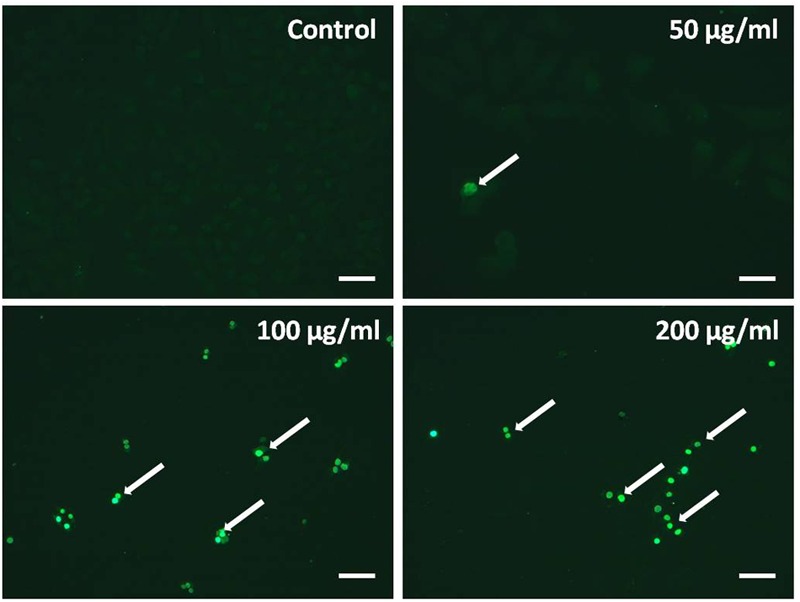
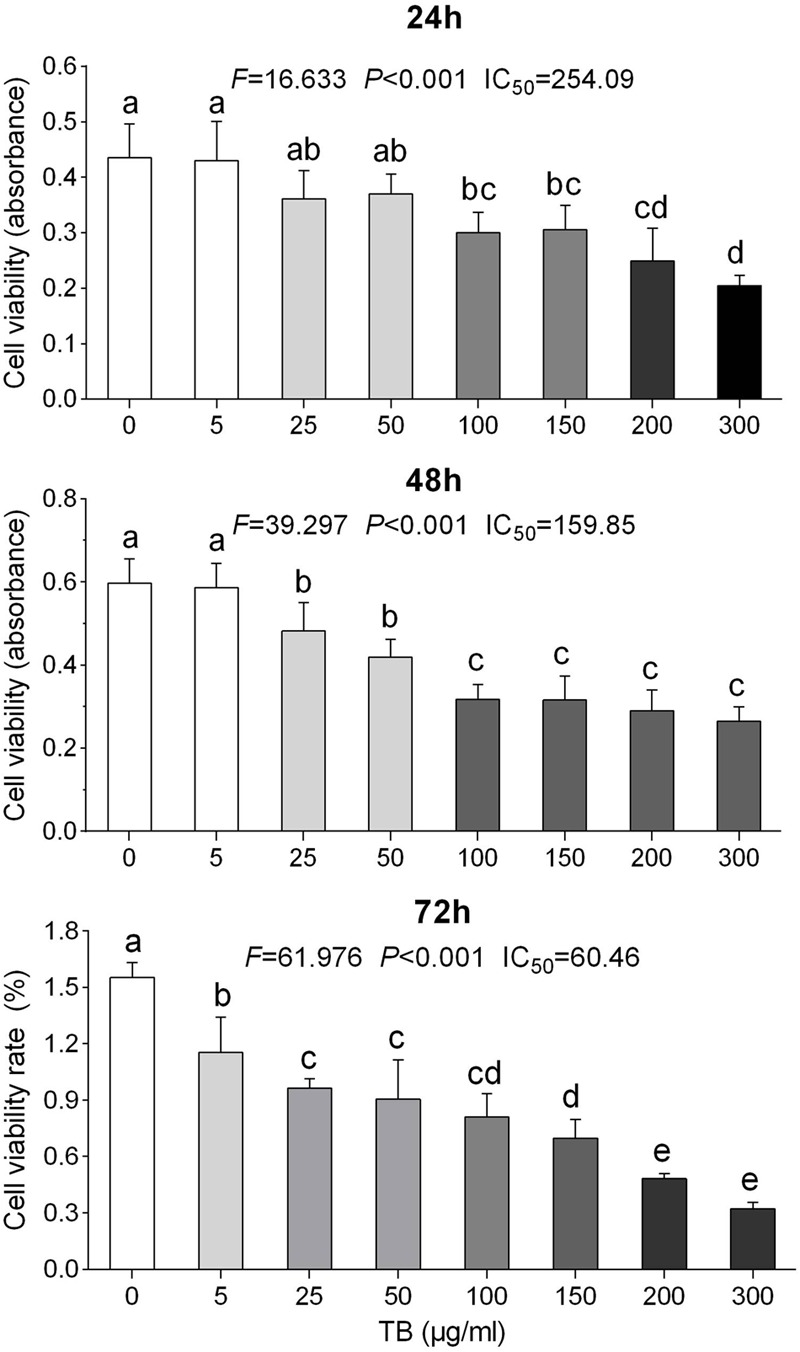
With the highest cancer incidence rate, lung cancer, especially non-small cell lung cancer (NSCLC), is the leading cause of cancer death in the world. Tea (leaves of ) has been widely used as a traditional beverage beneficial to human health, including anti-NSCLC activity. Theabrownin (TB) is one major kind of tea pigment responsible for the beneficial effects of tea liquor. However, its effect on NSCLC is unknown. The aim of the present study was to evaluate anti-proliferative and apoptosis-inducing effect of TB on NSCLC (A549) cells, using MTT assay, morphological observation (DAPI staining), terminal deoxynucleotidyl transferase dUTP nick end labeling (TUNEL) assay, and annexin-V/PI flow cytometry. Subsequently, the expression of several genes associated with cell proliferation and apoptosis were detected by real time PCR assay to explore its potential underlying mechanism. TB was revealed to inhibit cell proliferation of A549 cells in a concentration-dependent and time-dependent manner. Morphological observation, TUNEL assay and flow cytometric analysis evidenced an apoptosis-inducing effect of TB on A549 cells in a concentration-dependent manner. The real time PCR assay demonstrated that TB down-regulated the expression of , and , and up-regulated the expression of , and , which suggests an activation of P53-mediated apoptotic (caspase-dependent) pathway in response to TB treatment. The western blot analysis showed a similar trend for the corresponding protein expression (P53, Bax, Bcl-2, caspase 3,9, and PARP) and further revealed DNA damage as a trigger of the apoptosis (phosphorylation of histone H2A.X). Accordingly, TB can be speculated as a DNA damage inducer and topoisomerase (Topo I and Topo II) inhibitor that can up-regulate expression and subsequently modulate the expression of the downstream genes to induce cell proliferation inhibition and apoptosis of A549 cells. Our results indicate that TB exhibits its anti-NSCLC activity via a P53-dependent mechanism, which may be a promising candidate of natural product for anti-cancer drug development in the treatment of NSCLC.
肺癌是癌症发病率最高的疾病,尤其是非小细胞肺癌(NSCLC),是全球癌症死亡的主要原因。茶叶已被广泛用作有益于人类健康的传统饮品,包括具有抗NSCLC活性。茶褐素(TB)是一种主要的茶色素,对茶汤的有益作用起关键作用。然而,其对NSCLC的影响尚不清楚。本研究旨在通过MTT法、形态学观察(DAPI染色)、末端脱氧核苷酸转移酶dUTP缺口末端标记(TUNEL)法和膜联蛋白-V/PI流式细胞术,评估TB对NSCLC(A549)细胞的抗增殖和诱导凋亡作用。随后,通过实时PCR检测与细胞增殖和凋亡相关的几个基因的表达,以探讨其潜在的作用机制。结果显示,TB以浓度和时间依赖性方式抑制A549细胞的增殖。形态学观察、TUNEL法和流式细胞术分析证明,TB以浓度依赖性方式诱导A549细胞凋亡。实时PCR检测表明,TB下调了 、 和 的表达,并上调了 、 和 的表达,这表明TB处理激活了P53介导的凋亡(半胱天冬酶依赖性)途径。蛋白质印迹分析显示相应蛋白质表达(P53、Bax、Bcl-2、半胱天冬酶3、9和PARP)有类似趋势,并进一步揭示DNA损伤是凋亡的触发因素(组蛋白H2A.X磷酸化)。因此,可以推测TB是一种DNA损伤诱导剂和拓扑异构酶(拓扑异构酶I和拓扑异构酶II)抑制剂,可上调 表达,随后调节下游基因的表达,从而诱导A549细胞增殖抑制和凋亡。我们的结果表明,TB通过P53依赖性机制发挥其抗NSCLC活性,这可能是一种有前途的天然产物候选物,用于开发治疗NSCLC的抗癌药物。