Negraes P D, Cugola F R, Herai R H, Trujillo C A, Cristino A S, Chailangkarn T, Muotri A R, Duvvuri V
Department of Pediatrics/Rady Children's Hospital San Diego, Department of Cellular and Molecular Medicine, Stem Cell Program, School of Medicine, University of California San Diego, La Jolla, CA, USA.
Graduate Program in Health Sciences, School of Medicine, Pontifícia Universidade Católica do Paraná, Curitiba, Brazil.
Transl Psychiatry. 2017 Mar 14;7(3):e1060. doi: 10.1038/tp.2017.37.
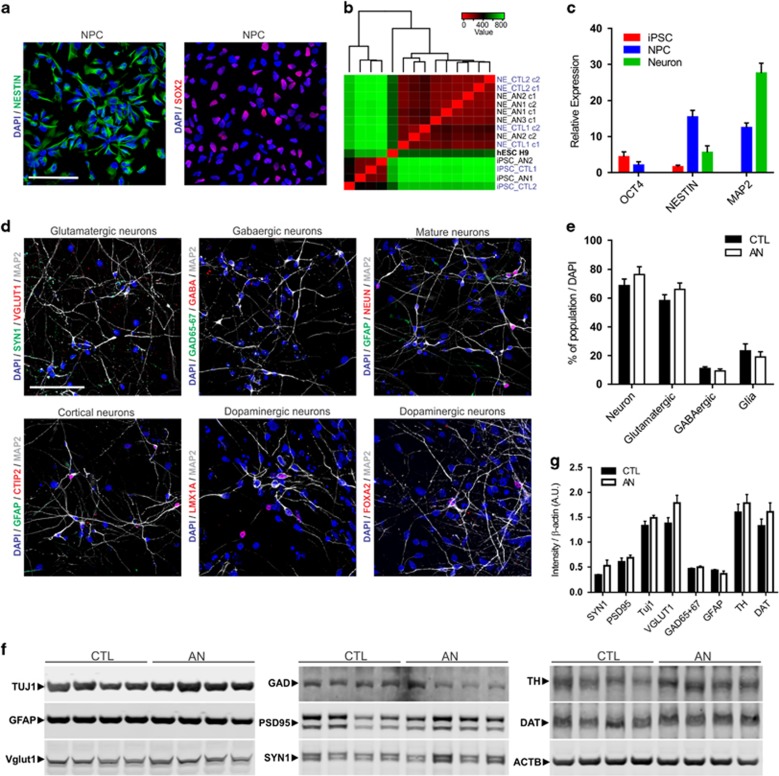
Anorexia nervosa (AN) is a complex and multifactorial disorder occurring predominantly in women. Despite having the highest mortality among psychiatric conditions, it still lacks robust and effective treatment. Disorders such as AN are most likely syndromes with multiple genetic contributions, however, genome-wide studies have been underpowered to reveal associations with this uncommon illness. Here, we generated induced pluripotent stem cells (iPSCs) from adolescent females with AN and unaffected controls. These iPSCs were differentiated into neural cultures and subjected to extensive transcriptome analysis. Within a small cohort of patients who presented for treatment, we identified a novel gene that appears to contribute to AN pathophysiology, TACR1 (tachykinin 1 receptor). The participation of tachykinins in a variety of biological processes and their interactions with other neurotransmitters suggest novel mechanisms for how a disrupted tachykinin system might contribute to AN symptoms. Although TACR1 has been associated with psychiatric conditions, especially anxiety disorders, we believe this report is its first association with AN. Moreover, our human iPSC approach is a proof-of-concept that AN can be modeled in vitro with a full human genetic complement, and represents a new tool for understanding the elusive molecular and cellular mechanisms underlying the disease.
神经性厌食症(AN)是一种主要发生在女性中的复杂的多因素疾病。尽管它在精神疾病中死亡率最高,但仍然缺乏强大而有效的治疗方法。像AN这样的疾病很可能是由多种基因共同作用导致的综合征,然而,全基因组研究在揭示与这种罕见疾病的关联方面能力不足。在这里,我们从患有AN的青春期女性和未受影响的对照者中生成了诱导多能干细胞(iPSC)。这些iPSC被分化为神经培养物并进行了广泛的转录组分析。在一小群前来接受治疗的患者中,我们鉴定出了一个似乎对AN病理生理学有影响的新基因,即速激肽1受体(TACR1)。速激肽参与多种生物过程以及它们与其他神经递质的相互作用,提示了速激肽系统紊乱可能导致AN症状的新机制。尽管TACR1已与精神疾病相关,尤其是焦虑症,但我们认为本报告是其首次与AN相关联。此外,我们的人类iPSC方法证明了可以在体外利用完整的人类基因组成对AN进行建模,并且代表了一种理解该疾病难以捉摸的分子和细胞机制的新工具。