Yang Xiaofeng, Rossi Peter J, Jani Ashesh B, Mao Hui, Zhou Zhengyang, Curran Walter J, Liu Tian
Department of Radiation Oncology and Winship Cancer Institute, Emory University, Atlanta, GA, USA.
Department of Radiology and Imaging Sciences and Winship Cancer Institute, Emory University, Atlanta, GA, USA.
J Appl Clin Med Phys. 2017 Jan;18(1):202-210. doi: 10.1002/acm2.12040.
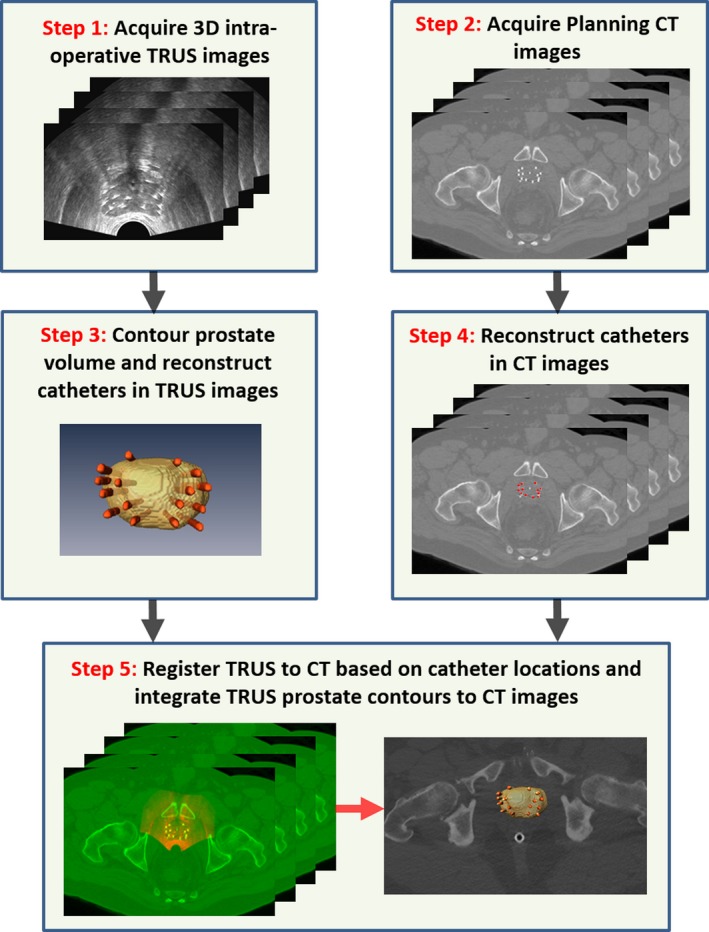
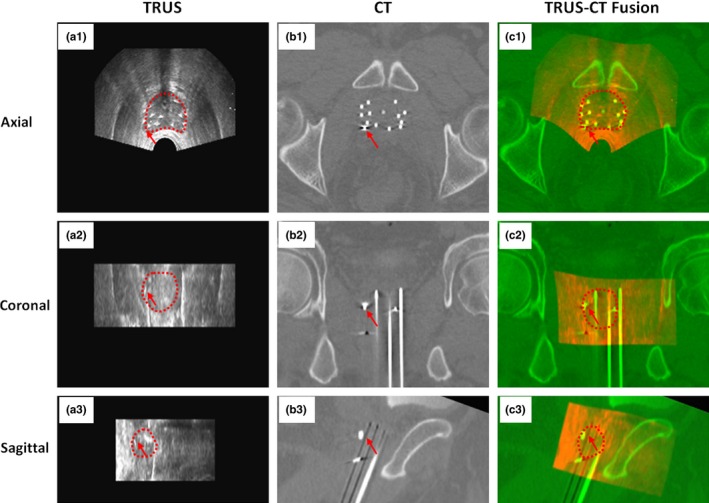
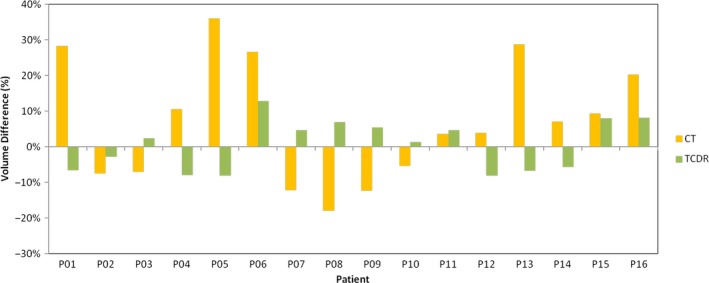
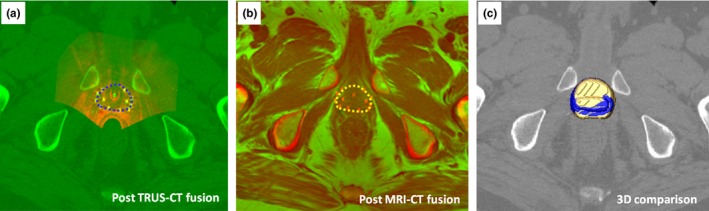
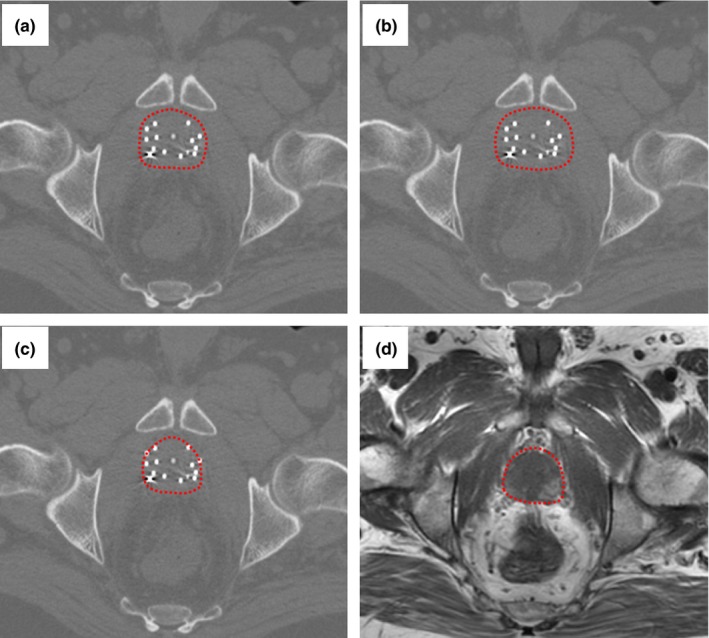
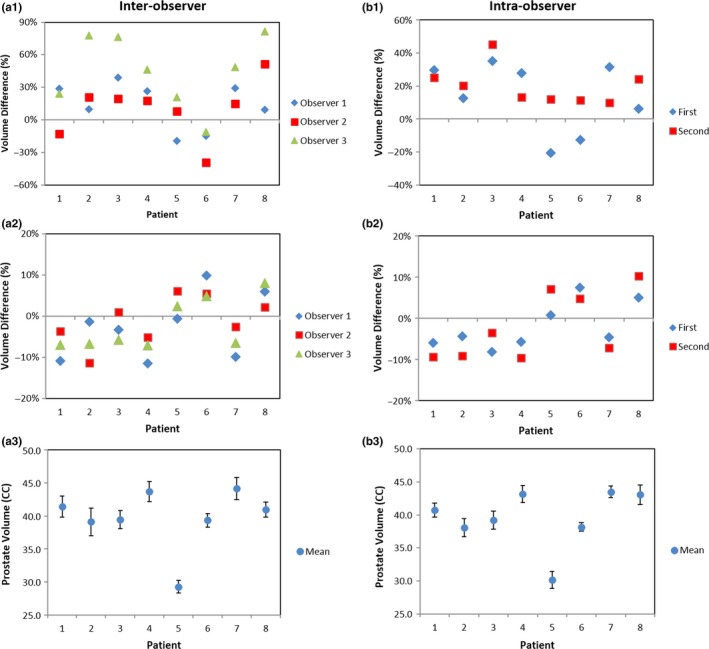
Accurate prostate delineation is essential to ensure proper target coverage and normal-tissue sparing in prostate HDR brachytherapy. We have developed a prostate HDR brachytherapy technology that integrates intraoperative TRUS-based prostate contour into HDR treatment planning through TRUS-CT deformable registration (TCDR) to improve prostate contour accuracy. In a perspective study of 16 patients, we investigated the clinical feasibility as well as the performance of this TCDR-based HDR approach. We compared the performance of the TCDR-based approach with the conventional CT-based HDR in terms of prostate contour accuracy using MRI as the gold standard. For all patients, the average Dice prostate volume overlap was 91.1 ± 2.3% between the TCDR-based and the MRI-defined prostate volumes. In a subset of eight patients, inter and intro-observer reliability study was conducted among three experienced physicians (two radiation oncologists and one radiologist) for the TCDR-based HDR approach. Overall, a 10 to 40% improvement in prostate volume accuracy can be achieved with the TCDR-based approach as compared with the conventional CT-based prostate volumes. The TCDR-based prostate volumes match closely to the MRI-defined prostate volumes for all 3 observers (mean volume difference: 0.5 ± 7.2%, 1.8 ± 7.2%, and 3.5 ± 5.1%); while CT-based contours overestimated prostate volumes by 10.9 ± 28.7%, 13.7 ± 20.1%, and 44.7 ± 32.1%. This study has shown that the TCDR-based HDR brachytherapy is clinically feasible and can significantly improve prostate contour accuracy over the conventional CT-based prostate contour. We also demonstrated the reliability of the TCDR-based prostate delineation. This TCDR-based HDR approach has the potential to enable accurate dose planning and delivery, and potentially enhance prostate HDR treatment outcome.
在前列腺高剂量率近距离放射治疗中,准确勾画前列腺轮廓对于确保靶区得到适当覆盖以及保护正常组织至关重要。我们开发了一种前列腺高剂量率近距离放射治疗技术,该技术通过超声-CT 可变形配准(TCDR)将基于术中超声的前列腺轮廓整合到高剂量率治疗计划中,以提高前列腺轮廓的准确性。在一项针对 16 名患者的前瞻性研究中,我们调查了这种基于 TCDR 的高剂量率方法的临床可行性及其性能。我们以 MRI 作为金标准,在前列腺轮廓准确性方面,将基于 TCDR 的方法与传统的基于 CT 的高剂量率方法进行了比较。对于所有患者,基于 TCDR 的前列腺体积与 MRI 定义的前列腺体积之间的平均骰子系数前列腺体积重叠率为 91.1±2.3%。在八名患者的子集中,由三名经验丰富的医生(两名放射肿瘤学家和一名放射科医生)对基于 TCDR 的高剂量率方法进行了观察者间和观察者内可靠性研究。总体而言,与传统的基于 CT 的前列腺体积相比,基于 TCDR 的方法可使前列腺体积准确性提高 10%至 40%。对于所有三名观察者,基于 TCDR 的前列腺体积与 MRI 定义的前列腺体积紧密匹配(平均体积差异:0.5±7.2%、1.8±7.2%和 3.5±5.1%);而基于 CT 的轮廓分别将前列腺体积高估了 10.9±28.7%、13.7±20.1%和 44.7±32.1%。这项研究表明,基于 TCDR 的高剂量率近距离放射治疗在临床上是可行的,并且与传统的基于 CT 的前列腺轮廓相比,可以显著提高前列腺轮廓的准确性。我们还证明了基于 TCDR 的前列腺勾画的可靠性。这种基于 TCDR 的高剂量率方法有可能实现精确的剂量规划和输送,并有可能提高前列腺高剂量率治疗效果。