Hoeflinger Jennifer L, Miller Michael J
Department of Food Science and Human Nutrition, University of Illinois at Urbana Champaign Urbana, IL, USA.
Front Microbiol. 2017 Feb 28;8:301. doi: 10.3389/fmicb.2017.00301. eCollection 2017.
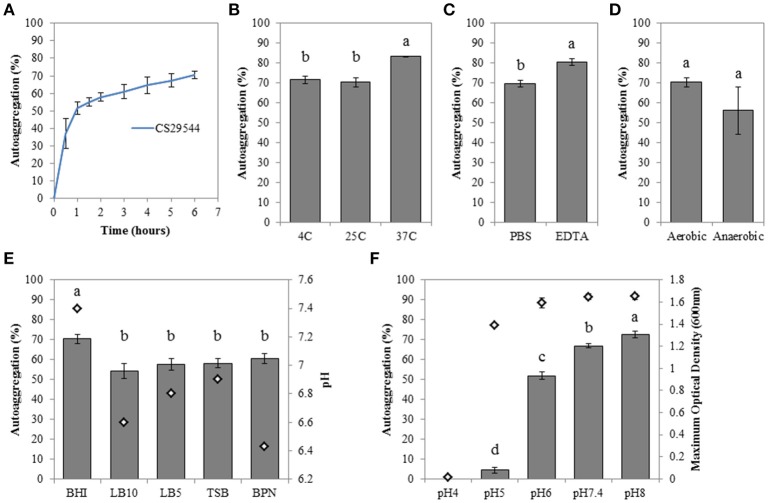
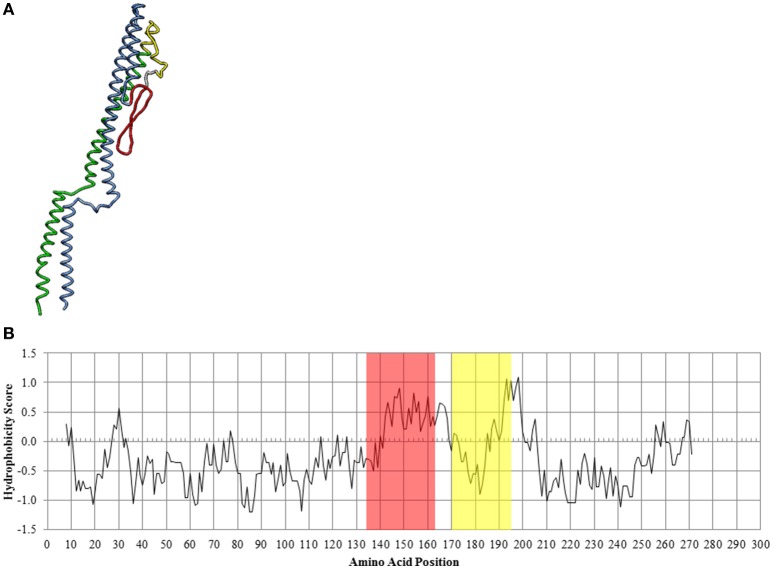
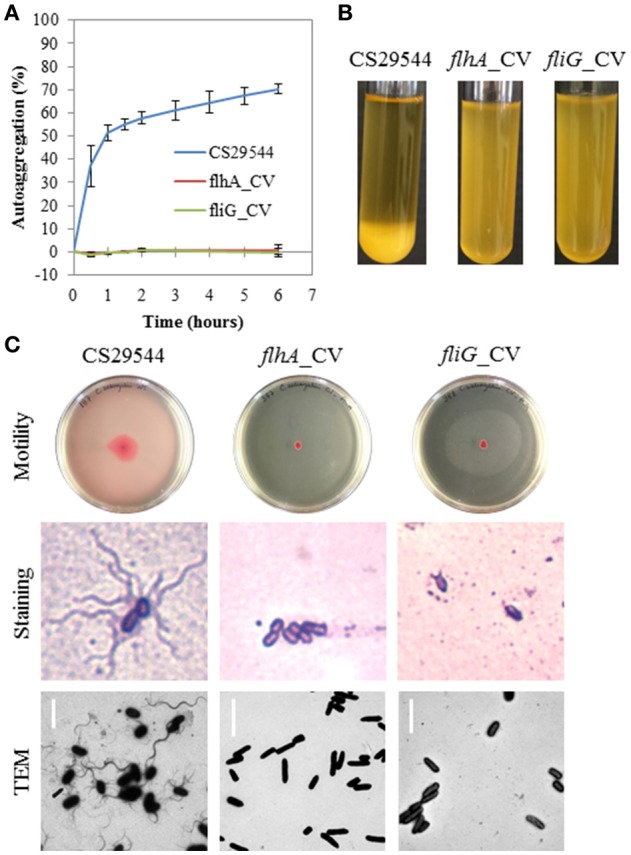
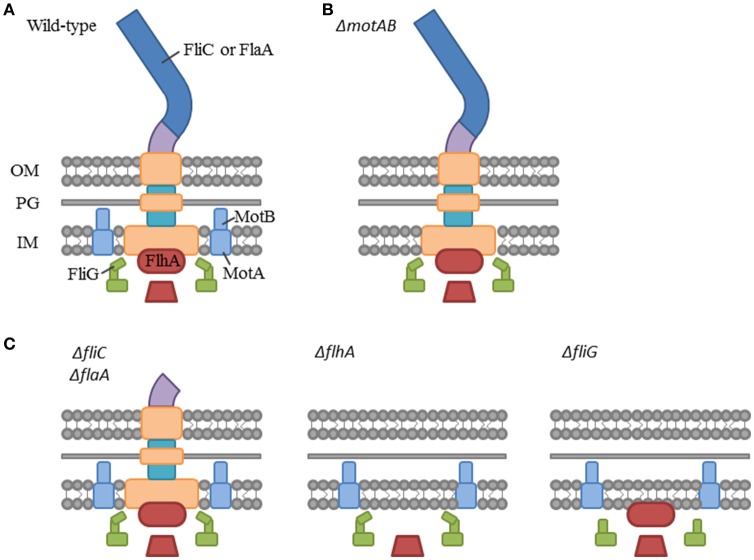
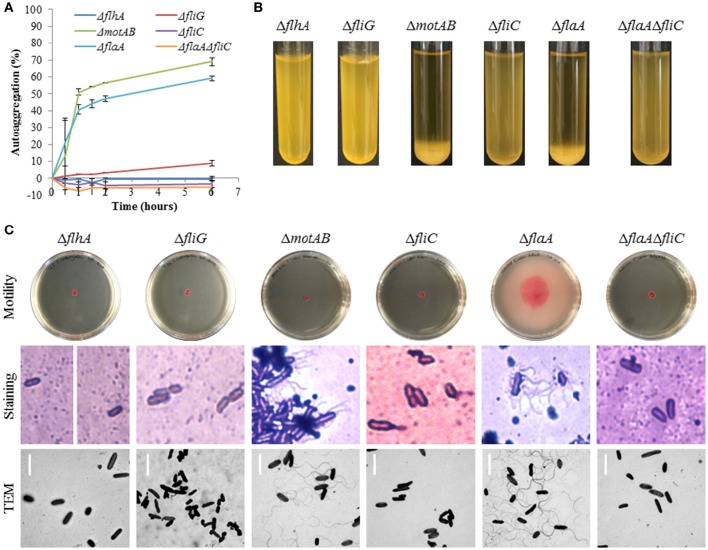
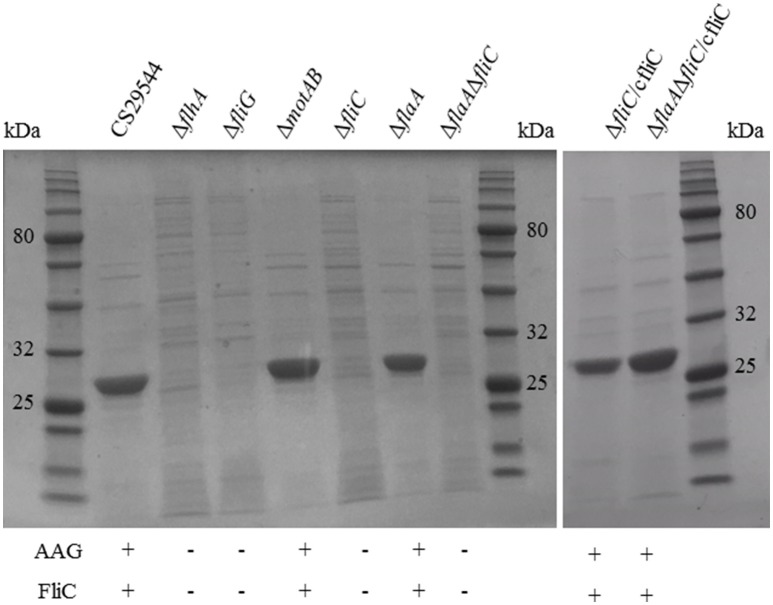
is an opportunistic nosocomial and foodborne pathogen that causes severe infections with high morbidity and mortality rates in neonates, the elderly, and immunocompromised individuals. Little is known about the pathogenesis mechanism of this pathogen and if there are any consequences of colonization in healthy individuals. In this study, we characterized the mechanisms of autoaggregation in ATCC 29544 (CS29544). Autoaggregation in CS29544 occurred rapidly, within 30 min, and proceeded to a maximum of 70%. Frameshift mutations in two flagellum proteins (FlhA and FliG) were identified in two nonautoaggregating CS29544 clonal variant isolates. Strategic gene knockouts were generated to determine if structurally intact and functional flagella were required for autoaggregation in CS29544. All structural knockouts (Δ, Δ Δ) abolished autoaggregation, whereas the functional knockout (Δ) did not prevent autoaggregation. Complementation with FliC (Δ/cfliC) restored autoaggregation. Autoaggregation was also disrupted by the addition of exogenous wild-type CS29544 filaments in a dose-dependent manner. Finally, filament supercoils tethering neighboring wild-type CS29544 cells together were observed by transmission electron microscopy. analyses suggest that direct interactions of neighboring CS29544 FliC filaments proceed by hydrophobic bonding between the externally exposed hypervariable regions of the CS29544 FliC flagellin protein. Further research is needed to confirm if flagella-mediated autoaggregation plays a prominent role in pathogenesis.
是一种机会性医院感染病原体和食源性病原体,可在新生儿、老年人和免疫功能低下个体中引起严重感染,发病率和死亡率很高。关于这种病原体的发病机制以及在健康个体中定植是否有任何后果,人们知之甚少。在本研究中,我们对ATCC 29544(CS29544)中的自聚集机制进行了表征。CS29544中的自聚集在30分钟内迅速发生,并达到最大值70%。在两个非自聚集的CS29544克隆变异分离株中鉴定出两种鞭毛蛋白(FlhA和FliG)的移码突变。产生了策略性基因敲除,以确定CS29544中的自聚集是否需要结构完整且功能正常的鞭毛。所有结构敲除(Δ、ΔΔ)均消除了自聚集,而功能敲除(Δ)并未阻止自聚集。用FliC(Δ/cfliC)互补恢复了自聚集。添加外源野生型CS29544细丝也以剂量依赖的方式破坏了自聚集。最后,通过透射电子显微镜观察到相邻野生型CS29544细胞之间的细丝超螺旋相互连接。分析表明,相邻CS29544 FliC细丝的直接相互作用是通过CS29544 FliC鞭毛蛋白外部暴露的高变区之间的疏水键进行的。需要进一步研究以确认鞭毛介导的自聚集在发病机制中是否起重要作用。