Department of Physiological Science, School of Life Science, The Graduate University for Advanced Studies, [SOKENDAI], Kanagawa, Japan.
Section of Behavior Patterns, Center for Genetic Analysis of Behaviour, National Institute for Physiological Sciences, Aichi, Japan.
Sci Rep. 2017 Mar 15;7:44531. doi: 10.1038/srep44531.
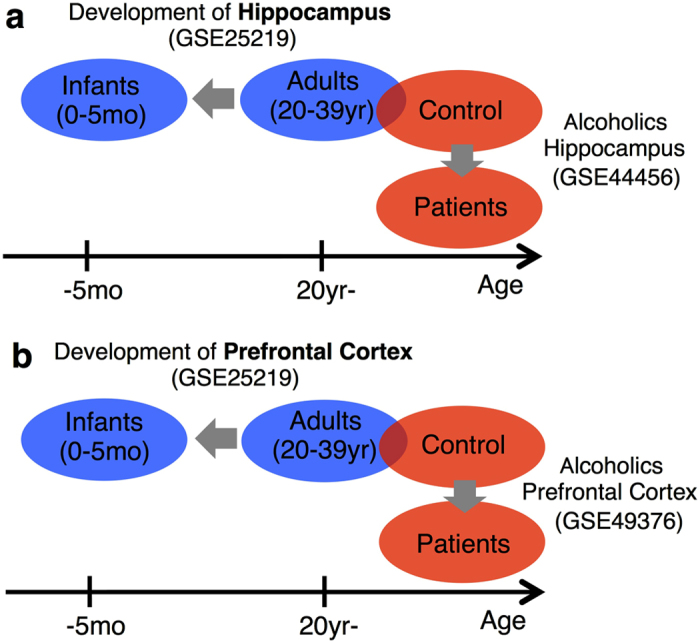
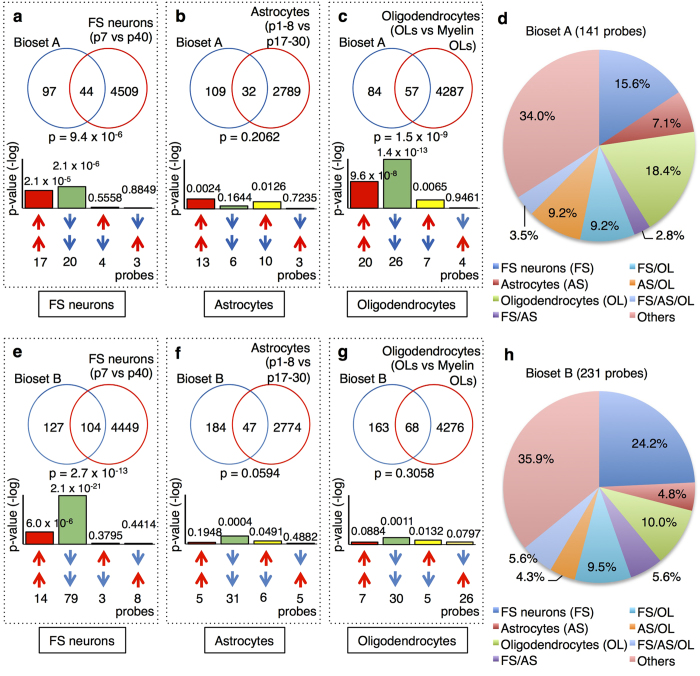
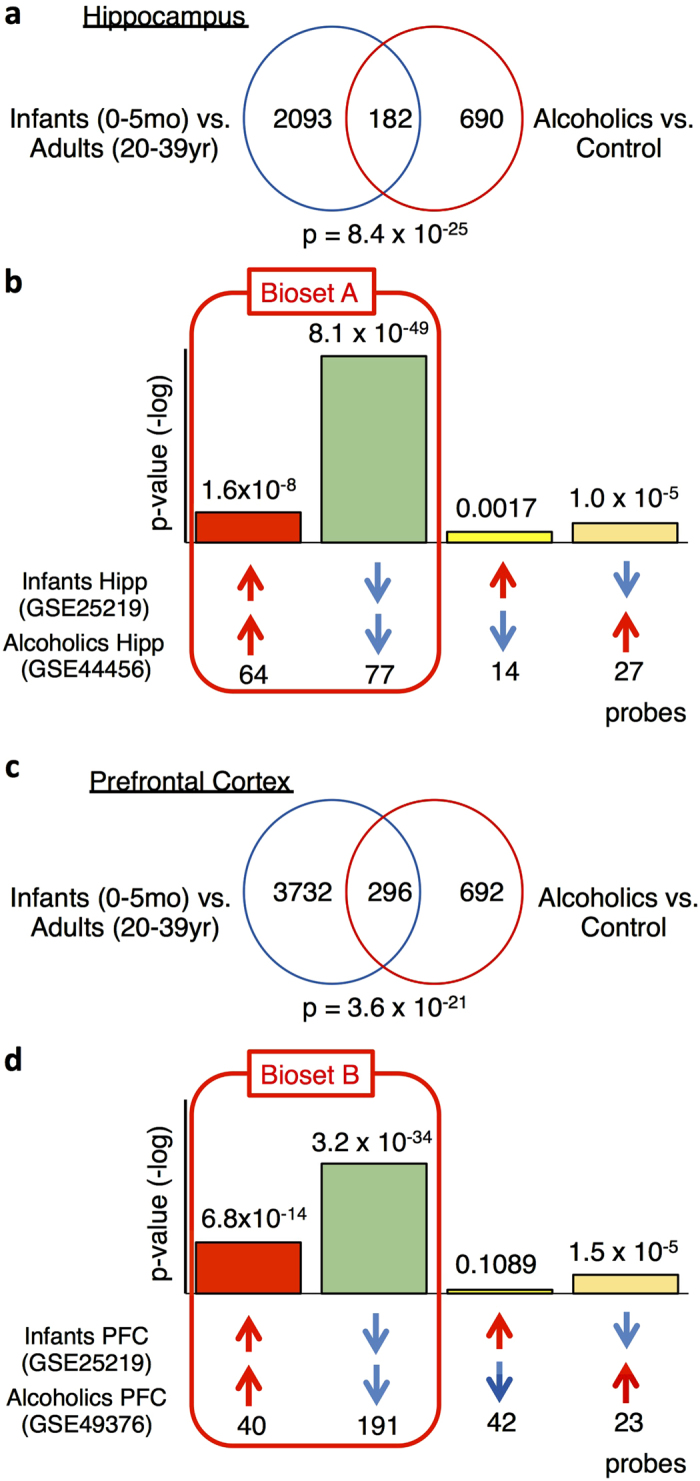
Alcoholism, which is defined as the recurring harmful use of alcohol despite its negative consequences, has a lifetime prevalence of 17.8%. Previous studies have shown that chronic alcohol consumption disrupts various brain functions and behaviours. However, the precise mechanisms that underlie alcoholism are currently unclear. Recently, we discovered "pseudo-immature" brain cell states of the dentate gyrus and prefrontal cortex (PFC) in mouse models of psychotic disorders and epileptic seizure. Similar pseudo-immaturity has been observed in patients with psychotic disorders, such as schizophrenia and bipolar disorder. Patients with alcoholism occasionally exhibit similar psychological symptoms, implying shared molecular and cellular mechanisms between these diseases. Here, we performed a meta-analysis to compare microarray data from the hippocampi/PFCs of the patients with alcoholism to data from these regions in developing human brains and mouse developmental data for specific cell types. We identified immature-like gene expression patterns in post-mortem hippocampi/PFCs of alcoholic patients and the dominant contributions of fast-spiking (FS) neurons to their pseudo-immaturity. These results suggested that FS neuron dysfunction and the subsequent imbalance between excitation and inhibition can be associated with pseudo-immaturity in alcoholism. These immaturities in the hippocampi/PFCs and the underlying mechanisms may explain the psychotic symptom generation and pathophysiology of alcoholism.
酗酒是一种反复发作的、不顾其负面后果而持续滥用酒精的行为,其终身患病率为 17.8%。先前的研究表明,慢性酒精摄入会破坏各种大脑功能和行为。然而,导致酗酒的确切机制目前尚不清楚。最近,我们在精神障碍和癫痫发作的小鼠模型中发现了齿状回和前额叶皮层(PFC)的“假性不成熟”脑细胞状态。在精神障碍患者(如精神分裂症和双相情感障碍)中也观察到类似的假性不成熟。酗酒患者偶尔会表现出类似的心理症状,这表明这些疾病之间存在共同的分子和细胞机制。在这里,我们进行了一项荟萃分析,比较了来自酗酒患者海马体/前额叶的微阵列数据与来自发育中人类大脑和特定细胞类型的小鼠发育数据。我们在酗酒患者死后的海马体/前额叶中鉴定出类似不成熟的基因表达模式,以及快速放电(FS)神经元对其假性不成熟的主要贡献。这些结果表明,FS 神经元功能障碍以及随后的兴奋和抑制之间的失衡可能与酗酒中的假性不成熟有关。海马体/前额叶中的这些不成熟状态及其潜在机制可能解释了酗酒中出现的精神病症状和发病机制。