Davis Molly, Thomassin Kristel, Bilms Joanie, Suveg Cynthia, Shaffer Anne, Beach Steven R H
Department of Psychology, University of Georgia, Athens, Georgia.
School of Psychology, University of Ottawa, Ottawa, Ontario, Canada.
Dev Psychobiol. 2017 May;59(4):473-485. doi: 10.1002/dev.21510. Epub 2017 Mar 14.
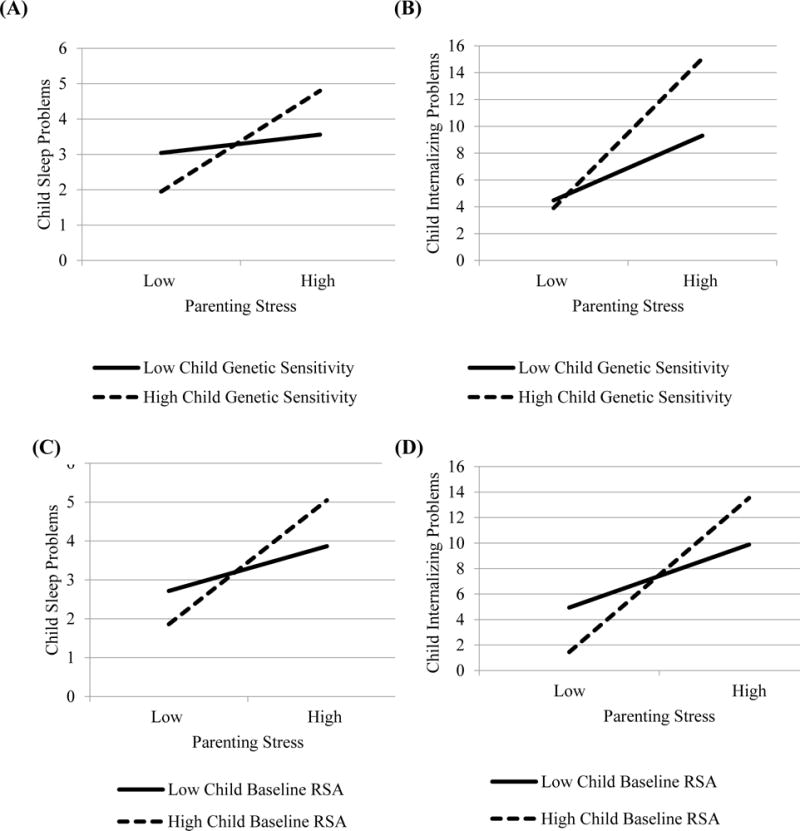
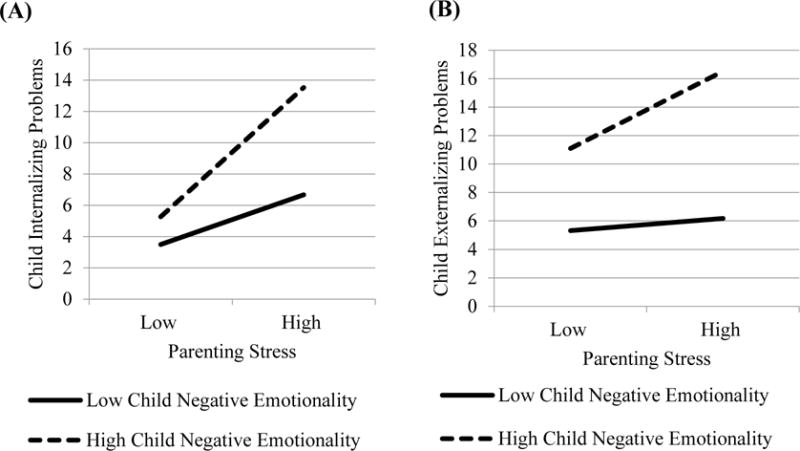
This study examined three potential moderators of the relations between maternal parenting stress and preschoolers' adjustment problems: a genetic polymorphism-the short allele of the serotonin transporter (5-HTTLPR, ss/sl allele) gene, a physiological indicator-children's baseline respiratory sinus arrhythmia (RSA), and a behavioral indicator-mothers' reports of children's negative emotionality. A total of 108 mothers (M = 30.68 years, SD = 6.06) reported on their parenting stress as well as their preschoolers' (M = 3.50 years, SD = 0.51, 61% boys) negative emotionality and internalizing, externalizing, and sleep problems. Results indicated that the genetic sensitivity variable functioned according to a differential susceptibility model; however, the results involving physiological and behavioral sensitivity factors were most consistent with a diathesis-stress framework. Implications for prevention and intervention efforts to counter the effects of parenting stress are discussed.
一种基因多态性——血清素转运体(5-HTTLPR,ss/sl等位基因)基因的短等位基因、一种生理指标——儿童的基线呼吸性窦性心律不齐(RSA),以及一种行为指标——母亲对儿童负面情绪的报告。共有108位母亲(平均年龄M = 30.68岁,标准差SD = 6.06)报告了她们的育儿压力,以及她们学龄前儿童(平均年龄M = 3.50岁,标准差SD = 0.51,61%为男孩)的负面情绪、内化问题、外化问题和睡眠问题。结果表明,基因敏感性变量按照差异易感性模型发挥作用;然而,涉及生理和行为敏感性因素的结果最符合素质-压力框架。本文讨论了应对育儿压力影响的预防和干预措施的意义。