McLaughlin Katie A, Rith-Najarian Leslie, Dirks Melanie A, Sheridan Margaret A
a Department of Psychology , University of Washington.
J Clin Child Adolesc Psychol. 2015;44(2):314-28. doi: 10.1080/15374416.2013.843464. Epub 2013 Oct 24.
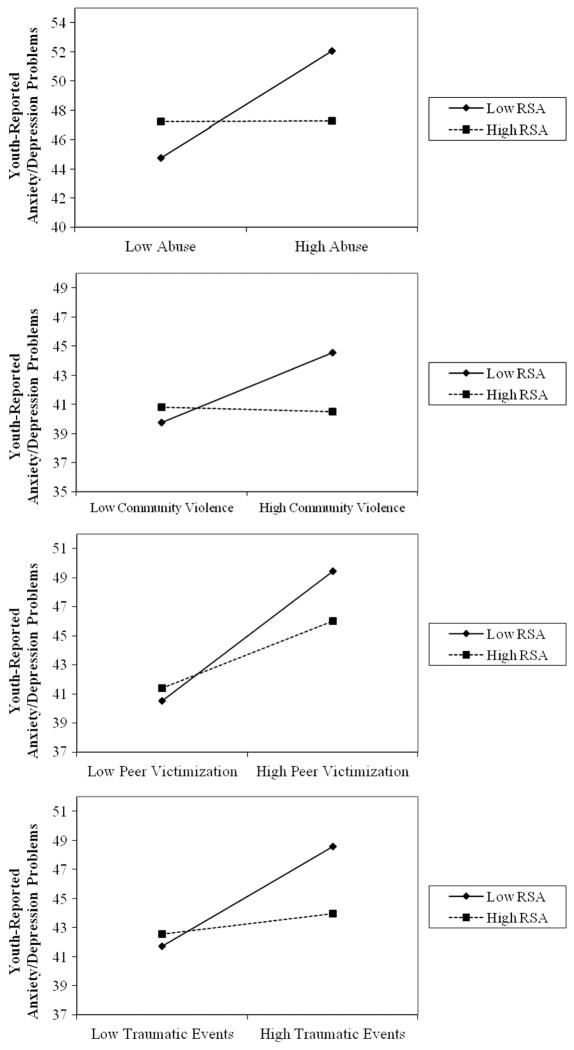
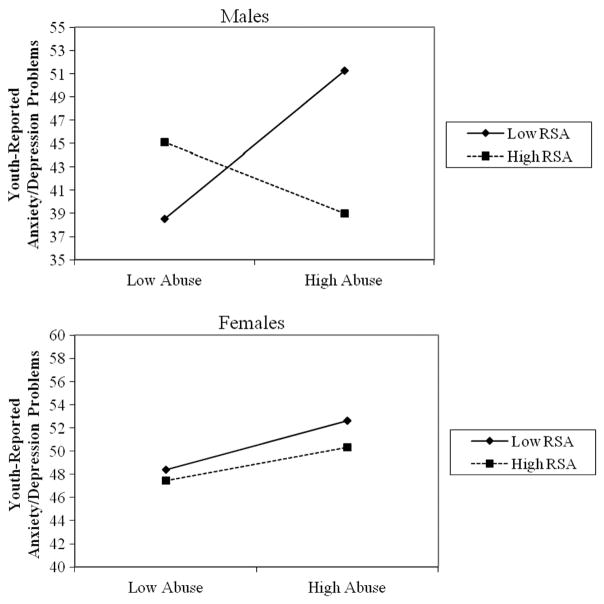
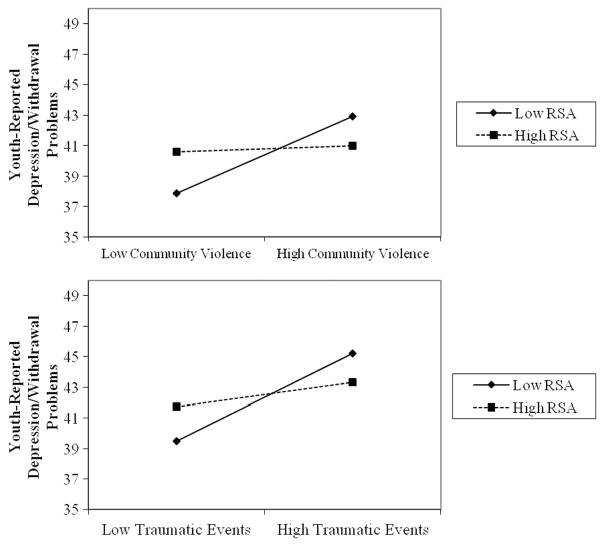
Vagal tone is a measure of cardiovascular function that facilitates adaptive responses to environmental challenge. Low vagal tone is associated with poor emotional and attentional regulation in children and has been conceptualized as a marker of sensitivity to stress. We investigated whether the associations of a wide range of psychosocial stressors with internalizing and externalizing psychopathology were magnified in adolescents with low vagal tone. Resting heart period data were collected from a diverse community sample of adolescents (ages 13-17; N = 168). Adolescents completed measures assessing internalizing and externalizing psychopathology and exposure to stressors occurring in family, peer, and community contexts. Respiratory sinus arrhythmia (RSA) was calculated from the interbeat interval time series. We estimated interactions between RSA and stress exposure in predicting internalizing and externalizing symptoms and evaluated whether interactions differed by gender. Exposure to psychosocial stressors was associated strongly with psychopathology. RSA was unrelated to internalizing or externalizing problems. Significant interactions were observed between RSA and child abuse, community violence, peer victimization, and traumatic events in predicting internalizing but not externalizing symptoms. Stressors were positively associated with internalizing symptoms in adolescents with low RSA but not in those with high RSA. Similar patterns were observed for anxiety and depression. These interactions were more consistently observed for male than female individuals. Low vagal tone is associated with internalizing psychopathology in adolescents exposed to high levels of stressors. Measurement of vagal tone in clinical settings might provide useful information about sensitivity to stress in child and adolescent clients.
迷走神经张力是心血管功能的一种度量,有助于对环境挑战做出适应性反应。迷走神经张力低与儿童情绪和注意力调节不良有关,并已被视为对应激敏感的一个标志。我们研究了在迷走神经张力低的青少年中,广泛的社会心理应激源与内化和外化精神病理学之间的关联是否会被放大。从一个多样化的青少年社区样本(13 - 17岁;N = 168)中收集静息心率数据。青少年完成了评估内化和外化精神病理学以及在家庭、同伴和社区环境中所接触应激源的测量。呼吸性窦性心律不齐(RSA)由心跳间期时间序列计算得出。我们估计了RSA与应激暴露之间在预测内化和外化症状方面的相互作用,并评估了相互作用是否因性别而异。接触社会心理应激源与精神病理学密切相关。RSA与内化或外化问题无关。在预测内化症状而非外化症状时,观察到RSA与儿童虐待、社区暴力、同伴受害和创伤性事件之间存在显著的相互作用。应激源与RSA低的青少年的内化症状呈正相关,但与RSA高的青少年无关。焦虑和抑郁也观察到类似模式。男性比女性更一致地观察到这些相互作用。迷走神经张力低与暴露于高水平应激源的青少年的内化精神病理学有关。在临床环境中测量迷走神经张力可能为儿童和青少年患者对应激的敏感性提供有用信息。