Centre for BioNano Interaction, University College Dublin, School of Chemistry, Belfield, Dublin, 4, Ireland.
Angew Chem Int Ed Engl. 2017 Apr 3;56(15):4215-4218. doi: 10.1002/anie.201700343. Epub 2017 Mar 15.
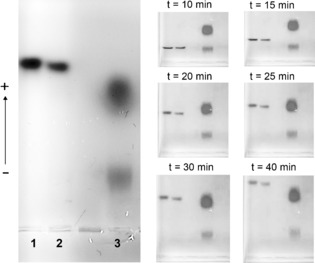
Ultrasmall nanoparticles (USNPs), usually defined as NPs with core in the size range 1-3 nm, are a class of nanomaterials which show unique physicochemical properties, often different from larger NPs of the same material. Moreover, there are also indications that USNPs might have distinct properties in their biological interactions. For example, recent in vivo experiments suggest that some USNPs escape the liver, spleen, and kidney, in contrast to larger NPs that are strongly accumulated in the liver. Here, we present a simple approach to study the biomolecular interactions at the USNPs bio-nanointerface, opening up the possibility to systematically link these observations to microscopic molecular principles.
超小纳米颗粒(USNPs)通常定义为粒径在 1-3nm 范围内的纳米颗粒,是一类具有独特物理化学性质的纳米材料,通常与同一种材料的较大纳米颗粒不同。此外,还有迹象表明,USNPs 在其生物相互作用中可能具有独特的性质。例如,最近的体内实验表明,一些 USNPs 逃避了肝脏、脾脏和肾脏,而较大的 NPs 则强烈积聚在肝脏中。在这里,我们提出了一种简单的方法来研究 USNPs 生物-纳米界面处的生物分子相互作用,为将这些观察结果与微观分子原理系统地联系起来开辟了可能性。