Sousa Alioscka A
Department of Biochemistry, Federal University of São Paulo São Paulo SP Brazil
RSC Adv. 2019 Aug 28;9(46):26927-26941. doi: 10.1039/c9ra04718b. eCollection 2019 Aug 23.
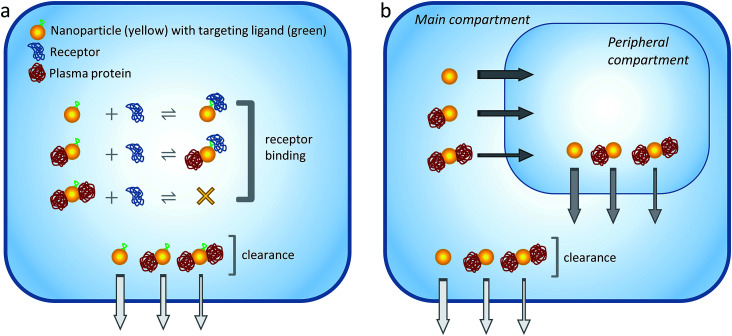
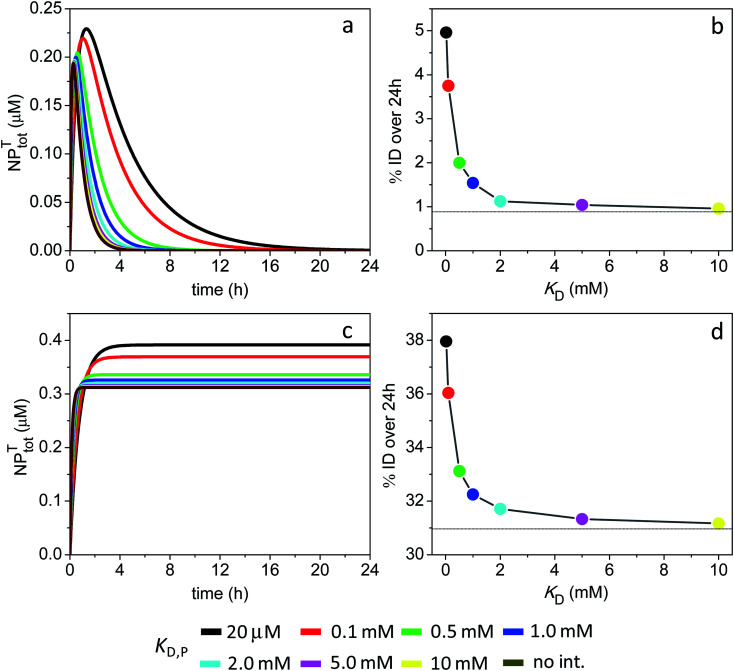
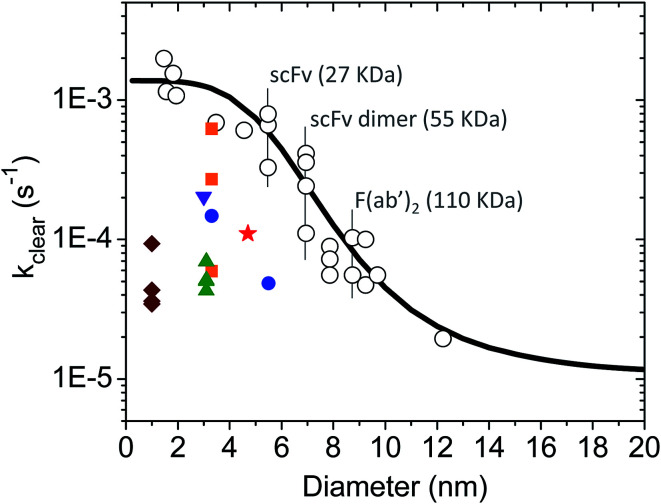
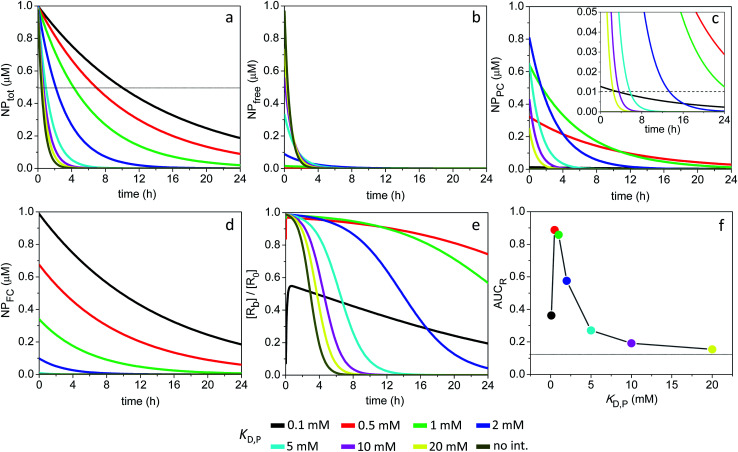
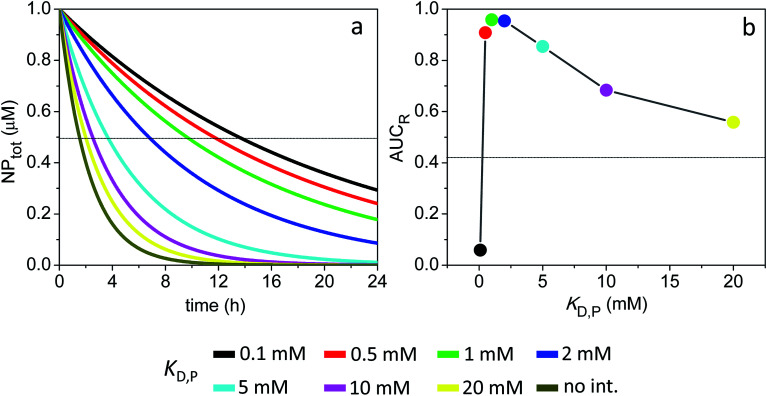
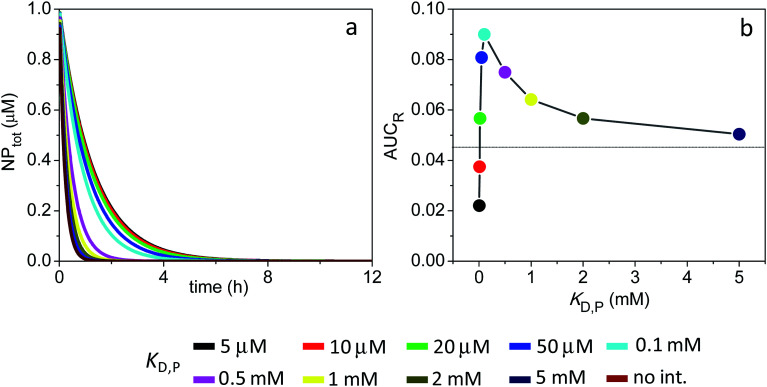
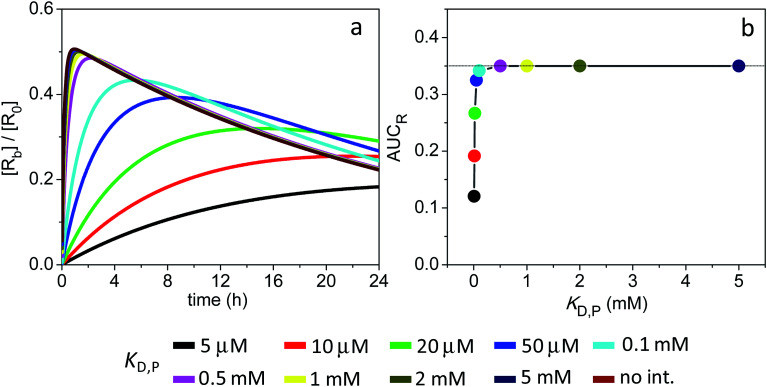
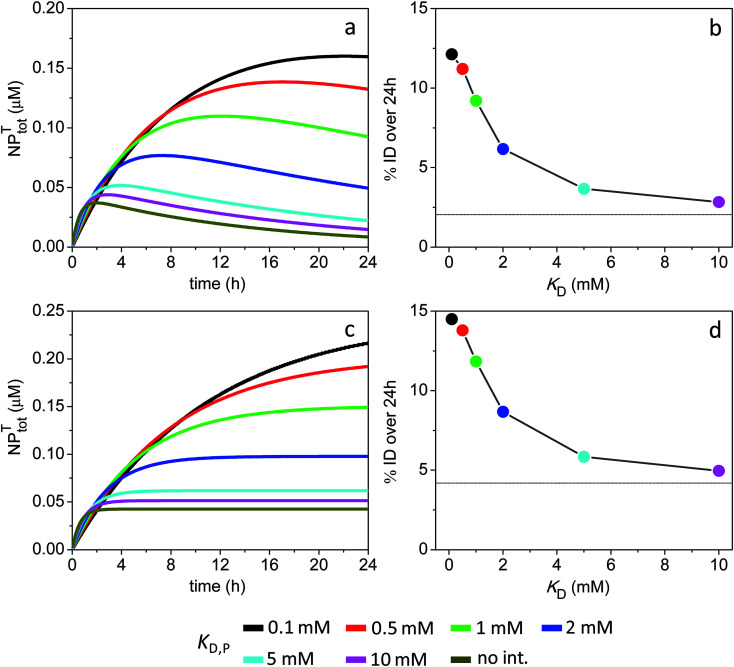
Ultrasmall metal nanoparticles (NPs) are next-generation nano-based platforms for disease diagnosis and treatment. Due to their small size below the kidney filtration threshold and marked resistance to nonspecific serum protein adsorption, ultrasmall NPs can be rapidly excreted through the kidneys and escape liver uptake. However, although ultrasmall particles may be deemed highly resistant to protein adsorption, the real extent of this resistance is not known. Here, a simple compartmental model simulation was therefore implemented to understand how NP behavior could be modulated by soft, transient NP-plasma protein interactions characterized by dissociation constants in the millimolar range. In Model 1, ultrasmall NPs functionalized with a targeting probe, plasma proteins and target receptors were assumed to co-exist within a single compartment. Simulations were performed to understand the synergistic effect of soft interactions, systemic clearance and NP size on receptor occupancy in the single compartment. The results revealed the existence of a narrow range of ultraweak affinities and optimal particle sizes leading to greater target occupancy. In Model 2, simulations were performed to understand the impact of soft interactions on NP accumulation into a peripheral (tumor) compartment. The results revealed that soft interactions - but not active targeting - enhanced tumor uptake levels when tumor accumulation was limited by 'fast' plasma clearance and 'slow' vascular extravasation. The simple model presented here provides a basic framework to quantitatively understand the blood and tumor pharmacokinetics of ultrasmall NPs under the influence of transient protein interactions.
超小金属纳米颗粒(NPs)是用于疾病诊断和治疗的下一代纳米平台。由于其尺寸小于肾脏滤过阈值且对非特异性血清蛋白吸附具有显著抗性,超小纳米颗粒可通过肾脏迅速排泄并避免肝脏摄取。然而,尽管超小颗粒可能被认为对蛋白质吸附具有高度抗性,但这种抗性的实际程度尚不清楚。因此,这里实施了一个简单的隔室模型模拟,以了解纳米颗粒行为如何受到以毫摩尔范围内的解离常数为特征的软的、短暂的纳米颗粒 - 血浆蛋白相互作用的调节。在模型1中,假设用靶向探针、血浆蛋白和靶受体功能化的超小纳米颗粒共存于单个隔室内。进行模拟以了解软相互作用、全身清除率和纳米颗粒大小对单个隔室内受体占有率的协同作用。结果揭示了存在导致更高靶占有率的超弱亲和力窄范围和最佳颗粒大小。在模型2中,进行模拟以了解软相互作用对纳米颗粒在外周(肿瘤)隔室中积累的影响。结果表明,当肿瘤积累受到“快速”血浆清除和“缓慢”血管外渗限制时,软相互作用而非主动靶向增强了肿瘤摄取水平。这里提出的简单模型提供了一个基本框架,以定量理解在短暂蛋白质相互作用影响下超小纳米颗粒的血液和肿瘤药代动力学。