Zheng Shuyue, He Liangliang, Yang Xiaohui, Li Xiuhua, Yang Zhanmin
Pain Clinic of Anesthesiology Department, Central Hospital of China Aerospace Corporation (Aerospace Clinical Medical School of Peking University) Department of Pain Management, Xuanwu Hospital, Capital Medical University, Beijing Department of Pain Management, Affiliated Hospital of Weifang Medical University, Weifang Medical University, Weifang, Shandong Province, China.
Medicine (Baltimore). 2017 Mar;96(11):e6354. doi: 10.1097/MD.0000000000006354.
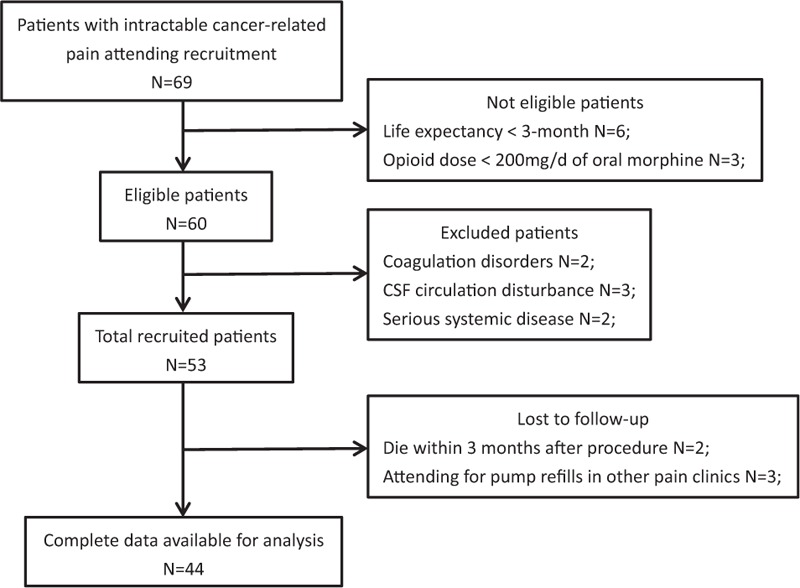
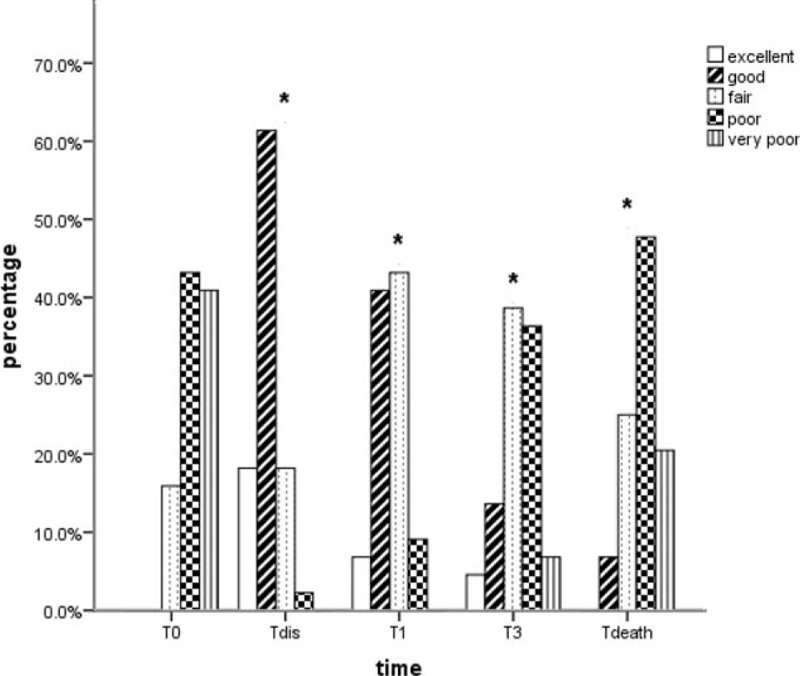
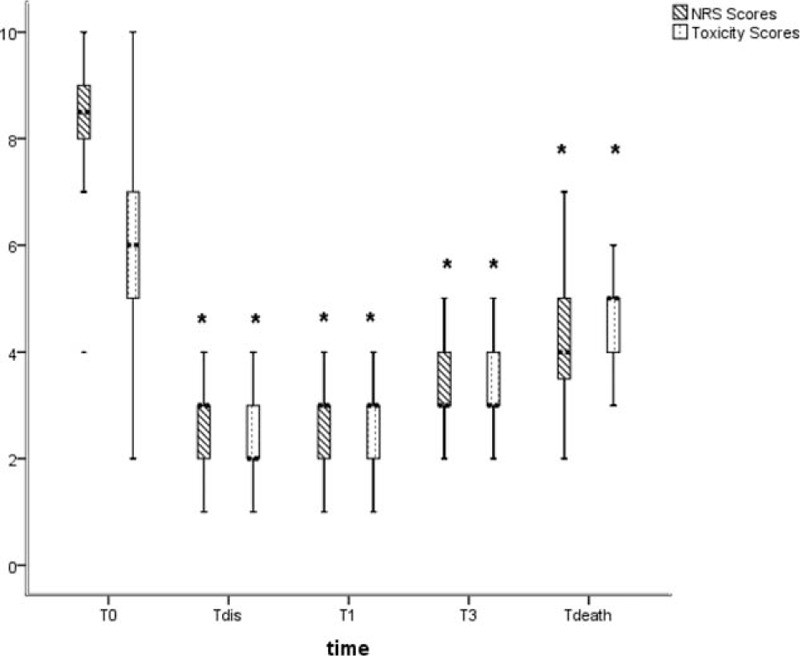
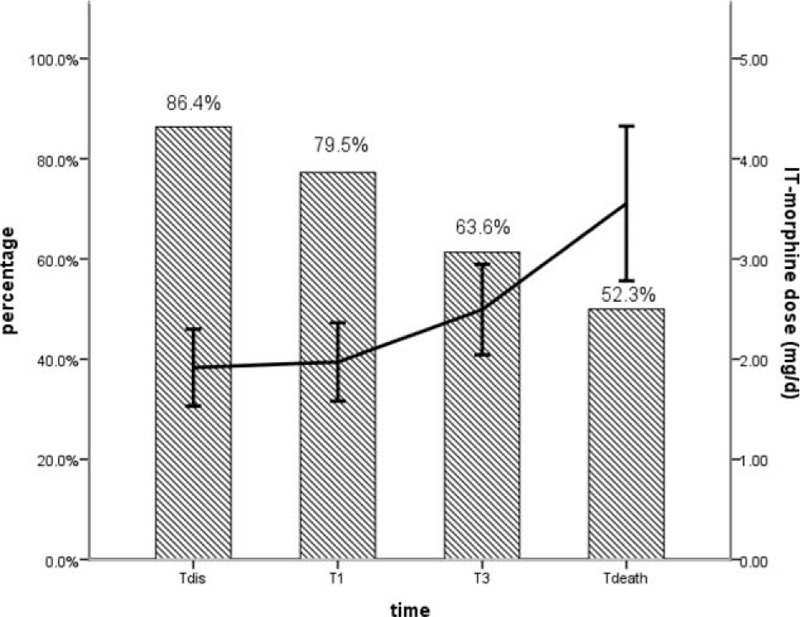
Pain is prevalent in advanced malignancies; however, some patients cannot get adequate pain relief by conservative routes of analgesic administration or experience serious side effects related to high dose of opioids. For those who have exhausted multimodal conservative analgesic, intrathecal drug delivery is an alternative intervention for truly effective pain management. The objective of this study was to evaluate the clinical efficacy and safety of intrathecal drug delivery system (IDDS) for the treatment of intractable pain in advanced cancer patients.A prospective cohort study was performed between July 2015 and October 2016. Fifty-three patients undergoing intractable cancer-related pain or intolerable drug-related adverse effects were recruited and received IDDS therapy with a patient-controlled intrathecal analgesia pump. The assessment was conducted during admission, in titration period, and followed up monthly to death by scheduled refill visits. Pain numeric rating scale scores, comprehensive toxicity scores, quality of life scores, systemic opioid use (basal and breakthrough dose), intrathecal morphine use (basal and patient-controlled intrathecal analgesia dose), and complications were recorded to evaluate the curative effect and safety.Between baseline and all subsequent follow-ups, statistically significant decreases in pain numeric rating scale scores and comprehensive toxicity scores were verified. A statistical improvement in quality of life scores was found after starting IDDS therapy. Both basal and breakthrough doses of systemic opioid showed a significant decrease during the follow-up period. And there was a modest escalation in the intrathecal morphine dose throughout the duration of study. No infective, device-related, and catheter-related complications were observed.The findings showed that IDDS therapy allowed for rapid and highly effective pain relief with less toxicity in comparison to conservative medications. Patients with advanced malignancies would also benefit from an improvement in the life quality after the procedure. IDDS therapy represented a valuable option for intractable cancer-related pain management.
疼痛在晚期恶性肿瘤中很常见;然而,一些患者通过保守的镇痛给药途径无法获得充分的疼痛缓解,或者会经历与高剂量阿片类药物相关的严重副作用。对于那些用尽多模式保守镇痛方法的患者,鞘内药物递送是一种真正有效控制疼痛的替代干预措施。本研究的目的是评估鞘内药物递送系统(IDDS)治疗晚期癌症患者顽固性疼痛的临床疗效和安全性。
在2015年7月至2016年10月期间进行了一项前瞻性队列研究。招募了53名患有顽固性癌症相关疼痛或无法耐受药物相关不良反应的患者,并使用患者自控鞘内镇痛泵接受IDDS治疗。在入院期间、滴定期进行评估,并通过定期补充访视每月随访直至死亡。记录疼痛数字评分量表得分、综合毒性评分、生活质量评分、全身阿片类药物使用情况(基础剂量和爆发剂量)、鞘内吗啡使用情况(基础剂量和患者自控鞘内镇痛剂量)以及并发症,以评估疗效和安全性。
在基线和所有后续随访之间,疼痛数字评分量表得分和综合毒性评分在统计学上有显著下降得到证实。开始IDDS治疗后,生活质量评分有统计学上的改善。在随访期间,全身阿片类药物的基础剂量和爆发剂量均显著下降。并且在整个研究期间,鞘内吗啡剂量有适度增加。未观察到感染性、与装置相关和与导管相关的并发症。
研究结果表明,与保守药物相比,IDDS治疗能够快速、高效地缓解疼痛,且毒性较小。晚期恶性肿瘤患者在接受该治疗后生活质量也会得到改善。IDDS治疗是顽固性癌症相关疼痛管理的一个有价值的选择。