Ward Eric J, Adkison Milo, Couture Jessica, Dressel Sherri C, Litzow Michael A, Moffitt Steve, Hoem Neher Tammy, Trochta John, Brenner Rich
Conservation Biology Division, Northwest Fisheries Science Center, National Marine Fisheries Service, National Oceanic and Atmospheric Administration, Seattle Washington, United States of America.
School of Fisheries and Ocean Sciences, University of Alaska Fairbanks, Juneau, Alaska, United States of America.
PLoS One. 2017 Mar 15;12(3):e0172898. doi: 10.1371/journal.pone.0172898. eCollection 2017.
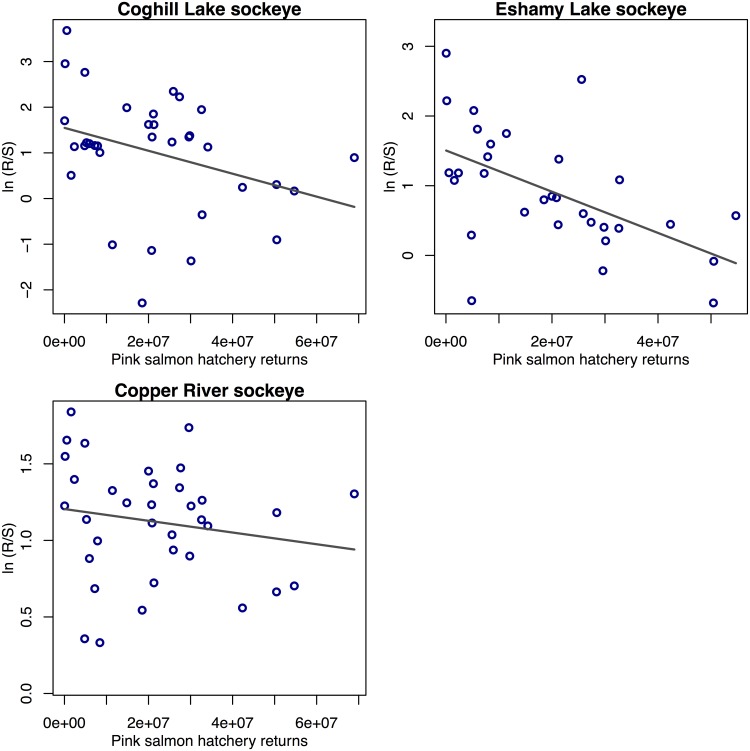
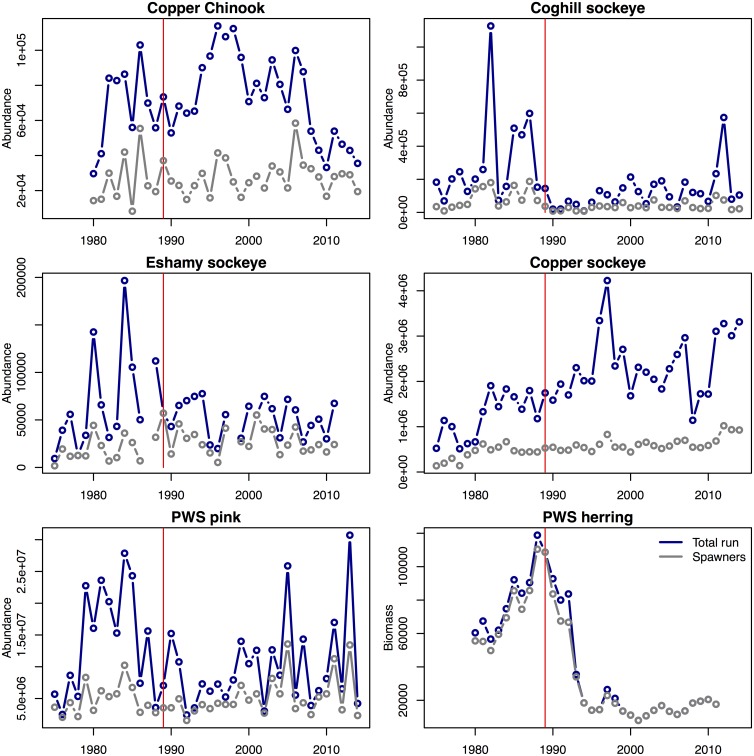
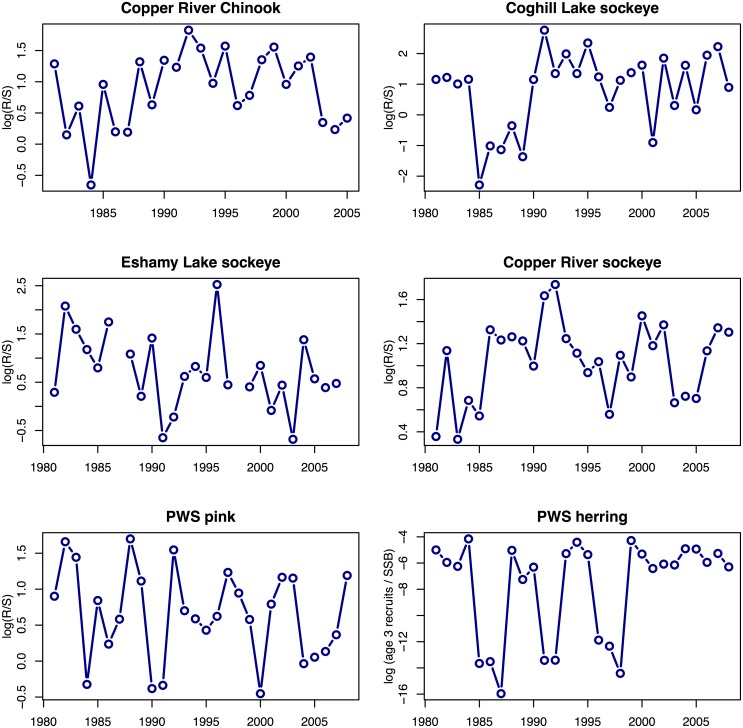
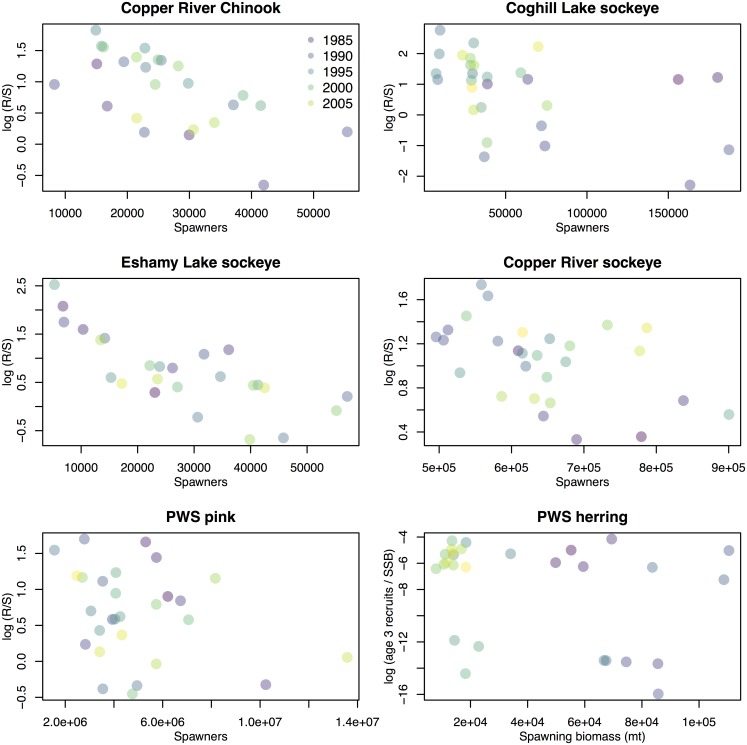
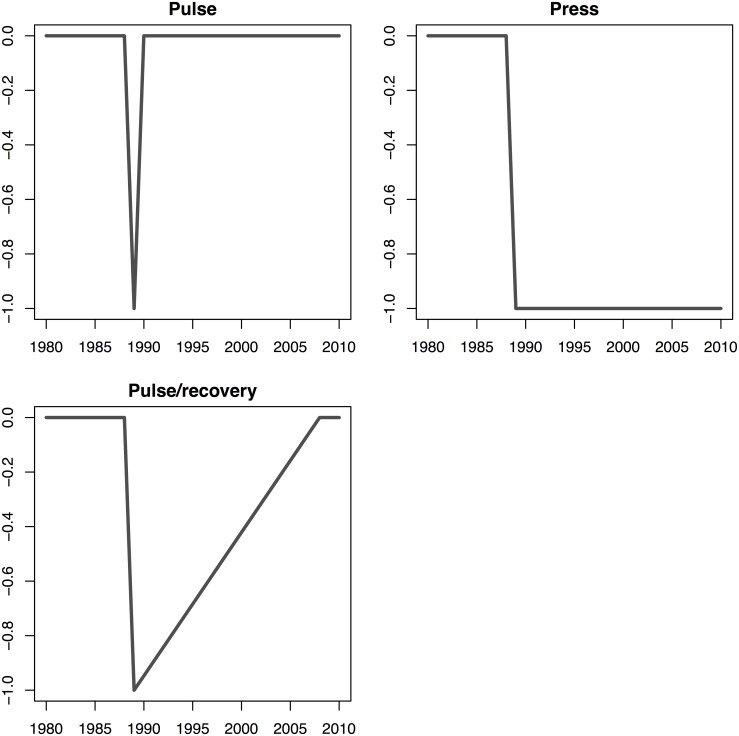
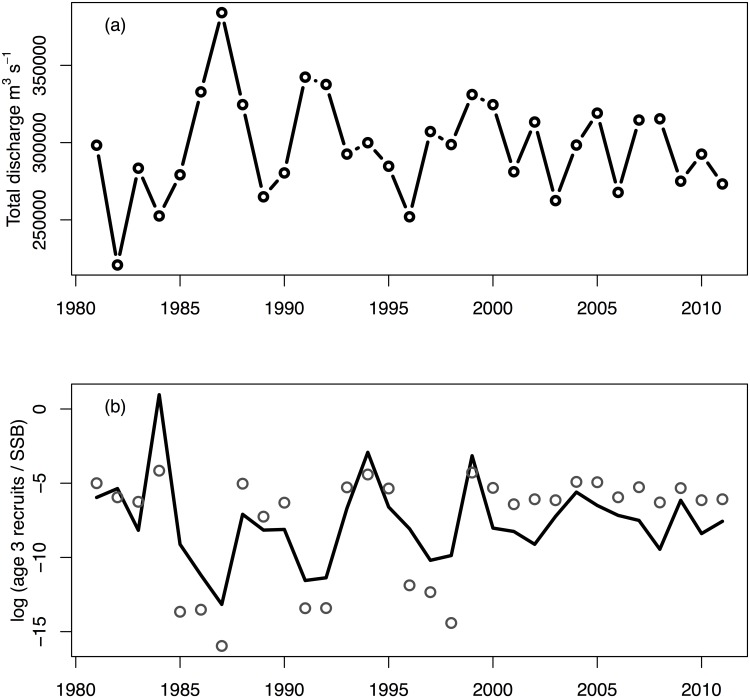
The Exxon Valdez oil spill occurred in March 1989 in Prince William Sound, Alaska, and was one of the worst environmental disasters on record in the United States. Despite long-term data collection over the nearly three decades since the spill, tremendous uncertainty remains as to how significantly the spill affected fishery resources. Pacific herring (Clupea pallasii) and some wild Pacific salmon populations (Oncorhynchus spp.) in Prince William Sound declined in the early 1990s, and have not returned to the population sizes observed in the 1980s. Discerning if, or how much of, this decline resulted from the oil spill has been difficult because a number of other physical and ecological drivers are confounded temporally with the spill; some of these drivers include environmental variability or changing climate regimes, increased production of hatchery salmon in the region, and increases in populations of potential predators. Using data pre- and post-spill, we applied time-series methods to evaluate support for whether and how herring and salmon productivity has been affected by each of five drivers: (1) density dependence, (2) the EVOS event, (3) changing environmental conditions, (4) interspecific competition on juvenile fish, and (5) predation and competition from adult fish or, in the case of herring, humpback whales. Our results showed support for intraspecific density-dependent effects in herring, sockeye, and Chinook salmon, with little overall support for an oil spill effect. Of the salmon species, the largest driver was the negative impact of adult pink salmon returns on sockeye salmon productivity. Herring productivity was most strongly affected by changing environmental conditions; specifically, freshwater discharge into the Gulf of Alaska was linked to a series of recruitment failures-before, during, and after EVOS. These results highlight the need to better understand long terms impacts of pink salmon on food webs, as well as the interactions between nearshore species and freshwater inputs, particularly as they relate to climate change and increasing water temperatures.
1989年3月,埃克森·瓦尔迪兹号油轮在阿拉斯加威廉王子湾发生漏油事故,这是美国有史以来最严重的环境灾难之一。尽管自漏油事故发生以来的近三十年里一直在进行长期数据收集,但关于漏油对渔业资源的影响程度仍存在巨大不确定性。20世纪90年代初,威廉王子湾的太平洋鲱鱼(Clupea pallasii)和一些野生太平洋鲑鱼种群(Oncorhynchus spp.)数量下降,至今仍未恢复到20世纪80年代观察到的种群规模。很难确定这种下降是否以及在多大程度上是由漏油事故导致的,因为许多其他物理和生态驱动因素在时间上与漏油事故相互混淆;其中一些驱动因素包括环境变化或气候变化、该地区孵化场鲑鱼产量增加以及潜在捕食者数量增加。利用漏油前后的数据,我们应用时间序列方法来评估对鲱鱼和鲑鱼生产力是否以及如何受到以下五个驱动因素影响的支持:(1)密度依赖性,(2)埃克森·瓦尔迪兹号油轮漏油事件,(3)不断变化的环境条件,(4)幼鱼的种间竞争,以及(5)成鱼的捕食和竞争,或者对于鲱鱼来说,还有座头鲸的捕食和竞争。我们的结果表明,支持鲱鱼、红大马哈鱼和奇努克鲑鱼存在种内密度依赖性影响,总体上对漏油影响的支持较少。在鲑鱼种类中,最大的驱动因素是成年细鳞大麻哈鱼洄游对红大马哈鱼生产力的负面影响。鲱鱼生产力受不断变化的环境条件影响最大;具体而言,阿拉斯加湾的淡水排放与埃克森·瓦尔迪兹号油轮漏油事件之前、期间和之后的一系列补充失败有关。这些结果凸显了更好地了解细鳞大麻哈鱼对食物网的长期影响以及近岸物种与淡水输入之间相互作用的必要性,特别是它们与气候变化和水温升高的关系。