Hays E, Majchrzak N, Daniel V, Ferguson Z, Brown S, Hathorne K, La Salle S
Department of Biochemistry, Chicago College of Osteopathic Medicine, Midwestern University, Downers Grove, IL, USA.
Chicago College of Pharmacy, Midwestern University, Downers Grove, IL, USA.
Andrology. 2017 Mar;5(2):299-312. doi: 10.1111/andr.12315.
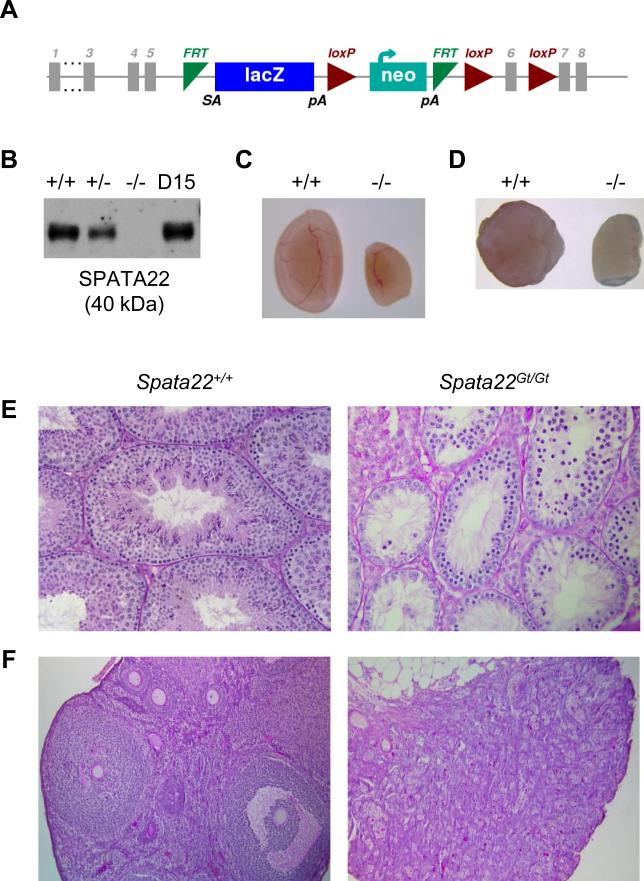
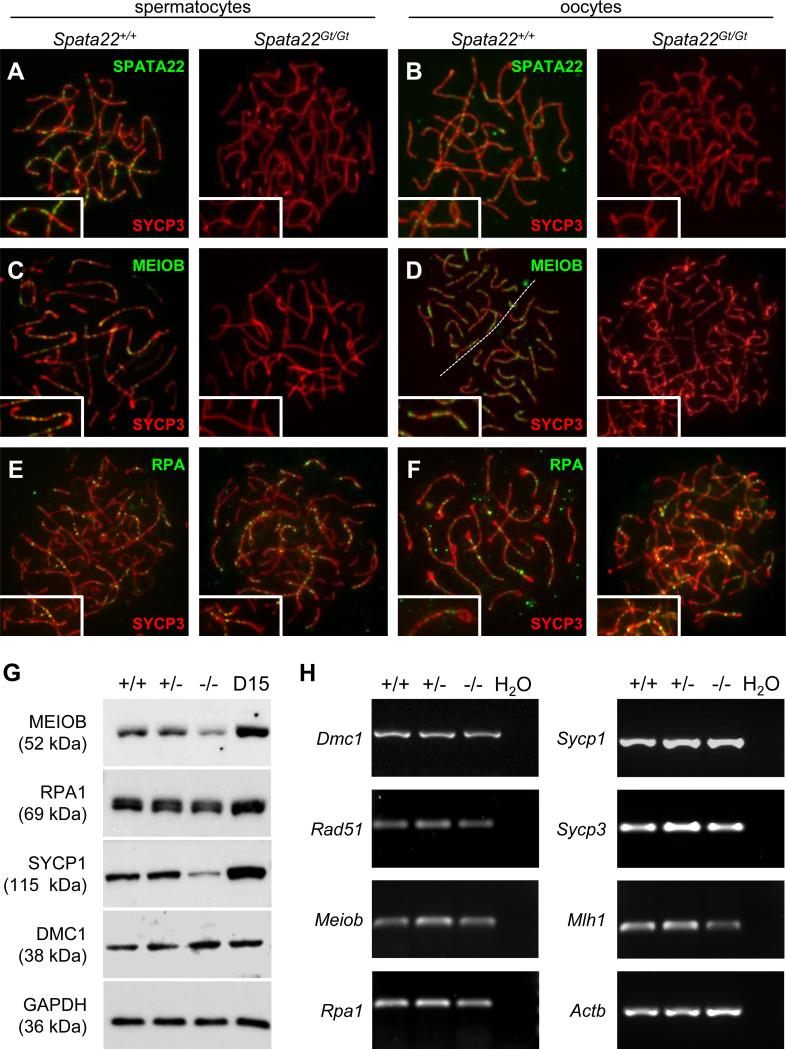
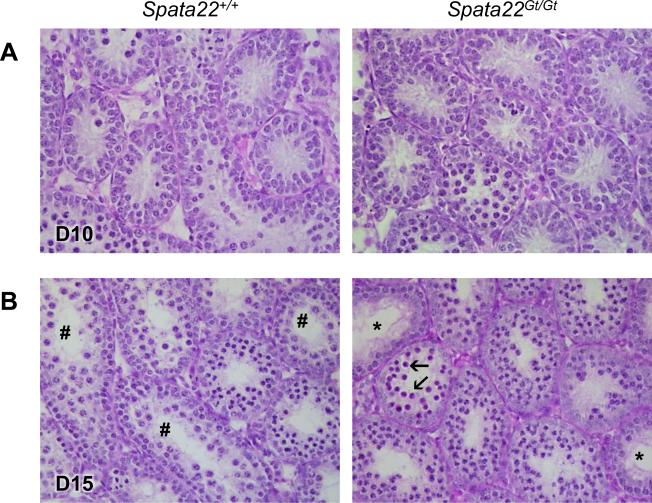
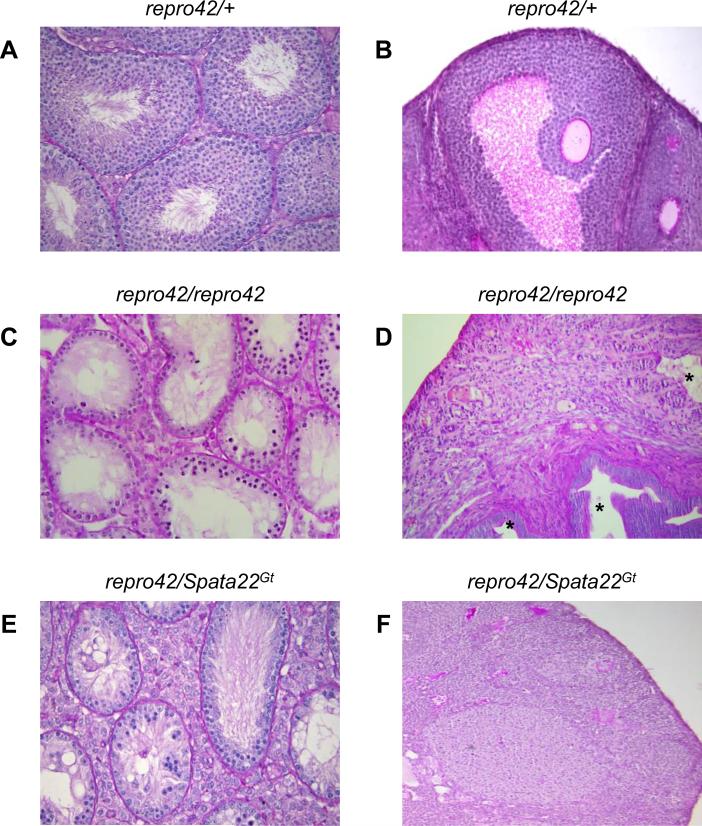
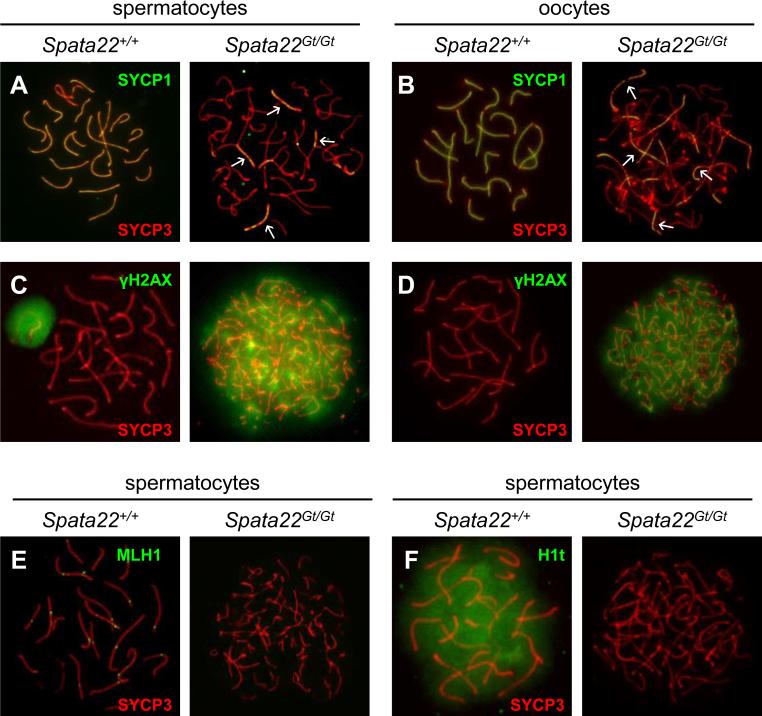
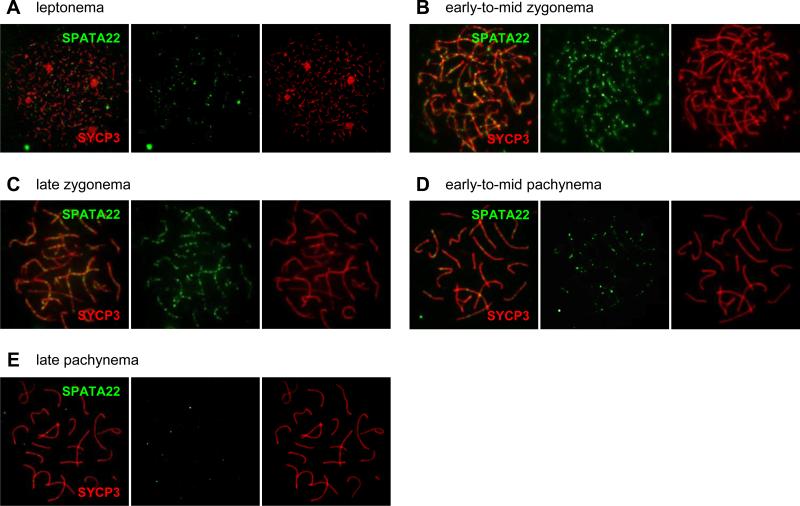
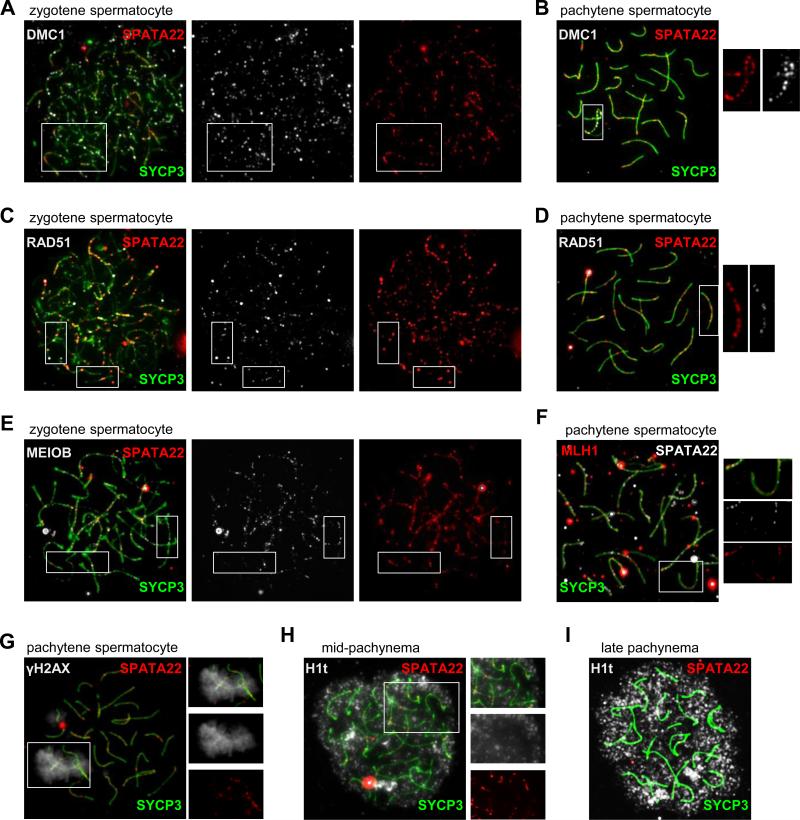
Analysis of the N-ethyl-N-nitrosourea (ENU)-induced repro42 mutation previously identified spermatogenesis associated 22 (Spata22) as a gene required for meiotic progression and fertility in both male and female mice, but its specific contribution to the process was unclear. Here, we report on a novel, null allele of Spata22 (Spata22 ) and confirm its requirement for germ cell development. Similar to repro42 mutant mice, histological and mating analyses indicate that gametogenesis is profoundly affected in Spata22 males and females, resulting in infertility. Cytological examination confirms that germ cells do not progress beyond zygonema and meiotic arrest is linked to impairment of both synapsis and DNA repair. Analysis of SPATA22 distribution reveals that it localizes to foci associated with meiotic chromosomes during prophase I and that the number of foci peaks at zygonema; there are also more SPATA22 foci in oocytes than in spermatocytes. Furthermore, SPATA22 co-localizes with a number of proteins involved in meiotic recombination, including RAD51, DMC1, and MLH1, and is present until mid-pachynema, suggesting a role in resolution of recombination intermediates. In fact, SPATA22 co-localizes with MLH1 in more than 20% of foci at pachynema. Analysis of Spata22 meiocytes confirms that SPATA22 is required for localization of MEIOB but not RPA (two proteins known to interact with SPATA22), and immunoblotting corroborates that production of MEIOB is indeed decreased in the absence of SPATA22. Together, these data suggest that SPATA22 is required for both meiotic recombination and synapsis during meiosis in mice.
对N-乙基-N-亚硝基脲(ENU)诱导的repro42突变的分析先前已确定精子发生相关22(Spata22)是雄性和雌性小鼠减数分裂进程和生育能力所需的基因,但其对该过程的具体贡献尚不清楚。在此,我们报告了Spata22的一个新的无效等位基因(Spata22),并证实了其对生殖细胞发育的必要性。与repro42突变小鼠相似,组织学和交配分析表明,Spata22雄性和雌性的配子发生受到严重影响,导致不育。细胞学检查证实生殖细胞不会超过偶线期,减数分裂停滞与联会和DNA修复受损有关。对SPATA22分布的分析表明,它在减数分裂前期I定位于与减数分裂染色体相关的位点,且位点数量在偶线期达到峰值;卵母细胞中的SPATA22位点也比精母细胞中的多。此外,SPATA22与多种参与减数分裂重组的蛋白质共定位,包括RAD51、DMC1和MLH1,并且一直存在到粗线期中期,表明其在重组中间体的解析中发挥作用。事实上,在粗线期,超过20%的位点中SPATA22与MLH1共定位。对Spata22减数分裂细胞的分析证实,SPATA22是MEIOB定位所必需的,但不是RPA(已知与SPATA22相互作用的两种蛋白质)定位所必需的,免疫印迹证实,在没有SPATA22的情况下,MEIOB的产生确实减少。总之,这些数据表明,SPATA22是小鼠减数分裂过程中减数分裂重组和联会所必需的。