Zimbudzi Edward
Department of Nephrology, Monash Health, Monash Medical Centre , Clayton, Melbourne, Victoria, Australia.
J Public Health Afr. 2013 Jun 25;4(1):e4. doi: 10.4081/jphia.2013.e4.
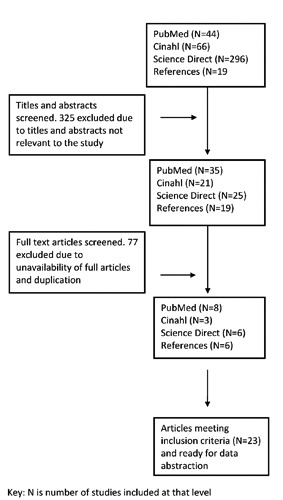
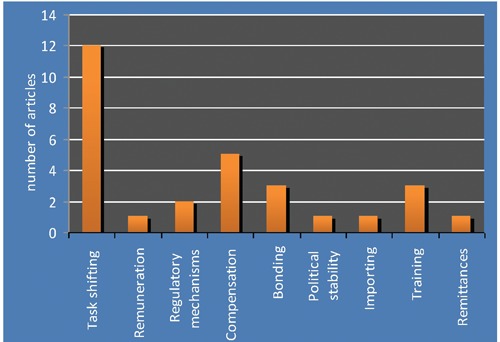
Africa has been losing professionally trained health workers who are the core of the health system of this continent for many years. Faced with an increased burden of disease and coupled by a massive exodus of the health workforce, the health systems of many African nations are risking complete paralysis. Several studies have suggested policy options to reduce brain drain from Africa. The purpose of this paper is to review possible policies, which can stem the impact of health professional brain drain from Africa. A systemic literature review was conducted. Cinahl, Science Direct and PubMed databases were searched with the following terms: and . References were also browsed for relevant articles. A total of 425 articles were available for the study but only 23 articles met the inclusion criteria. The review identified nine policy options, which were being implemented in Africa, but the most common was task shifting which had success in several African countries. This review has demonstrated that there is considerable consensus on task shifting as the most appropriate and sustainable policy option for reducing the impact of health professional brain drain from Africa.
多年来,非洲一直在流失经过专业培训的卫生工作者,而这些人是非洲大陆卫生系统的核心。面对日益加重的疾病负担,再加上卫生工作者大量外流,许多非洲国家的卫生系统正面临完全瘫痪的风险。多项研究提出了减少非洲人才外流的政策选择。本文的目的是回顾可能的政策,这些政策可以遏制非洲卫生专业人才外流的影响。进行了一项系统性文献综述。使用以下术语在CINAHL、科学Direct和PubMed数据库中进行搜索: 以及 。还浏览了参考文献以查找相关文章。共有425篇文章可供本研究使用,但只有23篇文章符合纳入标准。该综述确定了非洲正在实施的九项政策选择,但最常见的是任务转移,这在几个非洲国家取得了成功。该综述表明,对于任务转移作为减少非洲卫生专业人才外流影响的最合适和可持续的政策选择,存在相当大的共识。