Wolfson Anna R, Hamilos Daniel L
Massachusetts General Hospital, Allergy and Immunology Division, Cox 201, 55 Fruit Street, Boston, Massachusetts, 02114, USA.
F1000Res. 2017 Feb 23;6. doi: 10.12688/f1000research.9399.1. eCollection 2017.
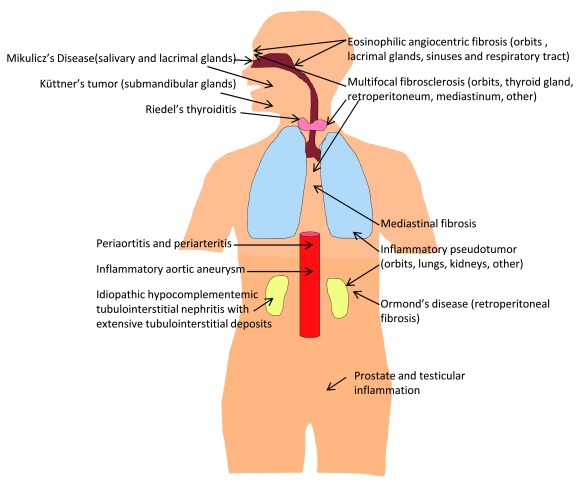
IgG4-related disease was only recently discovered, so its description, management, and new discoveries related to its etiology are rapidly evolving. Because IgG4 itself is a unique antibody which is intimately related to the diagnosis of the disease, the role of plasmablasts in the pathophysiology remains an active area of discussion. Recent studies have uncovered a possible role for CD4-positive cytotoxic T lymphocytes, T follicular helper cells, and M2 macrophages. The clinical presentation is variable and can be vague, as this disease affects many organs and new presentations are continuing to be described. The diagnosis depends on clinical and histopathological assessment. The mainstay of treatment is with glucocorticoids, but rituximab has recently shown promise. Monitoring disease activity using imaging modalities (including positron emission tomography) and serum markers is imperative, as relapses are common. IgG4-related disease spans many medical disciplines but is a treatable condition with which all clinicians should be familiar.
IgG4相关疾病是最近才被发现的,因此其描述、管理以及与其病因相关的新发现都在迅速发展。由于IgG4本身是一种与该疾病诊断密切相关的独特抗体,浆母细胞在病理生理学中的作用仍是一个活跃的讨论领域。最近的研究揭示了CD4阳性细胞毒性T淋巴细胞、滤泡辅助性T细胞和M2巨噬细胞可能发挥的作用。临床表现多样且可能不明确,因为这种疾病会影响许多器官,并且不断有新的表现被描述出来。诊断依赖于临床和组织病理学评估。治疗的主要手段是使用糖皮质激素,但利妥昔单抗最近已显示出前景。使用成像方式(包括正电子发射断层扫描)和血清标志物监测疾病活动至关重要,因为复发很常见。IgG4相关疾病跨越多个医学学科,但却是一种所有临床医生都应熟悉的可治疗疾病。