Brito-Zerón Pilar, Kostov Belchin, Bosch Xavier, Acar-Denizli Nihan, Ramos-Casals Manuel, Stone John H
aAutoimmune Diseases Unit, Department of Medicine, Hospital CIMA-Sanitas bSjögren Syndrome Research Group (AGAUR), Laboratory of Autoimmune Diseases Josep Font, IDIBAPS-CELLEX cDepartment of Autoimmune Diseases, ICMiD, Hospital Clínic dConsorci d'Atenció Primària de Salut Barcelona Esquerre (CAPS-BE) eTransverse Group for Research in Primary Care, Institut d'Investigacions Biomèdiques August Pi i Sunyer (IDIBAPS) fDepartment of Internal Medicine, ICMiD, Hospital Clínic, Barcelona, Spain gDepartment of Statistics, Faculty of Science and Letters, Mimar Sinan Fine Arts University, Istanbul, Turkey hDepartment of Medicine, University of Barcelona, Barcelona, Spain iHarvard Medical School and Department of Medicine (Division of Rheumatology, Allergy, and Immunology), Massachusetts General Hospital, Boston, MA.
Medicine (Baltimore). 2016 Jun;95(26):e4002. doi: 10.1097/MD.0000000000004002.
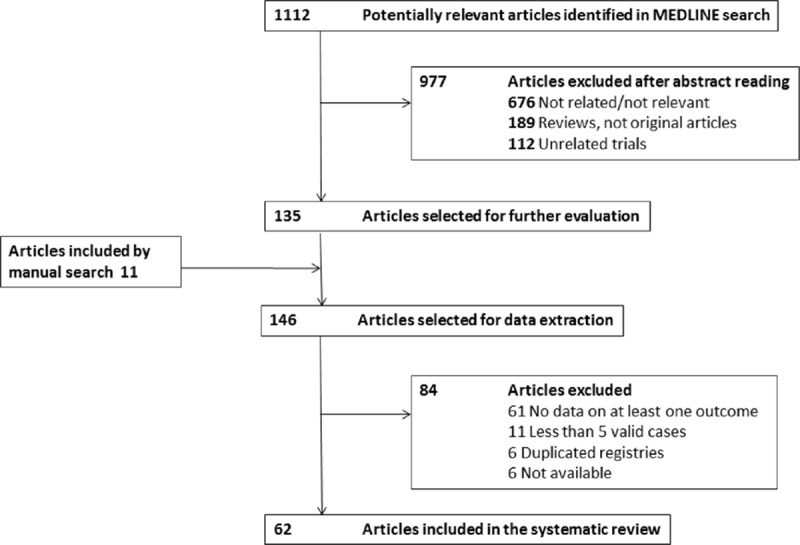
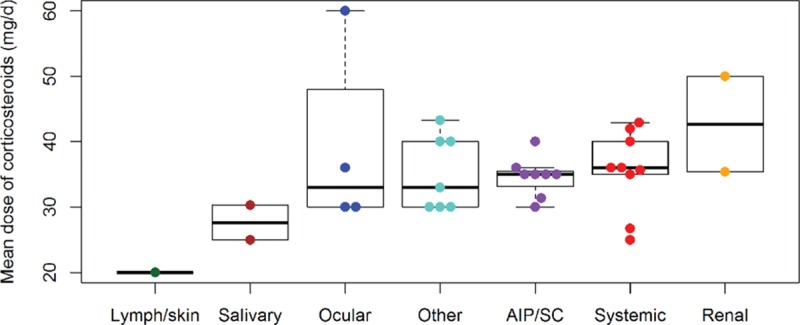
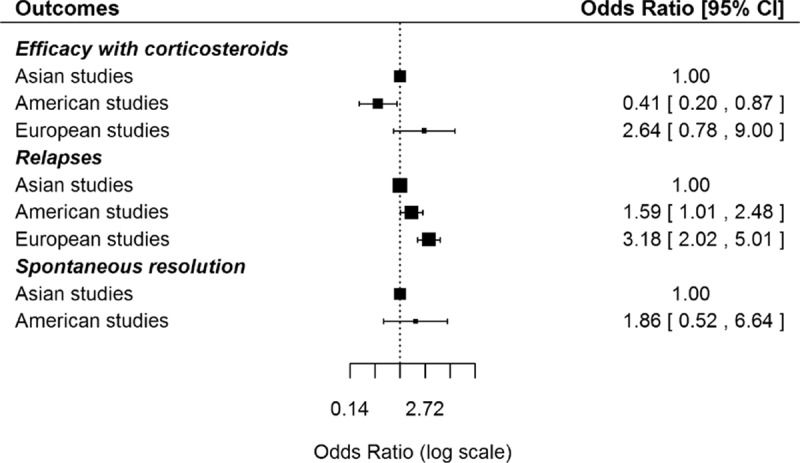
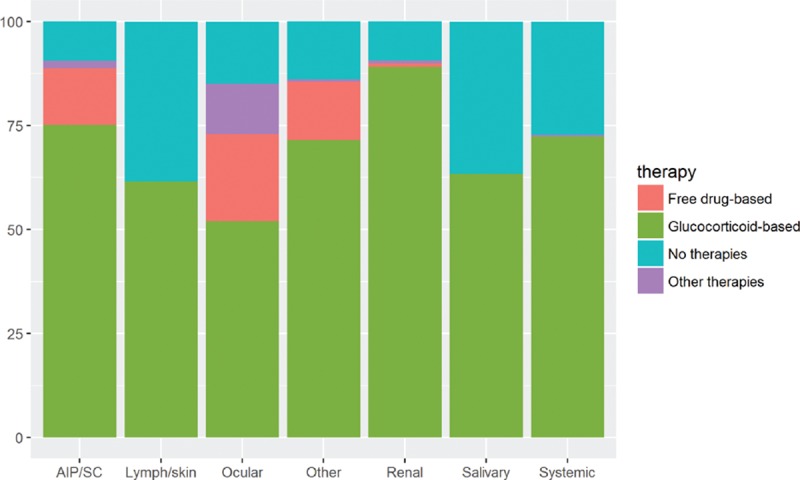
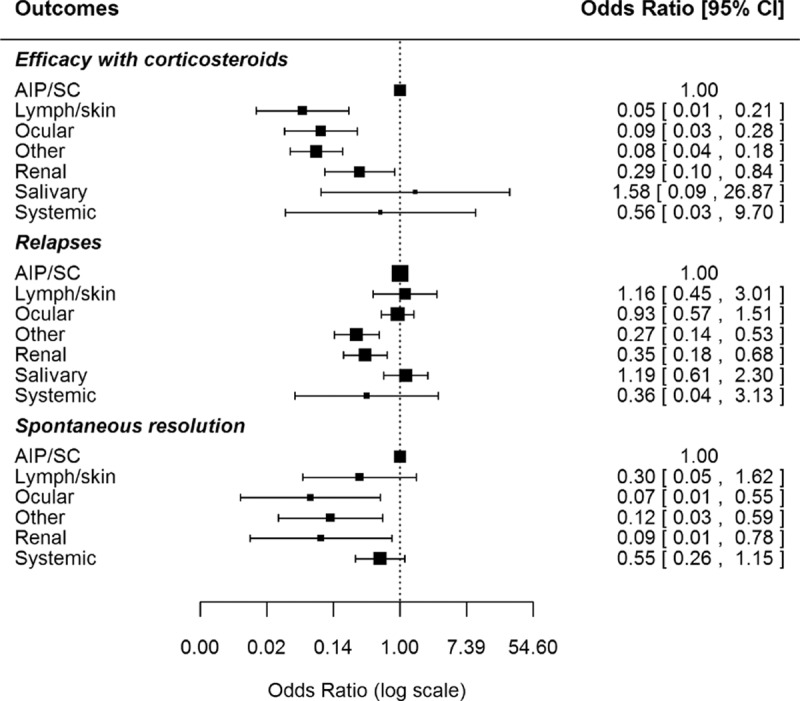
To review the reported evidence on the therapeutic management of IgG4-related disease (IgG4-RD) in clinical practice.A systematic search of the literature was conducted. The primary outcome measured was the rate of efficacy of first-line therapeutic approaches. Secondary outcomes measured included the rate of disease relapse, the outcome of untreated patients, the rate of patients without drug therapy at the end of follow-up, the rate of side effects, and mortality. The MOOSE, AHRQ, STROBE, and GRACE recommendations/statements were followed.The results of the systematic search strategy yielded 62 studies that included a total of 3034 patients. Complete information about first-line therapeutic regimens was detailed in 1952 patients, including glucocorticoid-based regimens in 1437 (74%), drug-free regimens in 213 (11%), and other therapies in 38 (2%). No therapy (wait and see management) was reported in 264 (13%) patients. The efficacy of monotherapy with glucocorticoids was specified in 1220 patients, of whom 97% had a therapeutic response. Relapses, however, were reported in 464/1395 (33%) patients despite typically short follow-up periods. Therapeutic efficacy was reported in 219/231 (95%) of relapses treated with glucocorticoids, 56/69 (81%) of those treated with azathioprine, 16/22 (72%) of those treated with other immunosuppressive agents, and in the 9 cases treated with rituximab (100%). In 14 studies, the authors detailed the outcome of 159/246 patients with wait-and-see management; spontaneous improvement or resolution was reported in 68 (43%) cases. Wide heterogeneity was observed with respect to the first-line therapeutic approaches used for the different organ-specific disease subsets, including significant differences in the mean dose of glucocorticoids used.Nearly 70% of reported IgG4-RD patients are treated with oral glucocorticoids in monotherapy. However, the therapeutic management is heavily influenced by geographical, epidemiological, and clinical factors, especially with respect to the predominant organ affected. The frequency of glucocorticoid failure to induce sustained remissions both during and after treatment and the assessment of glucocorticoid toxicity in IgG4-RD require further study.
回顾临床实践中关于IgG4相关性疾病(IgG4-RD)治疗管理的已报道证据。对文献进行了系统检索。测量的主要结局是一线治疗方法的有效率。测量的次要结局包括疾病复发率、未治疗患者的结局、随访结束时未接受药物治疗的患者比例、副作用发生率和死亡率。遵循了MOOSE、AHRQ、STROBE和GRACE的建议/声明。系统检索策略的结果产生了62项研究,共纳入3034例患者。1952例患者详细提供了关于一线治疗方案的完整信息,包括1437例(74%)基于糖皮质激素的方案、213例(11%)无药物方案和38例(2%)其他治疗。264例(13%)患者未接受治疗(观察等待管理)。1220例患者明确了糖皮质激素单药治疗的疗效,其中97%有治疗反应。然而,尽管随访期通常较短,但464/1395例(33%)患者出现复发。糖皮质激素治疗复发的患者中,219/231例(95%)有治疗效果,硫唑嘌呤治疗的患者中56/69例(81%)有治疗效果,其他免疫抑制剂治疗的患者中16/22例(72%)有治疗效果,利妥昔单抗治疗的9例患者(100%)有治疗效果。在14项研究中,作者详细介绍了159/246例观察等待管理患者的结局;68例(43%)报告有自发改善或缓解。对于不同器官特异性疾病亚组所采用的一线治疗方法,观察到广泛的异质性,包括所用糖皮质激素平均剂量的显著差异。近70%报告的IgG4-RD患者接受口服糖皮质激素单药治疗。然而,治疗管理受到地理、流行病学和临床因素的严重影响,特别是在主要受累器官方面。IgG4-RD中糖皮质激素治疗期间及治疗后未能诱导持续缓解的频率以及糖皮质激素毒性的评估需要进一步研究。