Fish Abigail I, Riley Sean P, Singh Birendra, Riesbeck Kristian, Martinez Juan J
Vector-Borne Diseases Laboratories, Department of Pathobiological Sciences, Louisiana State University School of Veterinary Medicine Baton Rouge, LA, USA.
Clinical Microbiology, Department of Translational Medicine, Lund University Malmö, Sweden.
Front Cell Infect Microbiol. 2017 Mar 1;7:61. doi: 10.3389/fcimb.2017.00061. eCollection 2017.
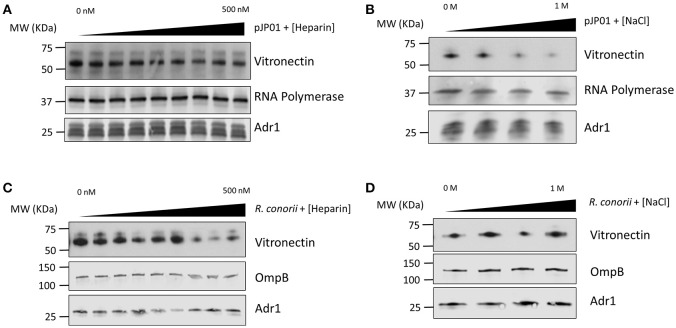
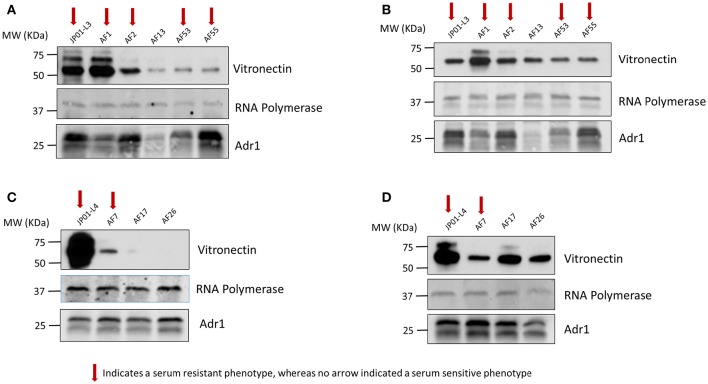
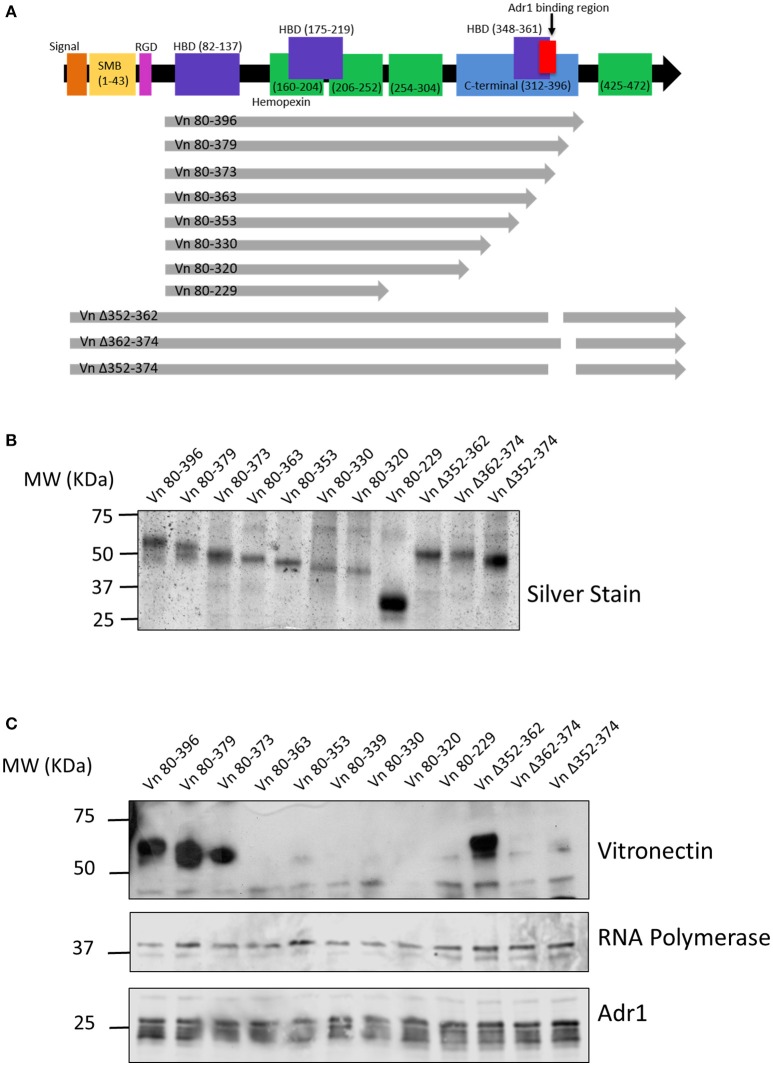
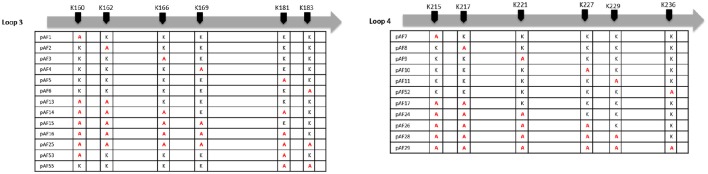
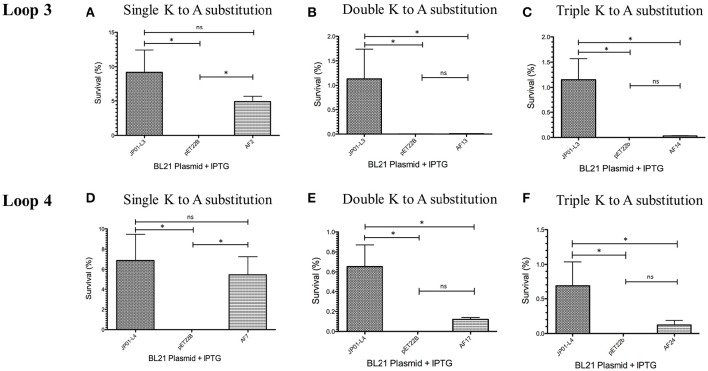
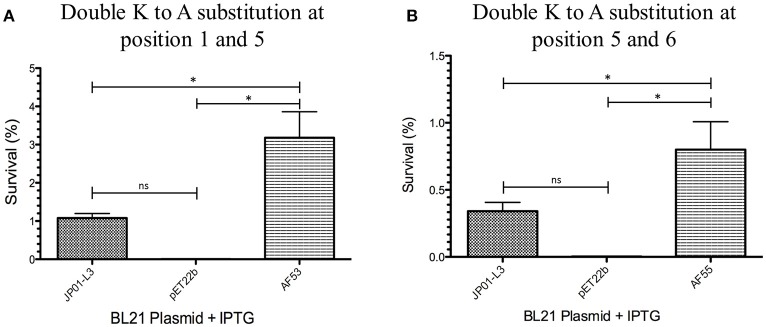
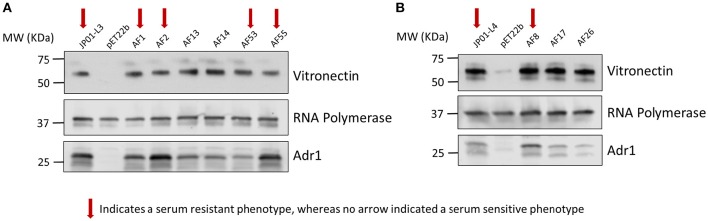
Spotted fever group (SFG) species are inoculated into the mammalian bloodstream by hematophagous arthropods. Once in the bloodstream and during dissemination, the survival of these pathogens is dependent upon the ability of these bacteria to evade serum-borne host defenses until a proper cellular host is reached. expresses an outer membrane protein, Adr1, which binds the complement inhibitory protein vitronectin to promote resistance to the anti-bacterial effects of the terminal complement complex. Adr1 is predicted to consist of 8 transmembrane beta sheets that form a membrane-spanning barrel with 4 peptide loops exposed to the extracellular environment. We previously demonstrated that Adr1 derivatives containing either loop 3 or 4 are sufficient to bind Vn and mediate resistance to serum killing when expressed at the outer-membrane of . By expressing Adr1 on the surface of non-pathogenic , we demonstrate that the interaction between Adr1 and vitronectin is salt-sensitive and cannot be interrupted by addition of heparin. Additionally, we utilized vitroenctin-derived peptides to map the minimal Adr1/vitronectin interaction to the C-terminal region of vitronectin. Furthermore, we demonstrate that specific charged amino acid residues located within loops 3 and 4 of Adr1 are critical for mediating resistance to complement-mediated killing. Interestingly, Adr1 mutants that were no longer sufficient to mediate resistance to serum killing still retained the ability to bind to Vn, suggesting that Adr1-Vn interactions responsible for resistance to serum killing are more complex than originally hypothesized. In summary, elucidation of the mechanisms governing Adr1-Vn binding will be useful to specifically target this protein-protein interaction for therapeutic intervention.
斑点热群(SFG)病原体通过吸血节肢动物接种到哺乳动物血液中。一旦进入血液并在传播过程中,这些病原体的存活取决于它们逃避血清介导的宿主防御的能力,直到找到合适的细胞宿主。[病原体名称]表达一种外膜蛋白Adr1,它与补体抑制蛋白玻连蛋白结合,以增强对末端补体复合物抗菌作用的抵抗力。预测Adr1由8个跨膜β折叠组成,形成一个跨膜桶状结构,有4个肽环暴露于细胞外环境。我们之前证明,含有环3或环4的Adr1衍生物在[病原体名称]外膜表达时足以结合玻连蛋白并介导对血清杀伤的抗性。通过在非致病性[细菌名称]表面表达Adr1,我们证明Adr1与玻连蛋白之间的相互作用对盐敏感,并且不能被添加肝素所阻断。此外,我们利用玻连蛋白衍生的肽段将Adr1/玻连蛋白的最小相互作用定位到玻连蛋白的C末端区域。此外,我们证明位于Adr1环3和环4内的特定带电荷氨基酸残基对于介导对补体介导杀伤的抗性至关重要。有趣的是,不再足以介导对血清杀伤抗性的Adr1突变体仍然保留了与玻连蛋白结合的能力,这表明负责血清杀伤抗性的Adr1-玻连蛋白相互作用比最初假设的更为复杂。总之,阐明控制Adr1-玻连蛋白结合的机制将有助于特异性靶向这种蛋白质-蛋白质相互作用以进行治疗干预。