Chen Shali, Feng Biao, Thomas Anu Alice, Chakrabarti Subrata
Dept. of Pathology and Laboratory Medicine, Western University, London ON, Canada.
PLoS One. 2017 Mar 16;12(3):e0173918. doi: 10.1371/journal.pone.0173918. eCollection 2017.
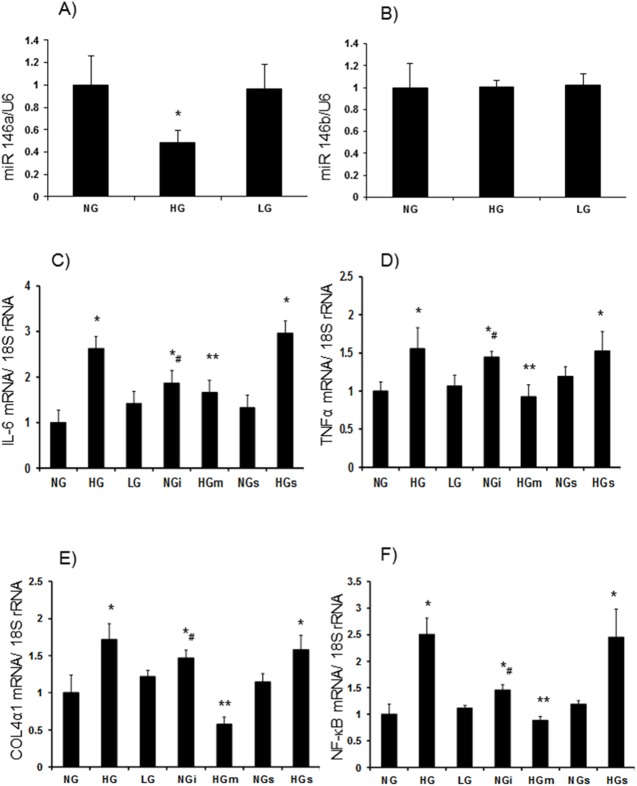
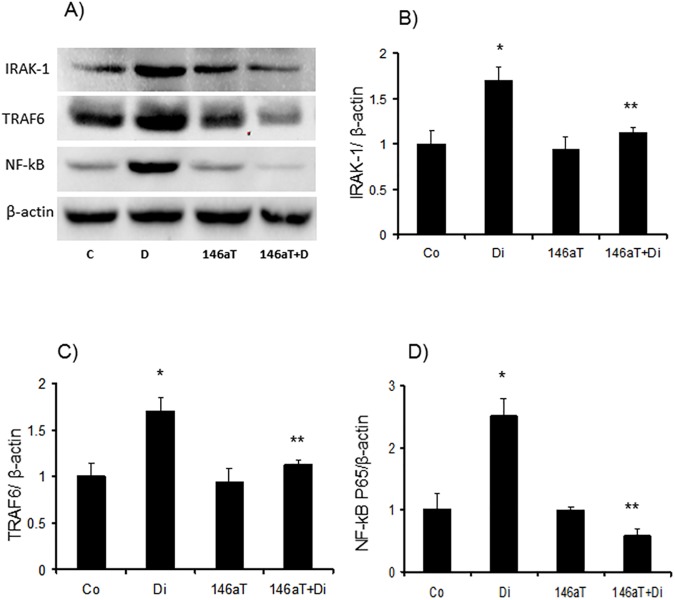
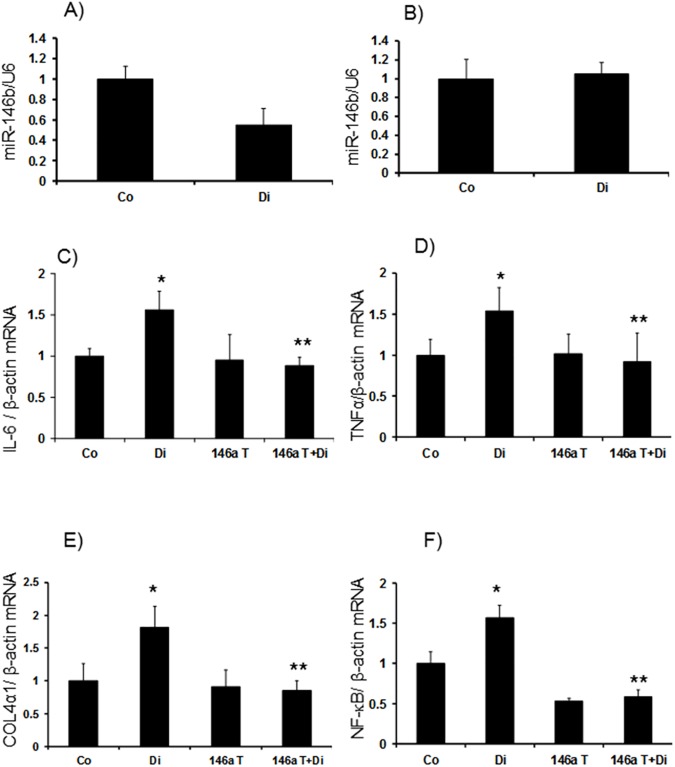
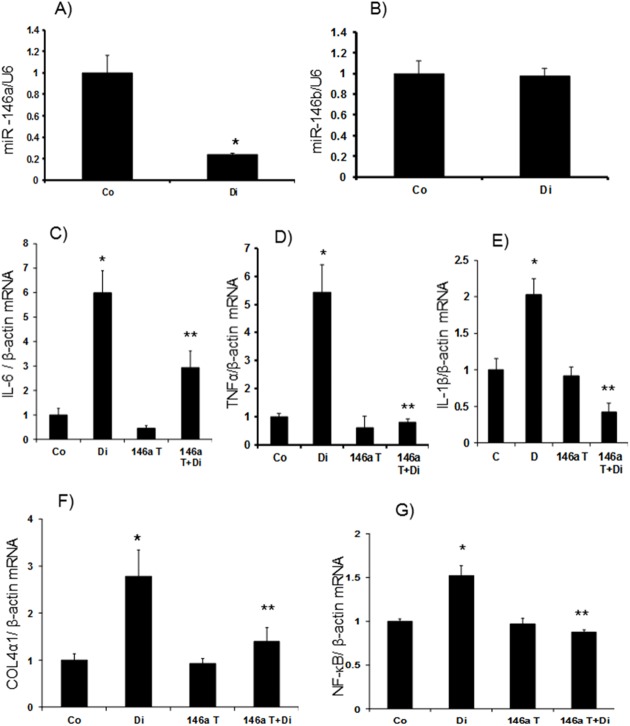
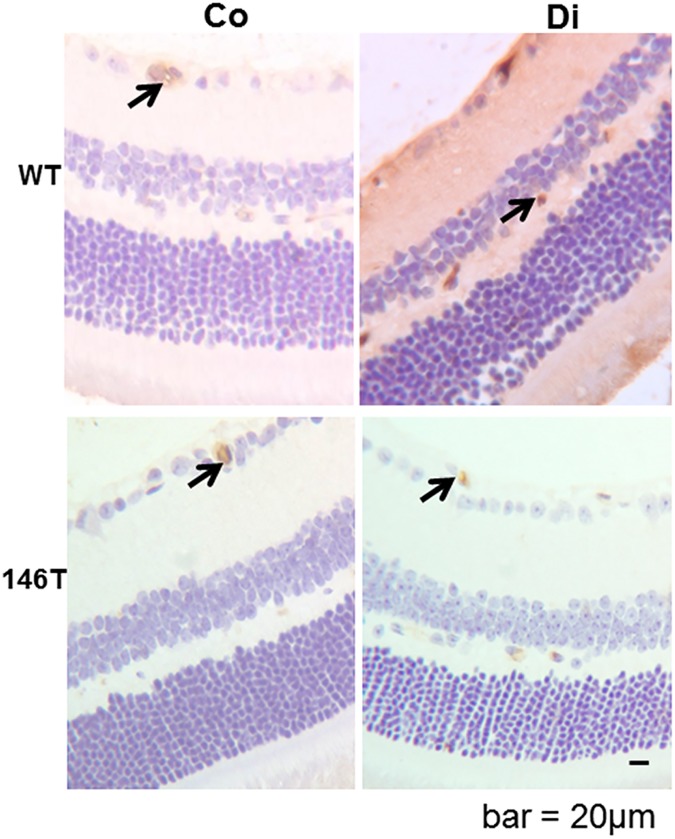
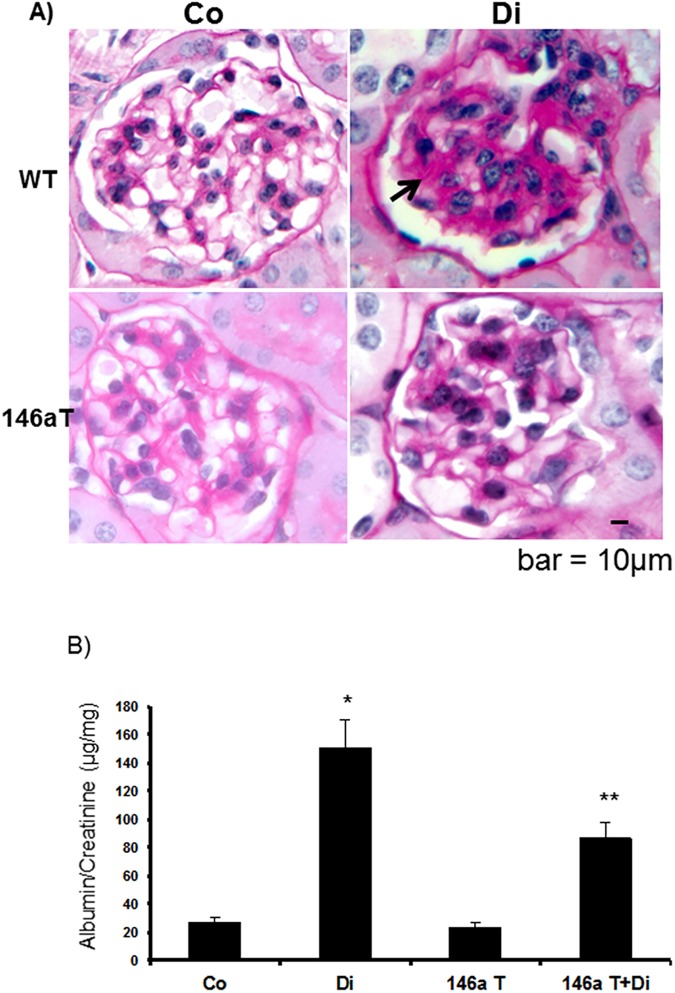
Hyperglycemic damage to the endothelial cells (ECs) leads to increased synthesis of inflammatory cytokines. We have previously shown miR-146a downregulation in ECs and in the tissues of diabetic mice. Here we investigated the role of miR-146a, in the production of specific inflammatory cytokines and extracellular matrix (ECM) proteins in retina and kidneys in diabetes. We generated an endothelial specific miR-146a overexpressing transgenic mice (TG). We investigated these mice and wild type (WT) controls with or without streptozotocin (STZ) induced diabetes. Retinal and renal cortical tissues from the mice were examined for mRNAs for specific inflammatory markers, (ECM) proteins and inflammation inducible transcription factor by real time RT-PCR. Corresponding proteins, where possible, were examined using immunofluorescence or ELISA. In parallel, we examined ECs following incubation with various levels of glucose with or without miR-146a mimic transfection. In the retina and kidneys of WT mice with diabetes, increased expression of inflammatory markers (IL-6, TNFα, IL1β) in association augmented expression of ECM proteins (collagen 1αIV, fibronectin) and NF κB-P65 were observed, compared to WT non-diabetic controls. These changes were prevented in diabetic miR-146a TG mice along with retinal and renal functional and structural changes. In vitro studies showed similar changes in the ECs exposed to high glucose. Such changes were corrected in the cells following miR-146a mimic transfection. Further analyses of renal cortical tissues showed diabetes induced significant upregulation of two regulators of NFκB, namely Interleukin-1 associated Kinase 1 and tumour necrosis factor receptor associated factor. Such changes were prevented in diabetic TG animals. These data indicate that augmented production of inflammatory cytokines and ECM proteins in the retina and kidneys in diabetes are regulated through endothelium derived miR-146a. Identification of such novel mechanisms may potentially lead to the development of novel therapies.
高血糖对内皮细胞(ECs)的损伤会导致炎症细胞因子合成增加。我们之前已经证明,在糖尿病小鼠的内皮细胞和组织中,miR-146a表达下调。在此,我们研究了miR-146a在糖尿病视网膜和肾脏中特定炎症细胞因子及细胞外基质(ECM)蛋白产生中的作用。我们构建了内皮细胞特异性过表达miR-146a的转基因小鼠(TG)。我们研究了这些小鼠以及野生型(WT)对照小鼠,它们有的接受或未接受链脲佐菌素(STZ)诱导的糖尿病处理。通过实时逆转录聚合酶链反应(RT-PCR)检测小鼠视网膜和肾皮质组织中特定炎症标志物、(ECM)蛋白和炎症诱导转录因子的mRNA。在可能的情况下,使用免疫荧光或酶联免疫吸附测定(ELISA)检测相应蛋白。同时,我们在转染或未转染miR-146a模拟物的情况下,用不同水平的葡萄糖孵育内皮细胞后进行检测。与非糖尿病的WT对照相比,糖尿病WT小鼠的视网膜和肾脏中,炎症标志物(白细胞介素-6、肿瘤坏死因子α、白细胞介素1β)表达增加,同时细胞外基质蛋白(胶原蛋白1αIV、纤连蛋白)和核因子κB-P65的表达也增加。在糖尿病miR-146a TG小鼠中,这些变化以及视网膜和肾脏的功能及结构变化均得到了预防。体外研究显示,暴露于高糖环境的内皮细胞也有类似变化。在转染miR-146a模拟物后,细胞中的这些变化得到了纠正。对肾皮质组织的进一步分析显示,糖尿病会导致核因子κB的两个调节因子,即白细胞介素-1相关激酶1和肿瘤坏死因子受体相关因子显著上调。在糖尿病TG动物中,这些变化得到了预防。这些数据表明,糖尿病视网膜和肾脏中炎症细胞因子及细胞外基质蛋白的产生增加是由内皮来源的miR-146a调控的。识别这种新机制可能会推动新型疗法的开发。