Naves Lucas B, Dhand Chetna, Venugopal Jayarama Reddy, Rajamani Lakshminarayanan, Ramakrishna Seeram, Almeida Luis
CAPES Foundation, Ministry of Education of Brazil, Brasília, Brazil.
Centre for Textile Science and Technology, University of Minho, Braga, Portugal.
Prog Biomater. 2017 May;6(1-2):13-26. doi: 10.1007/s40204-017-0064-z. Epub 2017 Mar 16.
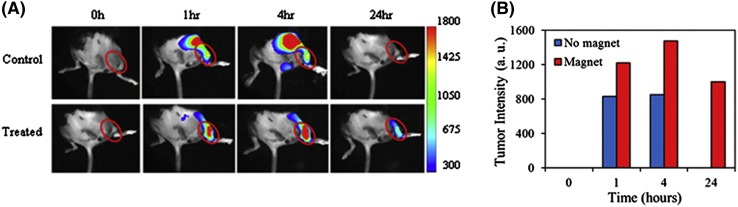
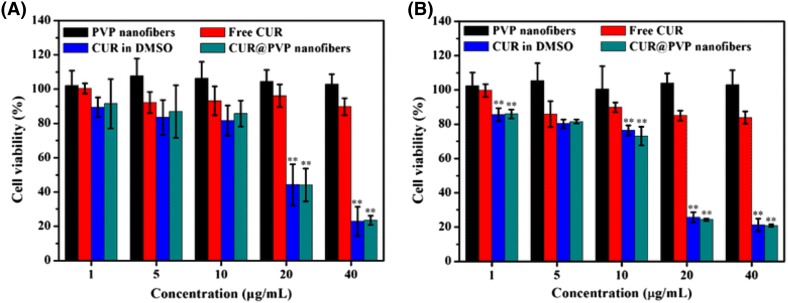
Melanoma is the most aggressive type of skin cancer and has very high rates of mortality. An early stage melanoma can be surgically removed, with a survival rate of 99%. This literature review intends to elucidate the possibilities to treat melanoma skin cancer using hybrid nanofibers developed by advanced electrospinning process. In this review we have shown that the enhanced permeability and retention is the basis for using nanotechnology, aiming topical drug delivery. The importance of the detection of skin cancer in the early stages is directly related to non-metastatic effects and survival rates of melanoma cells. Inhibitors of protein kinase are already available in the market for melanoma treatment and are approved by the FDA; these agents are cobimetinib, dabrafenib, ipilimumab, nivolumab, trametinib, and vemurafenib. We also report a case study involving two different approaches for targeting melanoma skin cancer therapy, namely, magnetic-based core-shell particles and electrospun mats.
黑色素瘤是最具侵袭性的皮肤癌类型,死亡率非常高。早期黑色素瘤可以通过手术切除,生存率为99%。这篇文献综述旨在阐明使用先进电纺工艺开发的混合纳米纤维治疗黑色素瘤皮肤癌的可能性。在这篇综述中,我们表明增强的通透性和滞留性是使用纳米技术进行局部药物递送的基础。早期检测皮肤癌的重要性与黑色素瘤细胞的非转移效应和生存率直接相关。蛋白激酶抑制剂已在市场上用于黑色素瘤治疗,并获得了美国食品药品监督管理局(FDA)的批准;这些药物有考比替尼、达拉非尼、伊匹单抗、纳武单抗、曲美替尼和维莫非尼。我们还报告了一个案例研究,涉及两种不同的靶向黑色素瘤皮肤癌治疗方法,即磁性核壳颗粒和电纺垫。