Boeynaems Steven, Bogaert Elke, Kovacs Denes, Konijnenberg Albert, Timmerman Evy, Volkov Alex, Guharoy Mainak, De Decker Mathias, Jaspers Tom, Ryan Veronica H, Janke Abigail M, Baatsen Pieter, Vercruysse Thomas, Kolaitis Regina-Maria, Daelemans Dirk, Taylor J Paul, Kedersha Nancy, Anderson Paul, Impens Francis, Sobott Frank, Schymkowitz Joost, Rousseau Frederic, Fawzi Nicolas L, Robberecht Wim, Van Damme Philip, Tompa Peter, Van Den Bosch Ludo
Experimental Neurology and Leuven Research Institute for Neuroscience and Disease (LIND), Department of Neurosciences, KU Leuven - University of Leuven, 3000 Leuven, Belgium; Laboratory of Neurobiology, VIB, Center for Brain and Disease Research, 3000 Leuven, Belgium.
Center for Structural Biology (CSB), VIB, Vrije Universiteit Brussel (VUB), 1050 Brussels, Belgium.
Mol Cell. 2017 Mar 16;65(6):1044-1055.e5. doi: 10.1016/j.molcel.2017.02.013.
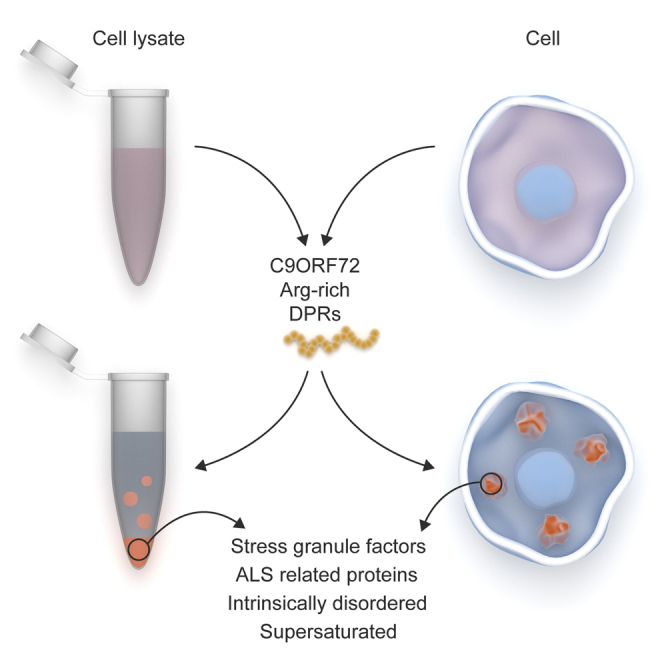
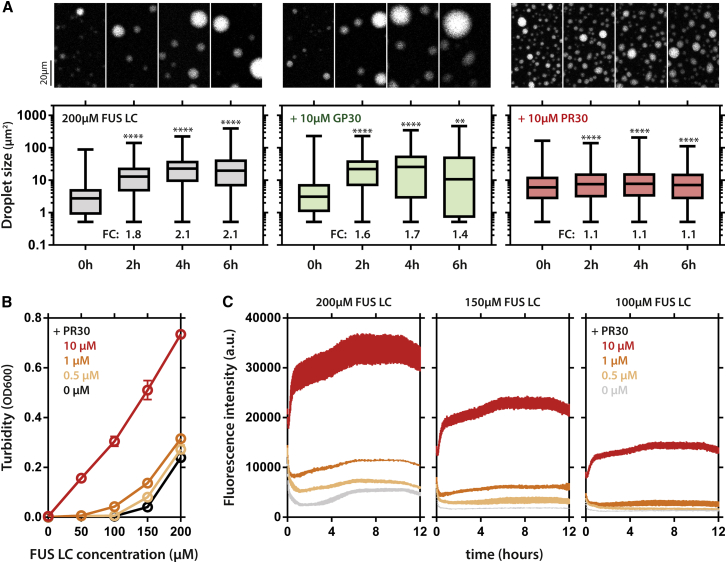
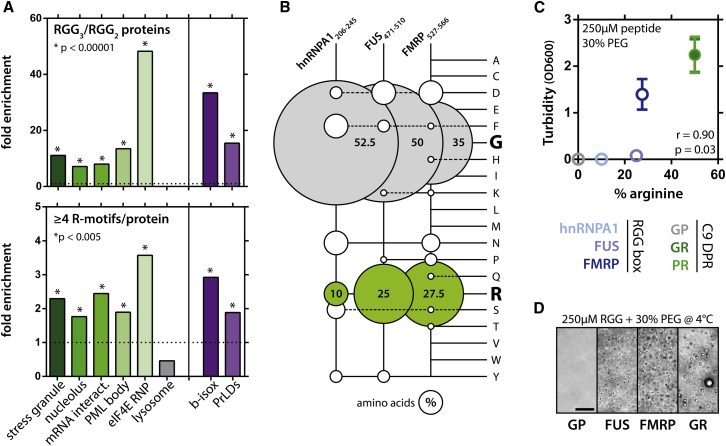
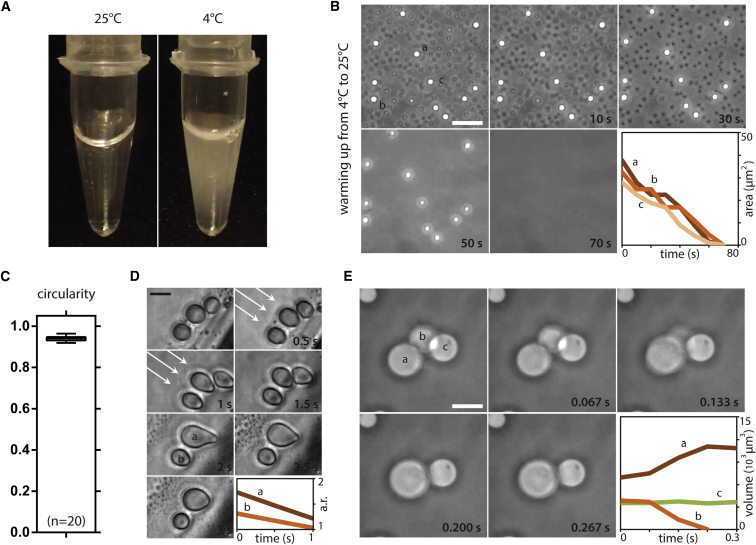
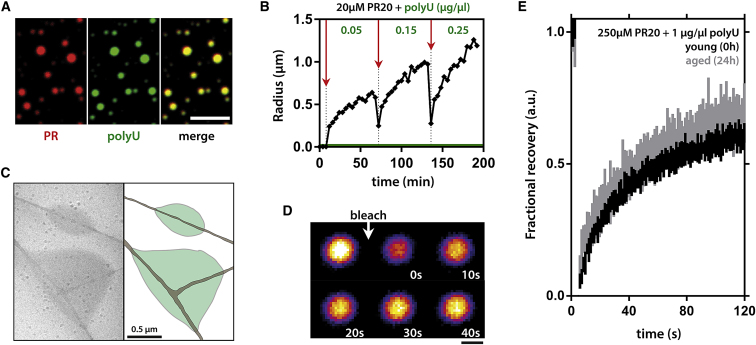
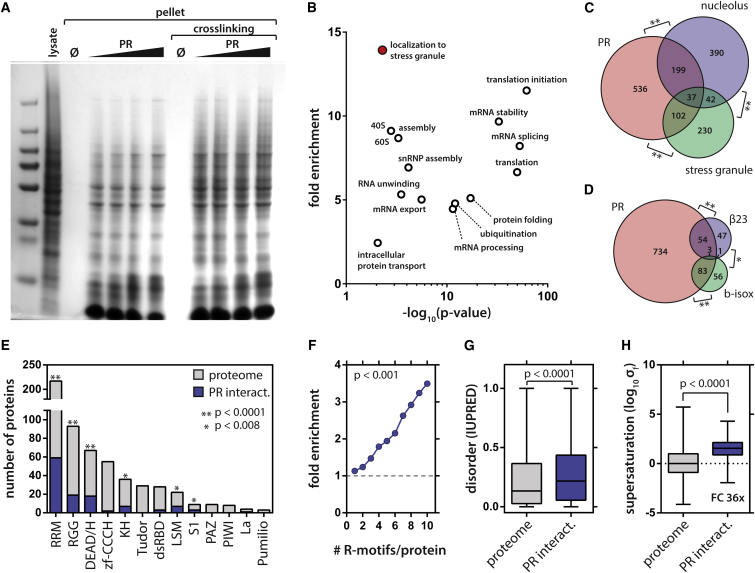
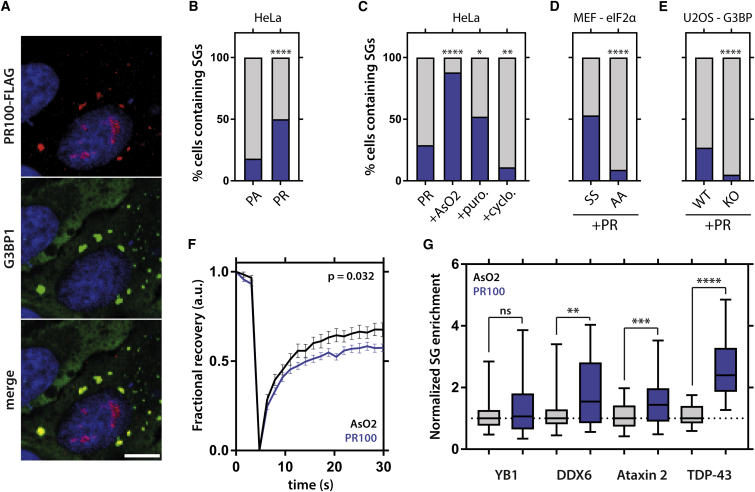
Liquid-liquid phase separation (LLPS) of RNA-binding proteins plays an important role in the formation of multiple membrane-less organelles involved in RNA metabolism, including stress granules. Defects in stress granule homeostasis constitute a cornerstone of ALS/FTLD pathogenesis. Polar residues (tyrosine and glutamine) have been previously demonstrated to be critical for phase separation of ALS-linked stress granule proteins. We now identify an active role for arginine-rich domains in these phase separations. Moreover, arginine-rich dipeptide repeats (DPRs) derived from C9orf72 hexanucleotide repeat expansions similarly undergo LLPS and induce phase separation of a large set of proteins involved in RNA and stress granule metabolism. Expression of arginine-rich DPRs in cells induced spontaneous stress granule assembly that required both eIF2α phosphorylation and G3BP. Together with recent reports showing that DPRs affect nucleocytoplasmic transport, our results point to an important role for arginine-rich DPRs in the pathogenesis of C9orf72 ALS/FTLD.
RNA结合蛋白的液-液相分离(LLPS)在参与RNA代谢的多个无膜细胞器(包括应激颗粒)的形成中发挥重要作用。应激颗粒稳态的缺陷是肌萎缩侧索硬化症/额颞叶痴呆(ALS/FTLD)发病机制的基石。极性残基(酪氨酸和谷氨酰胺)先前已被证明对与ALS相关的应激颗粒蛋白的相分离至关重要。我们现在确定富含精氨酸的结构域在这些相分离中发挥积极作用。此外,源自C9orf72六核苷酸重复扩增的富含精氨酸的二肽重复序列(DPRs)同样经历LLPS,并诱导大量参与RNA和应激颗粒代谢的蛋白质发生相分离。细胞中富含精氨酸的DPRs的表达诱导了自发的应激颗粒组装,这需要eIF2α磷酸化和G3BP。结合最近显示DPRs影响核质运输的报道,我们的结果表明富含精氨酸的DPRs在C9orf72 ALS/FTLD发病机制中起重要作用。