
19号染色体q13区域的破坏改变了CYP2A7、MIA和MIA-RAB4B长链非编码RNA的表达,并导致APC突变阴性的家族性结直肠癌患者出现类似家族性腺瘤性息肉病(FAP)的表型。
Chromosome 19q13 disruption alters expressions of CYP2A7, MIA and MIA-RAB4B lncRNA and contributes to FAP-like phenotype in APC mutation-negative familial colorectal cancer patients.
作者信息
Thean Lai Fun, Wong Yu Hui, Lo Michelle, Loi Carol, Chew Min Hoe, Tang Choong Leong, Cheah Peh Yean
机构信息
Department of Colorectal Surgery, Singapore General Hospital, Singapore.
Saw Swee Hock School of Public Health, National University of Singapore, Singapore.
出版信息
PLoS One. 2017 Mar 17;12(3):e0173772. doi: 10.1371/journal.pone.0173772. eCollection 2017.
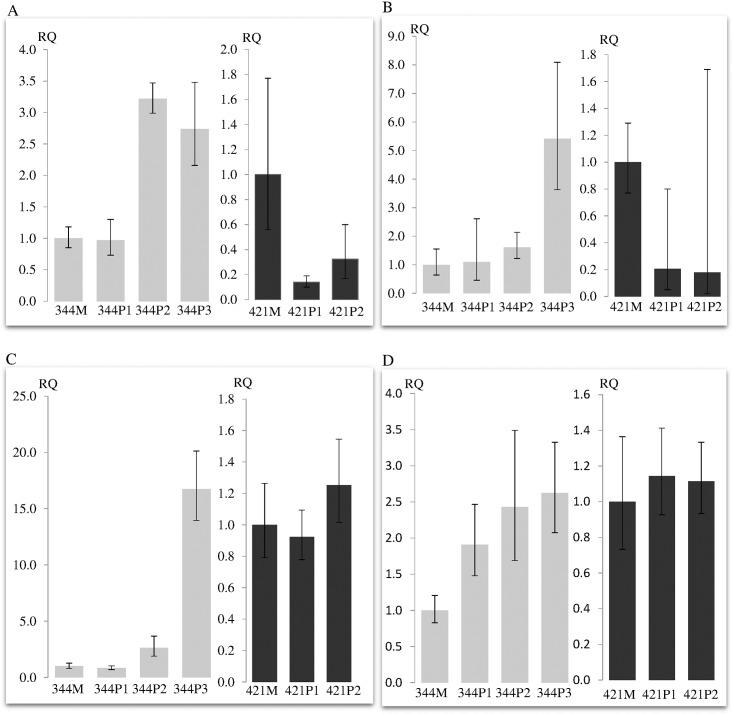
Familial adenomatous polyposis (FAP) is an autosomal-dominantly inherited form of colorectal cancer (CRC) caused by mutation in the adenomatous polyposis coli (APC) gene. Our ability to exhaustively screen for APC mutations identify microsatellite-stable and APC-mutation negative familial CRC patients, enabling us to search for novel genes. We performed genome-wide scan on two affected siblings of one family and 88 ethnicity- and gender-matched healthy controls to identify deletions shared by the siblings. Combined loss of heterozygosity, copy number and allelic-specific copy number analysis uncovered 5 shared deletions. Long-range polymerase chain reaction (PCR) confirmed chromosome 19q13 deletion, which was subsequently found in one other family. The 32 kb deleted region harbors the CYP2A7 gene and was enriched with enhancer, repressor and insulator sites. The wildtype allele was lost in the polyps of the proband. Further, real-time RT-PCR assays showed that expressions of MIA and MIA-RAB4B located 35 kb upstream of the deletion, were up-regulated in the polyps compared to the matched mucosa of the proband. MIA-RAB4B, the read-through long non-coding RNA (lncRNA), RAB4B, PIM2 and TAOK1 share common binding site of a microRNA, miR-24, in their 3'UTRs. PIM2 and TAOK1, two target oncogenes of miR-24, were co-ordinately up-regulated with MIA-RAB4B in the polyps, suggesting that MIA-RAB4B could function as competitive endogenous RNA to titrate miR-24 away from its other targets. The data suggest that the 19.13 deletion disrupted chromatin boundary, leading to altered expression of several genes and lncRNA, could contribute to colorectal cancer via novel genetic and epigenetic mechanisms.
家族性腺瘤性息肉病(FAP)是一种常染色体显性遗传的结直肠癌(CRC)形式,由腺瘤性息肉病 coli(APC)基因突变引起。我们对APC突变进行全面筛查的能力,能够识别微卫星稳定且APC突变阴性的家族性CRC患者,从而使我们能够寻找新的基因。我们对一个家族的两名患病兄弟姐妹以及88名种族和性别匹配的健康对照进行了全基因组扫描,以识别兄弟姐妹共有的缺失。综合杂合性缺失、拷贝数和等位基因特异性拷贝数分析,发现了5个共享缺失。长距离聚合酶链反应(PCR)证实了19号染色体q13缺失,随后在另一个家族中也发现了该缺失。缺失的32 kb区域包含CYP2A7基因,并富含增强子、阻遏子和绝缘子位点。先证者息肉中的野生型等位基因缺失。此外,实时RT-PCR分析表明,位于缺失上游35 kb处的MIA和MIA-RAB4B在息肉中的表达相较于先证者匹配的黏膜上调。MIA-RAB4B,即通读长链非编码RNA(lncRNA),RAB4B、PIM2和TAOK1在其3'UTR中共享微小RNA miR-24的共同结合位点。PIM2和TAOK1是miR-24的两个靶标癌基因,它们在息肉中与MIA-RAB4B协同上调,表明MIA-RAB4B可能作为竞争性内源RNA,将miR-24从其其他靶标中滴定出来。数据表明,19.13缺失破坏了染色质边界,导致多个基因和lncRNA的表达改变,可能通过新的遗传和表观遗传机制促成结直肠癌。


 Zotero 插件